
Weakening Rupiah Forces Central Java to Re-evaluate Road Projects as Asphalt Prices Soar
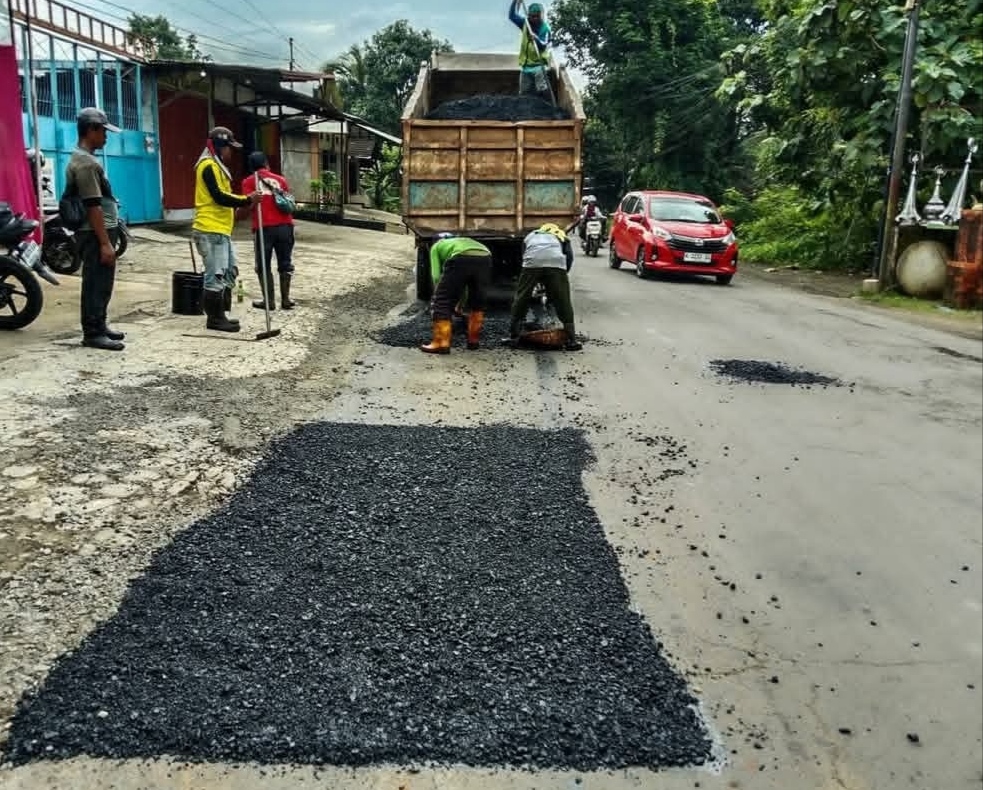
The real sector is becoming increasingly cautious regarding business expansion. The Central Java Provincial Government has been forced to conduct a thorough evaluation of road infrastructure development programmes in its region. This step was taken following a surge in asphalt prices triggered by the increasing weakness of the Rupiah against the US Dollar.
Based on monitoring on Wednesday (10/6), the Central Java Provincial Government’s efforts to boost infrastructure through a budget reallocation of Rp200 billion are now hitting economic realities. The Rupiah exchange rate, which has breached the Rp18,000 per US Dollar mark, has had a direct impact on construction material costs, particularly asphalt.
The Regional Secretary of Central Java, Sumarno, stated that they are currently recalculating the impact of these rising raw material costs. At present, most projects are still in the tendering or bidding process.
“We will recalculate the impact of the increase in road construction raw materials influenced by the Dollar. The local government is striving to ensure all projects proceed according as planned, despite facing the challenges of rising material costs,” said Sumarno.
Sumarno acknowledged that the current situation is quite challenging because there is currently no regulation that allows for contract value adjustments (price escalation) mid-way, unlike policies that existed several years ago.
The Head of the Central Java Public Works and Spatial Planning Agency (PUPR), Henggar Budi Anggoro, revealed that price increases are occurring across almost all construction components. Asphalt prices, as a primary component, have now reached the range of Rp2 million per unit.
Henggar cited one project significantly affected as the Randublatung-Cepu road repair. “We are currently recalculating it. The handling of the Randublatung-Cepu road, which was previously budgeted at Rp5.2 billion, has now surged to Rp34 billion,” he explained.
Despite the additional budget from the Rp200 billion regional budget (APBD) reallocation, the drastic increase in material prices is feared to correct the planned target percentage for road stability.
This increase in material prices of up to 20% has caused anxiety among construction service providers and contractors in Central Java. Suyuti, a contractor in Semarang, admitted difficulty in calculating the value of ongoing projects.
“If it hasn’t gone to tender, we can still recalculate, but for ongoing projects, this 20% increase in material prices is a headache,” he complained.
Similarly, Timpuk, a contractor from Temanggung, hopes the local government will promptly issue discretionary policies or changes regarding the increase in material costs. In his view, it is impossible for projects to be halted mid-way simply due to price increases that are beyond their control.
The Central Java Provincial Government reaffirmed its determination to complete road repairs, especially on heavily damaged sections, while seeking solutions for the ballooning financing burden.