
Weak Rupiah and Rising Operational Costs: How Shopping Mall Managers are Responding
Shopping centre managers are facing increasing cost pressures amidst the weakening of the Rupiah and a rise in several operational cost components. Rather than raising prices for consumers or tenants, mall operators are choosing to strengthen various promotional programmes to boost sales.
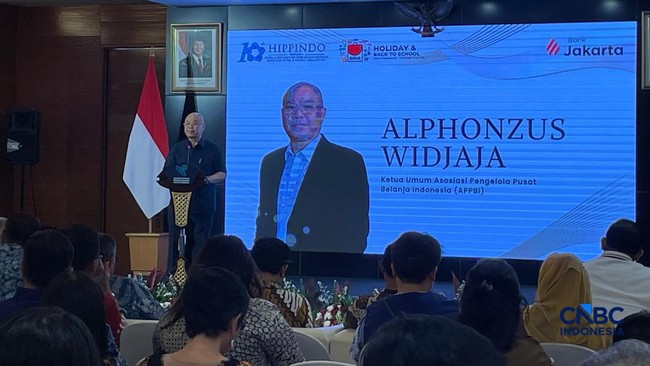
The General Chair of the Indonesian Shopping Centre Management Association (APPBI), Alphonzus Widjaja, stated that global pressures are being directly felt by the shopping centre industry. One of these pressures stems from rising operational costs due to the influence of the US Dollar exchange rate.
“The global impact is becoming more palpable; the Rupiah exchange rate against the US Dollar is continuously rising. Currently, operational costs in shopping centres are increasing, particularly regarding logistics costs and gas prices, because CNG (compressed natural gas) contains US Dollar elements, resulting in monthly increases in gas costs,” said Alphronzus during the launch of the BINA Holiday & Back to School programme at the Ministry of Trade Auditorium, Jakarta, on Monday (8/6/2026).
He continued that these cost increases are occurring at a time when sales have not yet fully recovered. According to him, shopping centre managers cannot immediately pass these increased costs onto tenants.
“On one hand, we as shopping centres cannot simply raise costs for tenants, or we must be selective, as we are currently in a low season. Sales are not yet maximised, yet operating costs are rising,” he said.
In addition to the pressure from the weakening Rupiah, APPBI is also facing rising operational burdens in several regions. Alphonzus noted that some local governments have begun seeking additional revenue sources following reductions in regional allocation funds from the central government.
“Furthermore, because regional allocation funds have been reduced, some local governments are seeking additional revenue by increasing taxes. This is what we are experiencing in several regions, leading to higher operational costs,” he revealed.
Despite being squeezed by rising costs from various sides, APPBI emphasised that price hikes are not the primary choice. According to Alphonzus, such a move could further suppress public purchasing power, which is currently facing various economic challenges.
“Raising prices is a last resort amidst a situation where public purchasing power is under pressure; raising prices should be the final option,” he asserted.
Therefore, the strategy chosen by the shopping centre industry is to increase transaction volumes and encourage public consumption through various shopping programmes.
“So, what is the option? The option is to increase sales; that is what we are doing. This is why we organise many programmes, including BINA Holiday, which is one of them,” said Alphonzus.
He explained that promotional programmes have long been part of the retail industry’s strategy, especially during major moments such as Christmas, New Year, Ramadan, Eid al-Fitr, school holidays, and Independence Day. However, in recent years, the implementation of these programmes has been strengthened and involves various parties.
“In the last 2-3 years, these have been more intensified and coordinated to ensure that maximum transactions occur and that public consumption remains high. This is to maintain our economic growth, especially the targets set by the government,” added Alphonzus.
He noted that strengthening promotional programmes is becoming increasingly important because the retail industry is currently facing a longer-than-usual low season. Following Ramadan and Eid al-Fitr, which mark peak sales, the retail sector usually enters a period of slowdown. This year, however, the condition is lasting longer because Ramadan and Eid al-Fitr fell in the first quarter.
“The implementation this year is particularly special because the Indonesian retail industry is currently in a low season period. Furthermore, this year’s low season is longer than usual because Ramadan and Eid al-Fitr arrived early in the first quarter, making the second and third quarters a prolonged low season,” he added.
To boost transactions, APPBI has prepared several major promotional agendas for the coming months, ranging from the Jakarta Great Sale Festival and the Solo Raya Great Sale to the Indonesia Shopping Festival, which will be held in August.
“The Jakarta Great Sale Festival is being launched this week. This is intended not only to commemorate the anniversary of Jakarta but also to drive sales. The Solo Raya Great Sale is also being prepared,” he said.
“In August, we will organise the Indonesia Shopping Festival, offering various prizes larger than those in previous years,” added Alphonzus.
He emphasised that all these programmes are efforts by the shopping centre and retail industry to maintain sales while resisting price increases amidst rising cost pressures.
“Our aim is to try our utmost to hold back price increases by maximising sales. Once again, we and our retail partners are committed that raising prices is the last resort. What we will do is create various shopping programmes, such as BINA Holiday,” he concluded.