
Weak Household Consumption Raises Economists’ Concerns Over Sluggish Q3 2026 Growth
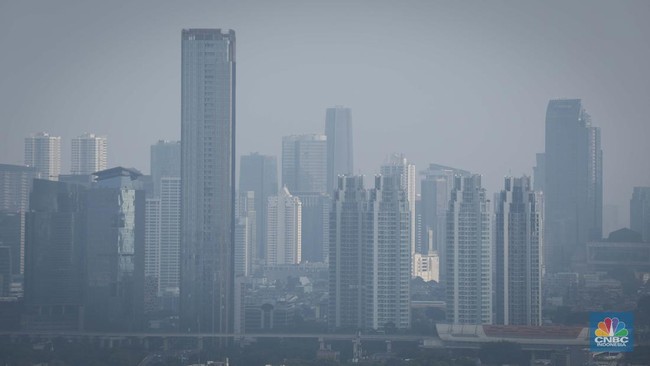
Jakarta, CNBC Indonesia — Ahead of the release of third-quarter 2026 economic growth figures tomorrow, Thursday (5 November 2026), economists expect Indonesia’s growth to slow slightly from 5.29% year on year in the second quarter and fall further from 5.61% in the first quarter.
David E. Sumual, chief economist at PT Bank Central Asia (BCA) Tbk, forecasts growth of 5.15–5.20% year on year in the third quarter.
“Exports and manufacturing activity supported economic growth in the third quarter of 2026, while consumption in both the household and government sectors appears to have slowed compared with the previous quarter,” David told CNBC Indonesia on Wednesday (4 November 2026).
Josua Pardede, chief economist at Bank Permata, meanwhile, forecasts that Indonesia’s economy grew by 5.23% year on year in the third quarter.
“With that forecast, growth in the first nine months of 2026 is estimated to have reached 5.37%. This means the Indonesian economy remains fairly resilient amid external pressures, but has yet to show broad-based acceleration,” Josua said.
Josua said the main question was not simply whether the economy could grow by more than 5%, but whether that growth was increasingly underpinned by rising real incomes, formal job creation and a recovery in labour-intensive sectors.
He said growth was currently supported by a combination of relatively resilient household consumption, investment in certain sectors and government spending. At the same time, some groups of society and business sectors continued to face considerable pressure.
On the expenditure side, household consumption is forecast to grow by 5.13% year on year, contributing about 2.66 percentage points to projected GDP growth of 5.23%.
Investment, or gross fixed capital formation, is forecast to grow by 5.59%, contributing about 1.76 percentage points. Government consumption, growing by 9.98%, is expected to contribute about 0.69 percentage points.
Josua said this composition showed that household consumption and investment remained the economy’s two main growth drivers.
However, he said one point warranted attention: investment growth had slowed from 6.87% in the second quarter, while government consumption had also eased from 15.97%.
Thus, although both components continued to record relatively strong growth, their pace was no longer as fast as in the previous quarter.
“This helps explain why GDP growth is expected to slow slightly, even though several production indicators continue to show expansion,” he said.
The greatest risk to the forecast comes from the resilience of household consumption, particularly among middle- and lower-middle-income groups. Consumption growth of 5.13% would represent a slight improvement on the 5.06% recorded in the second quarter.
However, several indicators suggest that purchasing power has not fully recovered. The September Consumer Confidence Index remained in optimistic territory at 118.1, but the Current Economic Conditions Index fell from 109.4 to 107.5. Perceptions of income among people in the Rp1–2 million spending group had already entered pessimistic territory.
Meanwhile, retail sales are forecast to have grown by only about 1.4% year on year in September, while consumer credit grew by 4.86%, far below investment credit growth of 23.20%. Food price pressures also remained high, with volatile food inflation at 5.03% in September.
These conditions suggest that people are still spending, but some households are becoming more selective, cutting non-essential expenditure, switching to cheaper products or using savings to maintain consumption.
“This explains why aggregate consumption growth still looks solid, while people continue to feel pressure on their purchasing power,” he said.
If household consumption growth comes in 0.5 percentage points below forecast, GDP growth could mechanically fall by about 0.26 percentage points, assuming the other components remain unchanged.
Source: jawawa.id (https://jawawa.id/newsitem/weak-household-consumption-raises-economists-concerns-over-sluggish-q3-2026-growth-1793767850)
Originally published by CNBC Indonesia (https://www.cnbcindonesia.com/news/20261104095327-4-782149/konsumsi-masyarakat-lesu-ekonom-wanti-wanti-ekonomi-loyo-di-q3-2026), translated from Indonesian