
WCCE 2026 Concludes with Three Initiatives to Strengthen the Creative Economy Ecosystem
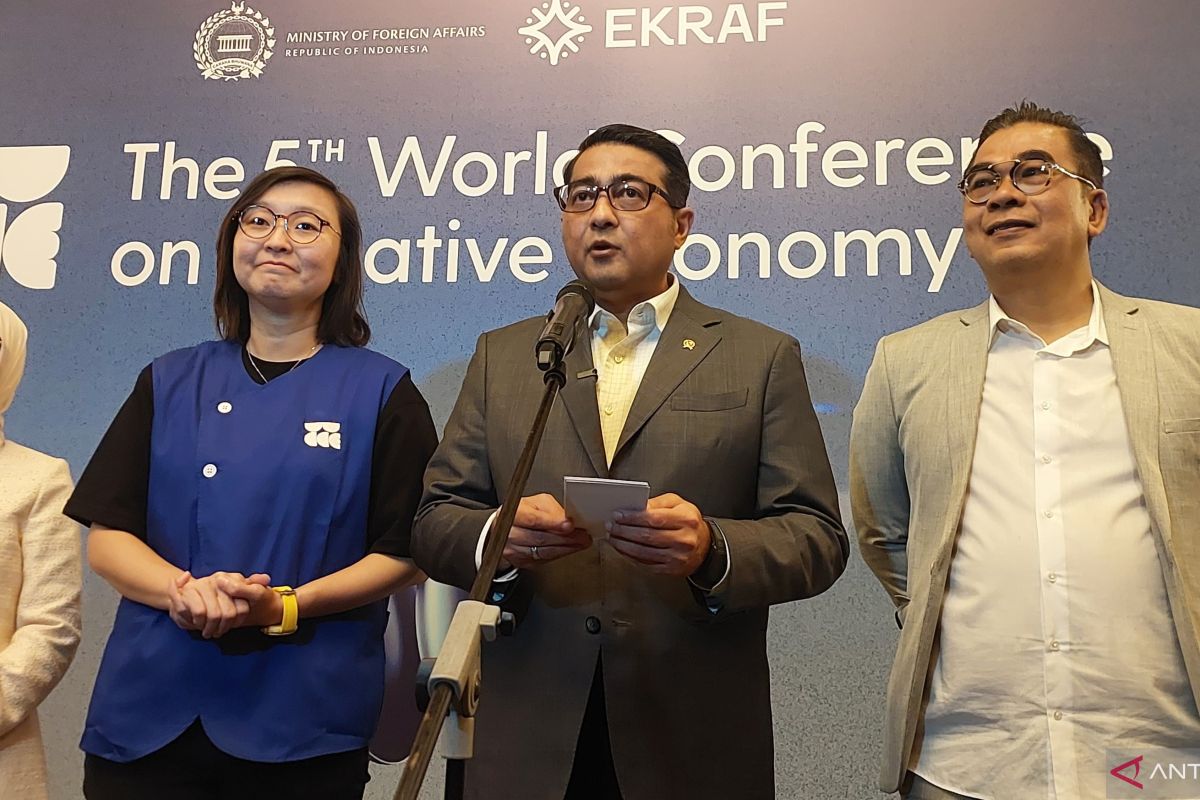
Jakarta (ANTARA) – Creative Economy Minister Teuku Riefky Harsya officially closed the World Conference on Creative Economy (WCCE) 2026, held from 21 to 23 October, with three strategic initiatives aimed at supporting the development of human resources and national creative-economy data.
The initiatives are the Creative Economy Data Model (CEDM), developed with the World Intellectual Property Organization (WIPO); the Indonesia Creative Economy Outlook 2026–2027, produced with Katadata; and Ekraf Academy, which aims to strengthen the skills of creative professionals.
“These three initiatives will turn knowledge into action and strengthen the creative economy across regions, in line with the Jakarta Vision. Let us turn knowledge into action, creativity into opportunity, and collaboration into shared prosperity,” Riefky said at the WCCE 2026 closing ceremony at Kempinski Jakarta on Friday.
Riefky said the CEDM is designed to map the creative-economy ecosystem across three dimensions: the environment for creativity, resources that support creativity, and creative value. These dimensions cover areas such as intellectual property, governance, socio-cultural conditions, infrastructure, financing, markets and socio-economic contributions.
The model is expected to help identify strengths and challenges in the creative-economy ecosystem, providing input for policymaking and the development of the sector.
The Indonesia Creative Economy Outlook 2026–2027, developed with Katadata, will serve as a data reference and strategic guide for the development of the national creative economy. The publication is intended to provide an overview of digital transformation, the use of artificial intelligence (AI), the intellectual-property-based economy, and the potential and opportunities for developing the creative economy across different regions.
The third initiative, Ekraf Academy, focuses on strengthening the skills and competencies of creative workers through training tailored to industry needs.
The programme is being developed with the Indonesia Creative Cities Network (ICCN), associations and professional certification bodies, with collaboration from 30 universities.
In 2025, Indonesia’s creative economy grew by about 6.8 per cent, supported 27.4 million workers, attracted US$11.3 million in investment and generated US$31.9 million in exports. Riefky said this growth needed to be accompanied by tangible economic benefits for creators.
“The CEDM and the Outlook will help stakeholders, particularly those in the creative sector, make better-informed decisions and support Rindekraf 2026–2045,” Riefky said.
Strengthening data and workforce skills is part of an effort to build a more focused creative-economy ecosystem while supporting the development of creative potential across Indonesia.
WCCE 2026 brought together representatives from more than 82 countries and seven international organisations, with 38 heads of delegation, 183 speakers and moderators, and 7,639 participants. Meanwhile, the Creative Village in the SCBD district received more than 20,000 visitors.
The conference also brought together policymakers, businesspeople, academics and creative-economy stakeholders to discuss opportunities and challenges in developing the sector nationally and globally.
Source: jawawa.id (https://jawawa.id/newsitem/wcce-2026-concludes-with-three-initiatives-to-strengthen-the-creative-economy-ecosystem-1792774307)
Originally published by Antara (Indonesian) (https://www.antaranews.com/berita/5808479/wcce-2026-ditutup-hasilkan-tiga-inisiatif-penguatan-ekosistem-ekraf), translated from Indonesian