
Wayan Koster Emphasises Importance of Protecting Agricultural Land in Bali
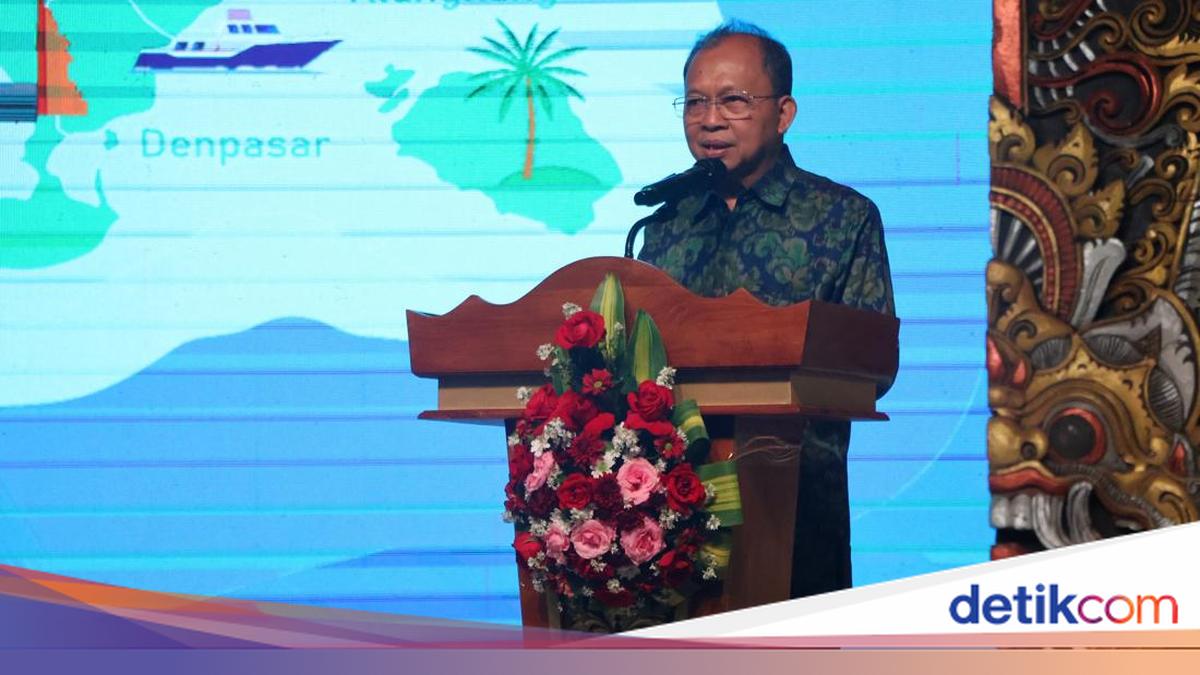
Bali Governor Wayan Koster has emphasised the importance of protecting Bali’s agricultural land amidst the heavy influx of investment and tourism development. According to him, Bali’s development must maintain a balance between economic growth, environmental preservation, agricultural sustainability, and community welfare.
Koster made these remarks while serving as the keynote speaker at a seminar titled ‘Synergy of Local Government, Ministry of ATR/BPN, Notaries, and PPAT to Provide Protection for Bali’s Agricultural Land Amidst Investment Flows and Maintaining Sustainable Bali Development’ in Denpasar, East Denpasar, on Sunday (20/9/2026).
Small Island, Large Development Pressure
Bali’s area is recorded at approximately 5,590 km², representing less than 0.1 percent of Indonesia’s total landmass, with a population of around 4.4 million people. The region is divided into 57 districts, 636 villages, and 80 sub-districts.
Due to its relatively small territory, Bali faces increasing development pressure, particularly from the tourism and investment sectors.
Bali Tourism Supports National Foreign Exchange
In 2025, Bali received 7.05 million international tourists, the highest in the last decade, representing an 11.4 percent growth compared to 2024. Combined with approximately 9.3 million domestic tourists, total visitor arrivals to Bali in 2025 reached 16.3 million people.
Tourism foreign exchange from Bali reached approximately Rp 176 trillion, contributing about 55 percent to the national tourism foreign exchange total, which reached Rp 319.9 trillion.
Bali’s Macroeconomic Indicators Improving
Koster presented several development indicators for Bali throughout 2025. Economic growth was recorded at 5.82 percent, an increase from 5.48 percent in 2024, and positioned above the national growth rate of 5.11 percent.
Bali’s GDP per capita was recorded at Rp 72.66 million, up from Rp 67.32 million in 2024. The poverty rate fell to 3.42 percent from 3.80 percent, noted as the lowest nationally. The Open Unemployment Rate also dropped to 1.45 percent from 1.79 percent, while Bali’s Human Development Index (HDI) rose to 79.37 from 78.63 in 2024. The prevalence of stunting in Bali was recorded at 8.7 percent, well below the national figure of 21.5 percent.
Nevertheless, Koster emphasised that regency/city governments must continue to work harder to address stunting cases.
Inequality Between Sarbagia and Non-Sarbagia Areas
The area of Sarbagia (Denpasar, Badung, Gianyar) is approximately 889 km², or 16 percent of Bali’s total area, while the area outside Sarbagia reaches 4,701 km², or 84 percent. However, in terms of Regional Original Income (PAD), Sarbagia contributes Rp 10.9 trillion or 83 percent, while the area outside Sarbagia contributes only about Rp 2.3 trillion or 17 percent.
Koster stated that this inequality is a serious issue that must be addressed immediately. He noted that infrastructure is a vital instrument to encourage equitable development, although Bali’s limited fiscal capacity means infrastructure development requires strong communication and synergy with the central government.
The Temptation of Investment for Farmers
Koster highlighted the economic pressure faced by Balinese farmers. When investors offer land prices equivalent to 10-20 years of harvest yields, selling land becomes a very human choice for farming families.
Therefore, according to Koster, a ban on land conversion alone is insufficient. The protection of agricultural land must be accompanied by tangible incentives for farmers, so that maintaining rice fields remains a viable economic option. If this issue is not managed well, Koster warned that the goal of achieving Bali’s food sovereignty will be difficult to achieve.
Farmer Regeneration as Another Challenge
Bali’s agricultural workforce is currently dominated by people aged over 50, while fewer young people are interested in working in this sector. Agricultural land preserved today potentially faces the risk of being uncultivated in the future if there is no farmer regeneration.
Consequently, land protection must go hand-in-hand with the sustainability of the profession and the welfare of farmers.
Bali Strengthens Land Protection Regulations
Koster stated that Bali has established Bali Provincial Regulation Number 4 of 2026 concerning the Control of Productive Land Conversion and the Prohibition of Land Ownership Transfer via Nominees. This policy is part of the government’s efforts to protect Bali’s productive land from conversion pressures and nominee ownership practices.
Koster reminded that Bali’s development must not be solely oriented towards short-term economic value. “Do not sacrifice Bali for the sake of money,” Koster asserted in a written statement on Monday (21/9/2026).
He noted that the community and all stakeholders must possess the idealism and serious responsibility to preserve Bali for future generations.
Nangun Sat Kerthi Loka Bali as the Foundation
Koster emphasised that Bali’s development is based on the vision of Nangun Sat Kerthi Loka Bali, which aims to maintain the sanctity and harmony of Bali’s nature and its contents for the prosperous and happy life of the Balinese people, both spiritually and physically. This vision is detailed in the Bali Future Development Roadmap, 100 Years of the New Bali Era 2025-2125, established through Bali Provincial Regulation Number 4 of 2023.
The values of Bali’s development stem from the local wisdom of Sad Kerthi, namely Jana Kerthi, Jagat Kerthi, Atma Kerthi, Segara Kerthi, Danu Kerthi, and Wana Kerthi.
Koster emphasised that development must honour nature through the strengthening of Balinese traditions and local wisdom, the protection of ecosystems and the sanctity of mountains, as well as the protection of water sources, lakes, springs, rivers, the sea, and conservation areas. These efforts also include climate management, controlling land conversion, developing organic agriculture, and realising food sovereignty.
Notaries and PPAT Requested to be the Frontline
Koster requested that Notaries and Land Deed Officials (PPAT) do not merely see themselves as parties who legalise transactions. According to him, Notaries and PPAT are the frontline in preventing nominee practices, as such practices can…
Source: jawawa.id (https://jawawa.id/newsitem/wayan-koster-emphasises-importance-of-protecting-agricultural-land-in-bali-1789995521)
Originally published by detikcom (https://news.detik.com/berita/d-8672906/wayan-koster-bicara-pentingnya-perlindungan-lahan-pertanian-di-bali), translated from Indonesian