
Way Kambas Pushed to Become International-Standard Elephant Conservation Centre
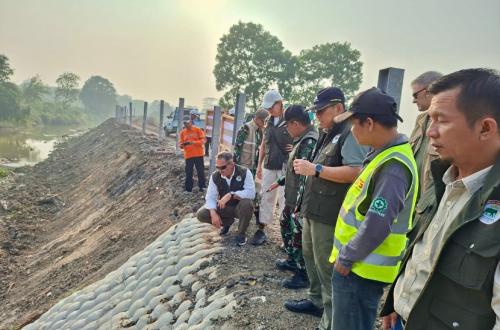
Way Kambas National Park (TNWK) is being pushed to become an international-standard Sumatran elephant conservation centre through the strengthening of facilities, handling of elephant-human interactions, and area management that continues to pay attention to ecological conditions. The development is being overseen through a review by expert teams from Indonesia and Thailand together with the Joint Committee for Mitigation and Handling of Negative Sumatran Elephant Interactions at TNWK on Saturday (15/8/2026).
The team reviewed a number of infrastructure development sites at TNWK to see the progress of work as well as identify technical needs in the conservation area. The review involved a delegation from Elephant Nature Park (ENP) Thailand led by Saengduean Chailert and an expert team from Wilderness (PT Living Landscapes Indonesia) led by Keren Brooks.
Chairman of the Joint Committee, Brigadier General Sriyanto, said the review was necessary to align facility development with the management needs of the conservation area. “The review activity on the progress of accelerating the development of Way Kambas National Park by the ENP Thailand Team and the Wilderness Team is a form of attention and coordination in order to ensure that the development of facilities and infrastructure in the TNWK area proceeds according to the plans and targets that have been set,” Sriyanto explained in a press release on Monday (17/8/2026).
According to Sriyanto, facility development still needs to pay attention to the precautionary principle because TNWK is an area with a conservation function. Coordination with expert teams is also needed so that the facilities built support Sumatran elephant management and do not ignore environmental conditions.
TNWK development is not only related to physical construction. Strengthening the mitigation system for elephant-human interactions is also a concern, given that the existence of Sumatran elephants is closely related to communities living around the area.
Community figure and Lampung cultural observer, Ansori Djausal, said TNWK development has a long historical footing as a conservation area. According to him, the experience of managing the area can be capital to strengthen Way Kambas’ position in elephant conservation.
“Way Kambas has now become an important conservation area with the Rhino Conservation Centre. The first Elephant Conservation in Indonesia cannot be separated from the success of changing a former logging concession area into a conservation area as a National Park in the early 80s. Likewise with a major work of ‘saving’ all elephants from the South Sumatra border into Way Kambas in the mid-80s known as the TATA LIMAN (86) activity,” Ansori revealed.
Ansori said developing TNWK as an international-standard conservation centre requires support from various parties as well as consistency in maintaining the function of the area. “Supporting conservation efforts, especially becoming a world example located in Indonesia in the development and preservation of wildlife such as the Sumatran elephant,” said Ansori.
A number of facilities being developed at TNWK include the provision of clean water and proper housing for elephants, a wildlife-human interaction mitigation system, and supporting facilities such as a skywalk and viewing towers.
The facility development also includes educational facilities at a number of monitoring posts to increase the involvement of surrounding communities. The TNWK development concept carries the spirit of “TNWK is Us” by bringing together conservation needs, environmental conditions, and community interests.
Evaluation of the development will be carried out periodically to ensure that the facilities developed can support area management and Sumatran elephant conservation in the long term.