
Way Kambas National Park develops beehive fences to prevent elephant-human conflict
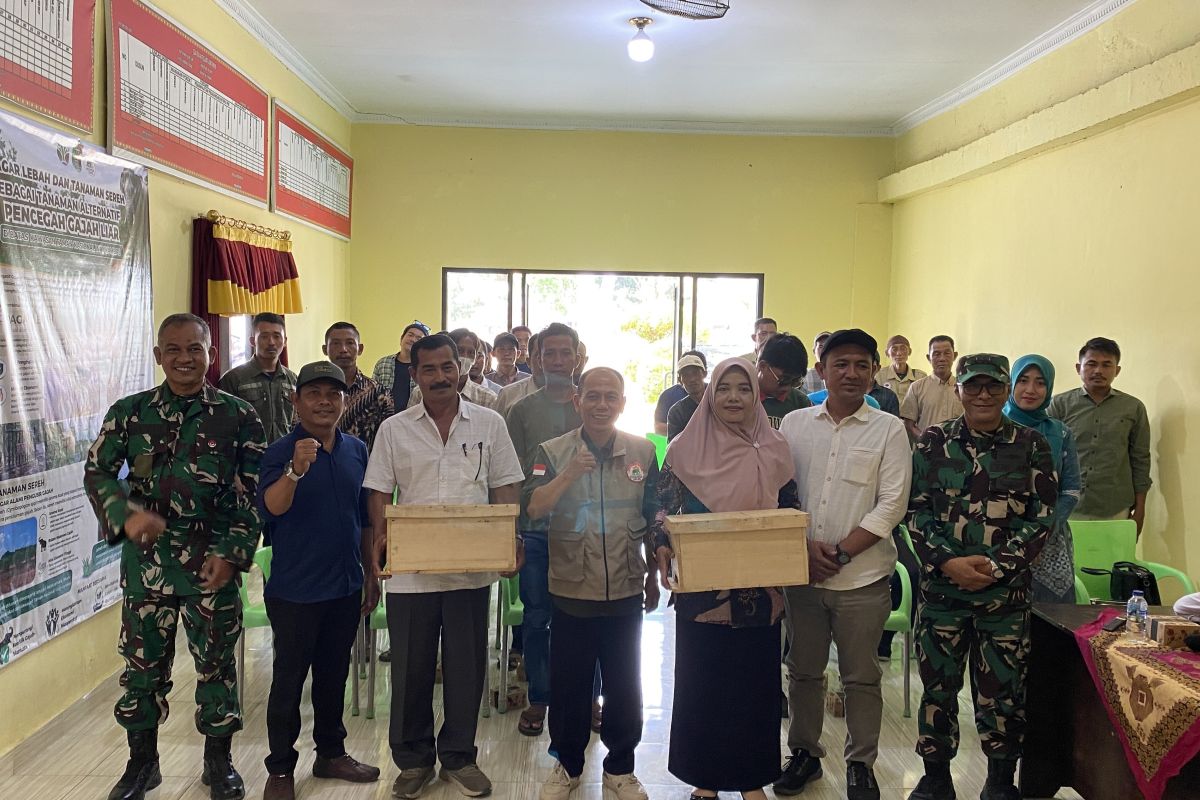
The buzzing sound and stings of bees will make elephants feel fearful and keep them away, without causing any harm to the animals.
Lampung (ANTARA) - The Joint Committee for the Mitigation and Handling of Negative Interactions with Sumatran Elephants at Way Kambas National Park (TNWK) is developing beehive fences as a nature-based effort to prevent conflicts between elephants and communities surrounding the conservation area.
The Chairman of the Joint Committee for the Mitigation and Handling of Negative Interactions with Sumatran Elephants at TNWK, Brigadier General TNI Sriyanto, stated that the construction of beehive fences at the boundaries of the conservation area is a tactical step to reduce negative interactions between humans and elephants that have persisted since the 1980s.
“To address this, an integrated solution is required, such as creating wildlife areas, utilising technology, and encouraging community-based conservation efforts,” said Sriyanto, as confirmed in South Lampung on Friday.
He explained that the beehive fence adopts a method that has been tested in several regions in Africa, leveraging the natural instinct of elephants towards bees.
“The beehive fence is one of the nature-based solutions that has been trialled in Africa to prevent elephants from leaving the conservation area. The buzzing sound and stings of bees will make elephants feel fearful and keep them away, yet it does not endanger the elephants,” he said.
In addition to being a conflict mitigation effort, the programme is designed to provide economic benefits to the communities living around the TNWK buffer zone through the development of local honeybee cultivation, specifically the Apis cerana species.
He added that the development of beehive fences also offers ecological benefits, as the presence of bees assists in the pollination process of plants located around community farmlands and plantations.
Thus, the approach is directed not only towards reducing human-elephant conflict but also towards building community involvement in protecting the conservation area through economic activities that are in harmony with the environment.
“The presence of bees helps maintain the ecosystem and assists the pollination process of plants around the residents’ plantations,” he said.