
Watermelon-Picking Tourism in Sanur Kauh Village
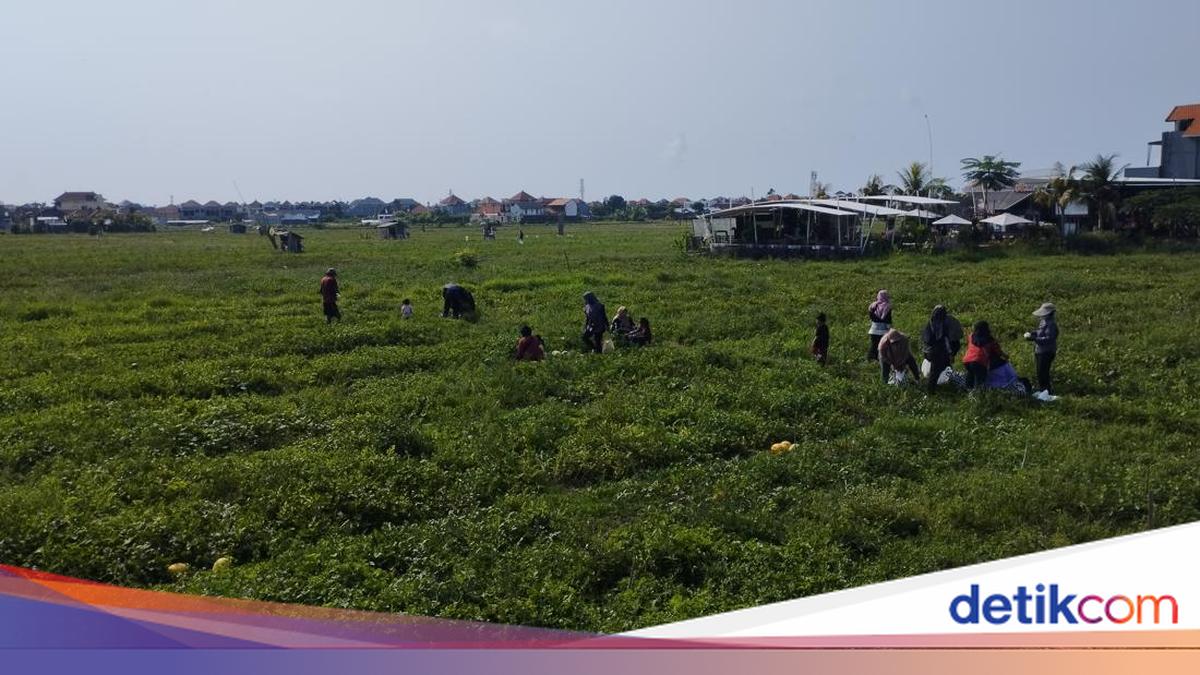
Samiyo carefully selected watermelons from the vines at a farm in Sanur Kauh Village, Denpasar, Bali. He then called over the farmer tending the plot to check whether the fruit had reached the ripeness he wanted. “I picked six watermelons,” he told detikBali on Saturday morning (10 October 2026).
Samiyo picked the six watermelons to share with his colleagues. The Denpasar resident had learnt about the pick-your-own attraction on social media.
He enjoyed picking the watermelons straight from the vines, an experience he did not get when buying fruit from a trader. “There’s satisfaction in choosing and picking the watermelons yourself, and getting the price directly from the farmer,” said the 55-year-old.
Samiyo was not the only visitor. That Saturday morning, the roughly 300-square-metre watermelon plot was busy with people selecting fruit and negotiating prices with the farmer before picking it. From time to time, they stopped to take photographs holding watermelons still on the vine or already picked.
There are several watermelon farms in Sanur Kauh Village. A paved path about one metre wide runs between rice fields and watermelon plots, making it suitable for running or cycling.
The watermelon vines spread across the ground, with green- and yellow-skinned fruit hidden beneath the leaves. Visitors therefore need to watch their step to avoid treading on the fruit.
The farm is run by Agung Gede and his wife. They grow seeded and seedless watermelons, as well as melons.
Agung began inviting visitors to pick watermelons at his farm a few days ago. Selling directly to customers is more profitable than selling the red- and yellow-fleshed fruit to middlemen. “If I sell directly to buyers, both they and I benefit,” he said.
Agung grows seedless red watermelons and seeded yellow ones, as well as melons.
He only allows visitors to pick the watermelons after they have bought them. He once lost money when visitors picked several watermelons but paid for only one.
Agung sells the fruit without weighing it. He sets the price according to its size and negotiates with visitors. “I don’t weigh them because it’s a hassle to bring scales out here to the farm,” he said.
Agung also explains the fruit to visitors, including how to identify a ripe watermelon, the varieties he grows, planting times and the harvest period. “A sign that a watermelon is ripe is that the tendril behind its stem turns dark brown and dries out,” said the farmer, who was wearing a red T-shirt.
I bought four watermelons—two seedless red ones and two yellow ones—as well as two melons. The two red watermelons cost Rp 30,000 and Rp 40,000 respectively, while each yellow watermelon cost Rp 25,000. The melons cost Rp 5,000 each.
I hurried to cut open the watermelons when I got home. Their flesh was red and juicy, with a sweet, crisp taste. The fruit, which originated in southern Africa, was refreshing to eat in the midday heat.
Source: jawawa.id (https://jawawa.id/newsitem/watermelon-picking-tourism-in-sanur-kauh-village-1791712257)
Originally published by detikBali (https://www.detik.com/bali/wisata/d-8702134/wisata-petik-semangka-di-desa-sanur-kauh), translated from Indonesian