
Water, the Source of Life That Must Be Protected
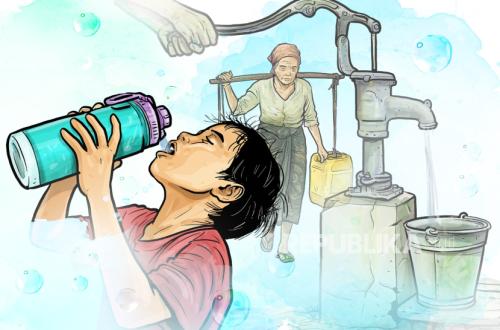
Amid the various environmental challenges facing the world today, water is increasingly demonstrating its position as the most precious resource for life. Without water, there would be no life. All living things, whether humans, animals, or plants, depend on the presence of water to grow, develop, and maintain their survival. Ironically, although approximately 71 percent of the Earth’s surface is covered by water, only a small fraction can truly be utilised as clean water to meet human needs. Data cited from the Bogor Agricultural University (IPB) Institute for Research and Community Service (LPPM) shows that around 97 percent of the Earth’s water is salt water that cannot be directly consumed by humans. Meanwhile, only about 3 percent is freshwater, and not all of it is easily accessible because most is stored as ice at the poles or lies deep underground. This means the clean water resources actually available to humans are very limited. This fact serves as a reminder that water is not an inexhaustible resource, but a natural wealth whose sustainability must be safeguarded.
Scientifically, water is a chemical compound composed of two hydrogen atoms and one oxygen atom (H₂O). Water is colourless, odourless, and tasteless, yet it has extraordinary functions. About 60–70 percent of the human body consists of water, which shows that human life is fundamentally very dependent on the availability of sufficient and quality water. The role of water for the human body is not merely to quench thirst. Water maintains body temperature stability, transports oxygen and nutrients to all cells, helps the process of removing toxins through the kidneys, and lubricates joints so the body can move properly. Therefore, maintaining daily fluid requirements is an important part of maintaining health. Generally, women need about 1.6 litres of water per day, while men need about 2 litres, with requirements that can increase during strenuous activity, in hot environments, or when ill.
However, the main issue today is not only about the need for water, but also about the availability of clean water. Population growth, river pollution, exploitation of natural resources, and climate change have led to increasingly limited public access to water fit for consumption. If these conditions continue to be ignored, a clean water crisis is no longer just a prediction, but a reality that future generations will face. Therefore, preserving water is a shared responsibility. This effort cannot be solely placed on the government or certain groups, but requires the active participation of all levels of society. Given the very limited amount of clean water available, every individual has a role in maintaining the sustainability of this resource through simple daily habits.
Responsibility for Preserving Water
The first and easiest step is to use water wisely. Habits such as showering for too long, leaving taps running, or using excessive water when washing vehicles and watering plants are forms of waste that should be avoided. Using a spray nozzle when washing vehicles or watering plants can help save significant amounts of water if done consistently. Furthermore, the public also needs to reduce the use of harmful chemicals in daily life. Excessive use of detergents, soaps, pesticides, and household chemicals can pollute water sources. When these substances enter rivers or the sea, the ecosystem balance is disrupted, including damage to algae which serve as a food source for various aquatic organisms. The impact is felt not only by the environment but also by humans who depend on the quality of that water.
The next effort is to dispose of waste properly. Rubbish that accumulates in rivers, drains, and waterways is a major cause of water pollution and increases the risk of flooding. Rivers filled with rubbish can no longer be used as a source of clean water or as a healthy habitat for various living creatures. Keeping the environment clean by not littering is a simple step that has a major impact on water conservation. No less important, the public must manage chemical waste responsibly. Waste such as paint, used oil, grease, and other chemicals must not be disposed of directly into rivers or waterways as it can pollute water sources in the long term. Proper waste management in accordance with environmental regulations is an important part of maintaining water quality so that it remains safe for life.
Water also holds value that goes far beyond the biological aspect. In various ancient civilisations, water was viewed as a symbol of life, fertility, and purification. For the Aryan people or the Indo-Iranian group, for instance, water was a sacred element because it determined the survival of nomadic communities. Water was not only seen as a physical need, but also had deep philosophical and spiritual meaning. This view is in line with Islamic teachings, which place water as one of the greatest blessings bestowed by Allah SWT upon mankind. The Qur’an explains that rainwater is the cause for the growth of various plants and fruits as sustenance for humans. Allah SWT says: “And it is He who sends down rain from the sky, and with it He produces fruits as provision for you. So do not attribute equals to Allah while you know.” (QS. Al-Baqarah: 22). In Islamic law, water holds a very important position as a means of purification. Water is the medium for removing major and minor ritual impurities.
Source: jawawa.id (https://jawawa.id/newsitem/water-the-source-of-life-that-must-be-protected-1785401628)
Originally published by Republika (https://analisis.republika.co.id/berita/tiz9op368/air-sumber-kehidupan-yang-harus-dijaga), translated from Indonesian