
Water is not enough just to arrive
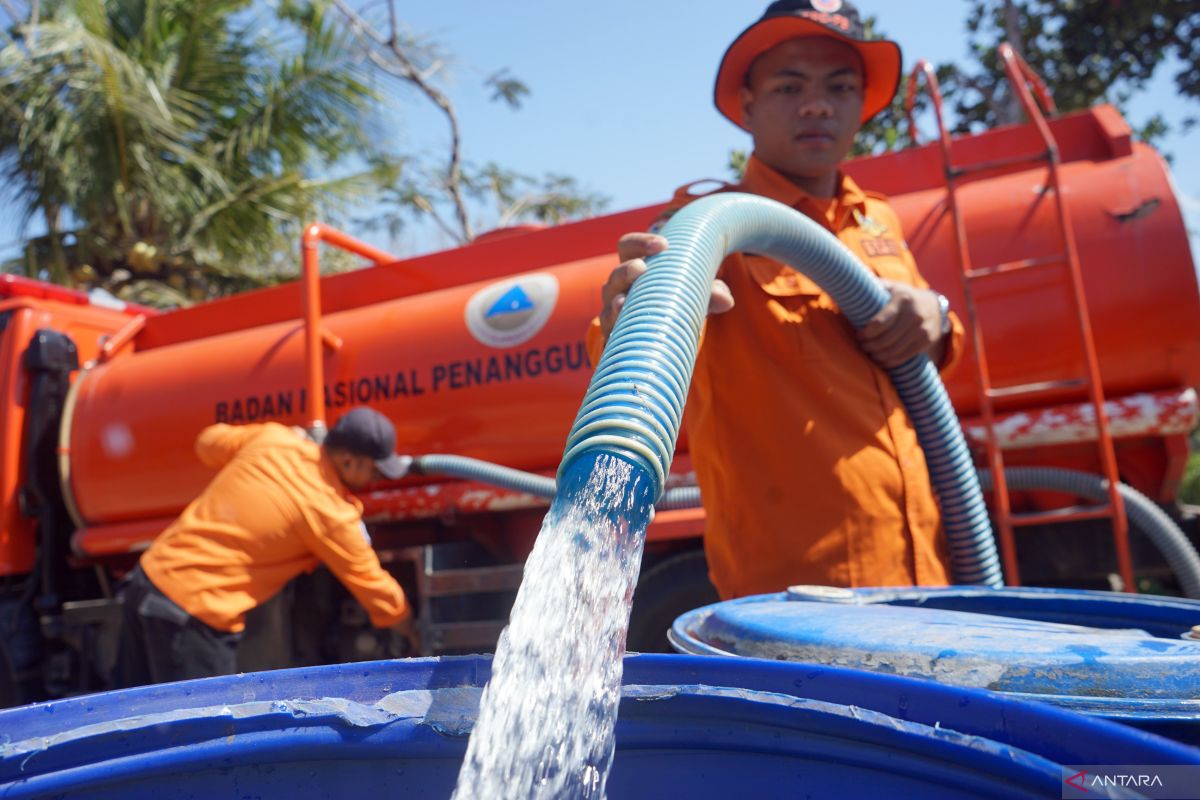
Water is not enough just to arrive. It must be available when needed, stored when abundant, and accessible in a proper manner as the seasons change.
Surabaya (ANTARA) - Clean water arrives via water tankers when wells run dry, reservoirs begin to empty, and residents must wait their turn. In many areas of East Java, such scenes are once again becoming a part of the dry season.
As of 16 September 2026, 24 regencies/cities in East Java have declared drought emergency status. Among them, 22 regencies have received clean water supplies from the East Java Provincial Government.
The scale of this indicates that drought is no longer an issue for just one or two villages. It has become a cross-regional problem that demands multi-layered government action, from distributing water for immediate needs to ensuring water sources remain available when the dry season returns.
The Meteorology, Climatology, and Geophysics Agency (BMKG) East Java Climatology Station predicts that the peak of the 2026 dry season occurs dominantly in August and September. BMKG also noted that the El Niño condition in September is in a very strong category, and dry atmosphere still dominates most of the southern Indonesian regions.
Therefore, the important question is not merely how many water tankers are in motion, but how far these distributions can bridge the gap for the community towards a water supply system that is more resilient to the dry season.
Tankers arrive
Local governments indeed have no choice but to provide aid when water becomes an urgent necessity. In Sampang, for example, clean water assistance was provided to 951 households, or 4,254 individuals, using two tankers with a capacity of 5,000 litres each. The government also distributed reservoirs and jerry cans so that water could be stored by residents.
In Blitar, water distribution was directed, among others, to the residents of Wonosari Hamlet, Tugurejo Village, Wates District. Previously, the East Java Provincial Government prepared clean water support for 38,270 households, or 98,946 individuals, affected across seven districts.
In Ngawi, the Regional Disaster Management Agency (BPBD) recorded that distribution reached 606,000 litres since 2 August 2026 to 1,884 residents in 15 villages across seven districts. Distribution is carried out repeatedly, even three to four times a day, depending on community demand.
This picture shows that water distribution is not a simple task. It involves fleets, fuel, water sources, distribution routes, storage facilities, field personnel, and inter-agency coordination that must move in unison.
Therefore, tanker assistance remains important as an emergency response. However, the objective must be clear. Aid should be understood as a bridge towards recovery, rather than a condition allowed to become a permanent pattern every dry season.
Furthermore, water needs do not stop at drinking. Households require water for cooking, bathing, washing, sanitation, religious observances, and economic activities. This means that water shortages can impact the quality of life far more broadly than just the difficulty of obtaining drinking water.