
Water Fleas' Predator-Repelling Armour Secret Finally Revealed
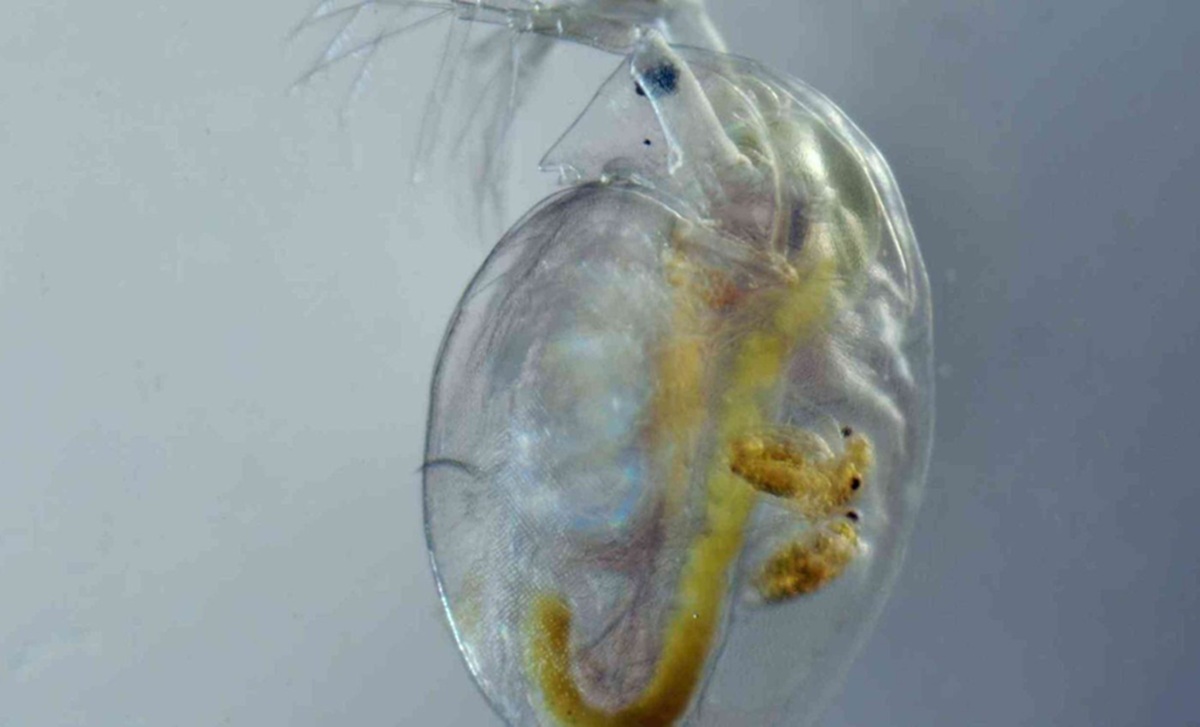
A water flea (Daphnia) raised in safe water can still grow armour to defend against predators it has never encountered before, with its body shape shifting, head helmet swelling, and tail spines elongating.
This unique phenomenon in freshwater crustaceans is triggered not by physical attacks or visual cues, but by faint chemical traces in the water. The chemicals released by predators are called kairomones, which inadvertently broadcast their presence while prey silently detect them.
Although biologists have long known about this body response, the initial process of converting dissolved molecules into growth signals remained a mystery. A research team from Ruhr University Bochum (RUB) in Germany has now solved it.
Published in the journal Proceedings of the Royal Society B, scientists observed three Daphnia species facing different predators. This precision proves water fleas do not merely respond to general threats but encode specific molecules from each hunter.
Led by Professor Linda C. Weiss, the team focused on ionotropic receptors — molecular gates that open when a matching chemical key attaches. They examined two receptor proteins, IR25a and IR93a, which anchor sensory structures to the cell membrane.
Using RNA interference, researchers injected small RNA fragments to block these proteins’ production. Test subjects grew and ate normally but lost molecular sensors on their antennules.
When exposed to predator chemicals, intact-genome water fleas immediately grew armour. Those with disabled genes showed no changes, remaining unarmoured like those in predator-free tanks.
“Until this paper was published, no one had demonstrated that silencing these specific genes completely removes Daphnia’s defenses,” the study stated.
For Professor Weiss, the implications extend beyond crustacean biology. Climate change warming ponds and altering water chemistry could disrupt predator-prey chemical relationships, causing water fleas to stop building defences.
This could lead to population crashes and freshwater food chain collapse. The discovery of these key proteins allows scientists to further investigate how freshwater ecosystems withstand emerging chemical signals.
A new study shows how sensory networks in ancient fish exoskeletons relate to a “genetic toolkit”.
Source: jawawa.id (https://jawawa.id/newsitem/water-fleas-predator-repelling-armour-secret-finally-revealed-1780079139)
Originally published by Media Indonesia (https://mediaindonesia.com/humaniora/894922/rahasia-kutu-air-tumbuhkan-baju-zirah-pengusir-predator-akhirnya-terungkap), translated from Indonesian