
Water Conservation Must Become a Habit, Not Just a Lesson
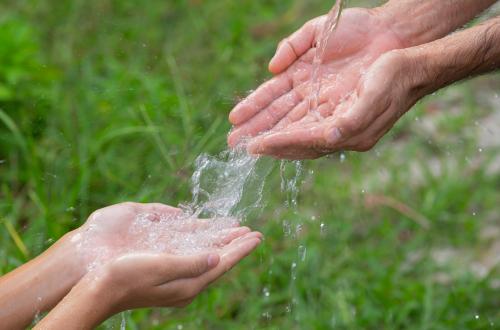
The dry season once again reminds us of a problem that often only registers when water becomes hard to obtain: water is not an unlimited resource. When water flows freely from the tap, we tend to use it without much thought. Taps are left running whilst washing hands, excessive water is used to hose down yards, and even small leaks are sometimes left unattended for days.
The problem is not merely water availability. It also lies in human behaviour in using water. Water-saving education is not sufficient if it only imparts knowledge about the water cycle, the dry season, drought, or the importance of protecting the environment. Children need to experience, practise, measure, and build habits of using water wisely.
Schools are in a strategic position to bring about this change.
Do Not Stop at Theory
Environmental education in schools has often ended at knowledge. Pupils know that water is essential to life. They can explain the water cycle and can probably answer questions about environmental conservation. But the more important question is: does that knowledge change behaviour?
A pupil may score highly in environmental lessons, yet still leave the tap running once outside the classroom. They know water matters, but do not necessarily have the habit of saving it. Education needs to move from knowing to doing, and further still, to being.
Pupils should not only know that water must be conserved, but actually practise conservation and ultimately make water saving part of their character and way of life. For example, schools can launch a simple movement: every pupil ensures taps are closed after use; reports leaks; uses only enough water when washing hands; reuses still-serviceable water to water plants; and calculates how much water can be saved in a week.
These simple activities can become a very real educational laboratory.
Learning from Singapore
Singapore’s experience is worth noting. The country has limited water resources, so water education is not treated as mere theory. PUB (Public Utilities Board), Singapore’s national water agency, working with schools and the education ministry, has developed water-saving awareness and behaviour from an early age. Its programmes are tailored to each level of education, from pre-school to university. The PUB holds comprehensive, integrated responsibility for drinking water supply, wastewater management and flood control.
What is interesting is the approach taken. Pupils are not merely told why water matters; they are invited to conduct water audits, field activities, project-based learning, and even water restriction simulations. In some programmes, schools even hold water rationing exercises. In these drills, certain water points are closed so pupils directly experience how life changes when access to water is limited. The experience is then followed by reflection and conservation activities.
One example is Mee Toh School. The school formed a water efficiency management team, conducted water usage audits, integrated water issues into learning, and involved pupils in conservation activities. The result was more than a change in knowledge. The school’s water usage fell by around 30 per cent between 2019 and 2022. The programme is part of the Applied Learning Programme (ALP) in environmental management. For its outstanding commitment, this primary school in Punggol won the Singapore government’s highest award for water governance, the Singapore Watermark Award.
Another example shows that pupils can become water ambassadors. They learn not only for themselves, but also encourage friends and family to save water. Even in 2026, a number of Singaporean schools continue to use water restriction simulations, educational games, student projects and experience-based activities to build water awareness.
Australia: Children Become ‘Waterwise’
Australia’s experience also offers lessons. In Western Australia, the Water Corporation has run the Waterwise Schools programme for three decades. The programme began in 1995 and by 2025 had reached more than 431,000 pupils. Its aim is not merely to provide information about water, but to build long-term water-saving behaviour.
The programme connects water learning with daily life. Pupils learn where water comes from, how it is used, why conservation matters, and what simple actions can be taken.
More interestingly, schools are encouraged to have an action plan called the Waterwise School Action Plan. It includes activities such as leak inspections, appointing pupils as monitors or junior water inspectors, regularly measuring school water usage, water audits, rewarding pupils who demonstrate water-saving behaviour, and appointing sustainability ambassadors.
In 2026, the learning programme continues through interactive activities. More than 700 pupils in the Karratha area, for instance, took part in learning about water sources, local environmental conditions and conservation habits they can take home.
A Consistent Movement
Indonesia naturally has a different context. We are not Singapore, nor Australia. But the educational principles can be adapted. Indonesian schools can start with something very simple, such as measuring water use before teaching how to save it.
Every school can have a ‘Water Friends Team’ comprising pupils, teachers, education staff and school managers. Its task is to carry out simple audits: how much water is used, where waste occurs, whether there are leaks, and which activities consume the most water. Targets can then be set — for example, the school aims to cut water use by 10 per cent in three months. Pupils can act as tap inspectors, record water usage, make posters and short videos, remind their friends, and report savings at school assemblies or meetings.
Mathematics can be used to calculate water volumes. Science covers the water cycle and water quality. Social studies discusses water’s connection to people’s lives. Indonesian language is used to run campaigns. Art is used to make posters. Character education builds responsibility.
Water-saving education will not be effective if it happens only during the dry season or on World Water Day. The government needs to make it a sustained movement. The relevant ministries, regional governments, schools, water resource managers, the business community and society can build a programme called, for instance, ‘Water-Wise Schools’.
The indicators need not be complicated, as complexity would make them harder to achieve. For example: the existence of water audits, recording of water usage, leak control, consumption reduction targets, student involvement, project-based learning activities, and family participation.
Successful schools should not only be rewarded for having the most attractive posters. More importantly, schools should be able to demonstrate that their community’s behaviour has changed and water usage has become more efficient.
Ultimately, saving water is not just a slogan, but a behaviour that must be trained. A child who, from their school years, is used to closing taps, using water sensibly, reporting leaks, using water wisely and reminding their family, will carry these habits into adulthood.
What is being done is not merely teaching children to save a few litres of water, but building a generation that understands every drop has value. That is why it is time for water education to move from ‘children know water matters’ to ‘children practise saving water’.