
Waste4Change at ESG NOW 2026 Identifies Three Key Waste Management Challenges
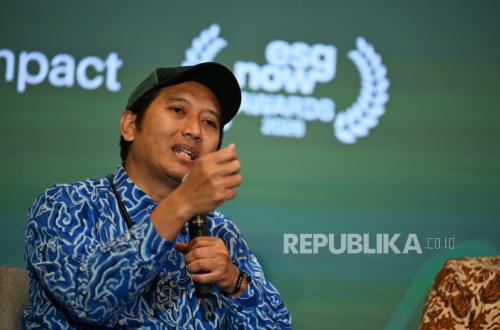
JAKARTA — Waste4Change founder and chief executive Mohamad Bijaksana Junerosano has identified three key waste management challenges that need to be addressed: governance, partnerships and financial arrangements.
“Indonesia is facing a waste emergency. Data from the Ministry of Environment shows that only 25 per cent of waste is managed, while 75 per cent across the country is unmanaged. So we still have waste being dumped indiscriminately in rivers, the sea, vacant land and elsewhere,” Bijaksana said at the ESG NOW Forum & Awards 2026, organised by Republika at Hotel Borobudur in Jakarta on Monday (19 October 2026).
He said waste management remained problematic even in the capital, Jakarta, where hectares of land were still occupied by piles of rubbish. This also raised questions about the situation in the future capital, Nusantara. The key issue, he said, was governance.
“We are not short of technology, solutions or experts. Many people could help solve the waste problem. But we lack one system: governance. The first priority is ensuring that regulations already in place are enforced,” he said.
Indonesia was good at drafting regulations and documents, he said, but often lacked the tactics, strategy and capacity to enforce the law in a structured and systematic way.
The second priority, he said, was clear partnerships between stakeholders. Private companies such as Waste4Change were willing to invest in municipalities, but local governments were often unsure how to accommodate them. When a private company invests in collection vehicles and other equipment, waste fees are often treated as a target for locally generated revenue (PAD), raising concerns that private-sector participation could affect the government’s revenue target.
Bijaksana said these conflicts had been raised with the central government, with the aim of creating more scope for private investment.
“The third, and most crucial, issue is the financial arrangement. Who will fully fund operations across the entire process, from upstream to downstream — local government budgets, fees, or Extended Producer Responsibility (EPR)?” he said.
Learning from Indore in India
Bijaksana said Waste4Change had spent the past two years studying Indore, a city in India that has been named the country’s cleanest city for eight consecutive years.