
Waste-to-Energy Project with European Standards Officially Begins Construction in Bali
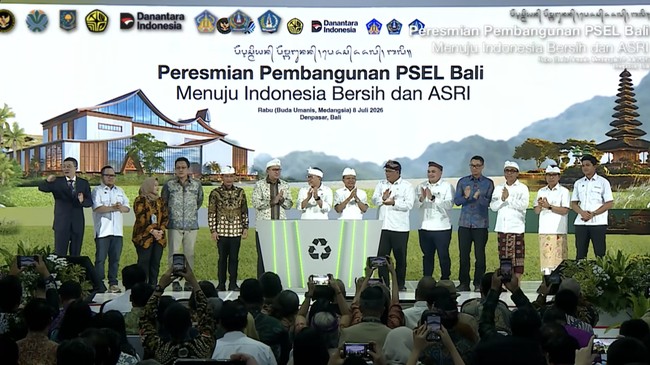
The Danantara Indonesia Investment Authority (BPI Danantara) has officially commenced the construction of the Denpasar Raya Waste-to-Energy (PSEL) project in Bali, which is designed to adhere to European environmental standards.
Chief Investment Officer of Danantara Indonesia, Pandu Sjahrir, stated that the project’s launch was marked by the signing of a Power Purchase Agreement (PPA) on Wednesday, 8 July 2026. “Today, the Denpasar Raya PSEL has entered a crucial phase through the signing of the Power Purchase Agreement and the inauguration of its construction. This signifies readiness to drive the realisation of an integrated waste management solution in Indonesia, starting in Greater Denpasar,” Pandu said during the inauguration ceremony.
He noted that the Bali PSEL facility is designed with reference to the European Industrial Emissions Directive (EU IED). The adoption of this standard is expected to ensure that the waste processing is environmentally friendly. “This Bali PSEL is designed to deliver tangible impacts on waste management, green energy, and the local economy by advancing with the European Industrial Emission Directive environmental standard,” he added.
Pandu explained that the facility is targeted to process more than 500,000 tonnes of waste per year, accounting for over 40 per cent of the waste generated in Bali. The project is also projected to reduce emissions from final processing sites by up to 80 per cent and cut carbon emissions by approximately 640,000 tonnes of CO2 annually. “From an energy perspective, this initiative will generate green energy capable of supplying the needs of around 100,000 households in Bali. Valued at IDR 3 trillion, this initiative is estimated to create 1,200 green jobs and reduce the need for landfill space by about 80 per cent,” he concluded.
Chief Executive Officer of BPI Danantara, Rosan Roeslani, said the waste problem is a shared societal issue that must be resolved quickly to avoid becoming a future burden. He emphasised that the project is not solely about generating electricity but also positively impacts environmental, health, and safety aspects, as well as good governance.
“Without collaboration and synergy from all of us, the central government, regional governments, and Danantara, this very positive initiative would not be able to proceed or be implemented well and quickly,” Rosan stated.
He revealed that the technology to be used has been proven in 50 countries and is capable of processing all types of waste, both new and old. Rosan expressed hope that through this project, Indonesia’s environmental cleanliness could match that of developed nations like China and Japan. He recounted visiting a similar facility in China that was located in the middle of an elite residential area, akin to Pondok Indah, yet remained clean and odourless, with a reading park and children’s recreation area built behind it. He is targeting the PSEL to be operational faster than the scheduled first half of 2028.