
Waste-to-Energy Project Officially Launched, Tariff Set at 20 US Cents/kWh
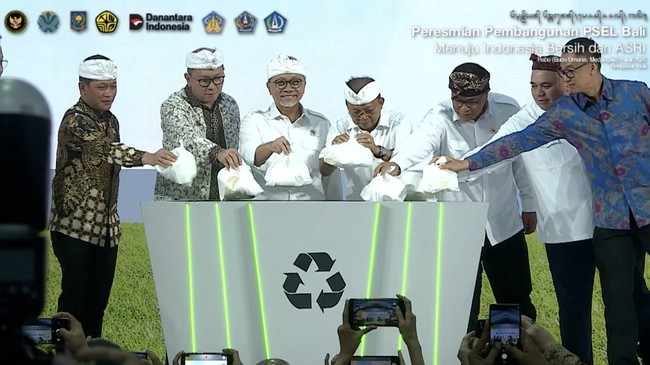
Indonesia, through the Investment Management Agency (BPI) Danantara, has officially commenced the construction of a Waste-to-Energy (PSEL) project in Greater Denpasar, Bali, marked by the signing of a Power Purchase Agreement (PPA) and a groundbreaking ceremony on Wednesday (8/7/2026). The development of this PSEL follows the issuance of Presidential Regulation Number 109 of 2025 concerning Urban Waste Management through Environmentally Friendly Technology-Based Waste-to-Renewable Energy Processing. During the groundbreaking ceremony, Coordinating Minister for Food Zulkifli Hasan revealed that the project had previously progressed slowly due to numerous regulatory obstacles. He stated that the government had finally resolved several hindering regulations, allowing the project to be realised. Zulhas noted that the Coordinating Ministry for Food’s task is to assist technical ministries in simplifying various regulations so that strategic government programmes can proceed more quickly. ‘We at the Coordinating Ministry for Food help Technical Ministries so that these rules are not complicated. We resolved 33 regulations, including Government Regulations, Presidential Regulations, Presidential Decrees, and Presidential Instructions, including this waste issue, 33 that we sorted out,’ Zulhas said. Beyond regulations, Zulhas disclosed that discussions regarding the electricity tariff from the PSEL project were also protracted. He explained that the tariff determination involved the government, PT PLN (Persero), and the Minister of Investment and Downstreaming/Head of BKPM who is also CEO of Danantara, Rosan Perkasa Roeslani. According to Zulhas, the President Director of PLN initially proposed a tariff in the range of US$ 18-20 cents per kilowatt-hour (kWh). After a series of discussions and negotiations, all parties finally agreed on a tariff of US$ 20 cents per kWh. Danantara Indonesia’s Chief Investment Officer, Pandu Sjahrir, previously stated that the partner selection process for the PSEL project was conducted through a series of rigorous stages. The proposal evaluation took place from 2-30 January 2026, followed by negotiations from 31 January to 23 February 2026, and concluded with the signing of a Joint Venture Agreement on 2 March 2026. He noted that out of six consortia that submitted proposals, two successfully passed the evaluation and proceeded to the negotiation process, demonstrating an effective screening process that emphasised the principle of prudence. Danantara has also achieved several key milestones, including the signing of a cooperation agreement with the Bali Regional Government on 21 April 2026 and the designation of the project as a National Strategic Project (PSN) on 22 May 2026. Pandu stated that the Greater Denpasar PSEL has entered a crucial phase with the signing of the Power Purchase Agreement and the groundbreaking, marking readiness to drive the realisation of an integrated waste management solution in Indonesia starting in Greater Denpasar. The facility is targeted to process more than 500,000 tonnes of waste per year, or over 40% of Bali’s waste accumulation. The project is also projected to reduce emissions from final processing sites by up to 80% and cut carbon emissions by approximately 640,000 tonnes of CO2 per year. ‘From an energy perspective, this initiative will produce green energy capable of supplying the needs of around 100,000 homes in Bali. This initiative is valued at Rp 3 trillion, estimated to create 1,200 green jobs and reduce landfill land requirements by around 80%,’ he concluded.