
Waste-to-Energy Programme Requires Public Participation to Succeed
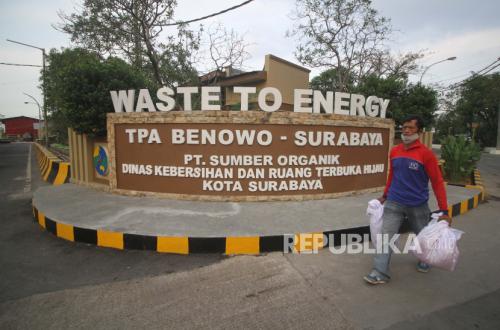
Waste-to-Energy (WtE) technology is considered a potential solution for national waste management if applied through a comprehensive, transparent approach that meaningfully involves the public. Beyond technology, strengthening governance and waste sorting at the source are critical factors for successful implementation.
Sustainability provocateur and Founder of Social Investment Indonesia, Jalal, stated that WtE can complement existing waste management efforts, from waste reduction and recycling to composting and residue utilisation. “Waste-to-Energy can be a legitimate part of Indonesia’s waste management solution, but it must not be positioned as the sole solution. Its success depends heavily on waste sorting at the source, the involvement of affected communities, the integration of waste pickers, and publicly verifiable environmental management transparency,” Jalal said in an interview on Friday (26/6/2026).
According to Jalal, the challenge of waste management in Indonesia lies not only in technology but also in the characteristics of the waste, which is dominated by organic material with high moisture content. Therefore, the construction of WtE facilities must go hand in hand with strengthening a culture of waste sorting at the household, commercial, and industrial levels.
Jalal assessed that the involvement of affected communities must be an essential part of every WtE project. In addition to receiving open information, the public should also experience the economic, social, and environmental benefits of the facility. “Public participation is not merely a formality in the licensing process. Local residents must be involved from the planning stage, have access to transparent emissions information, and receive tangible benefits from the project. Without this, WtE risks losing the social legitimacy that is the foundation of its sustainability,” he said.
He added that several countries have demonstrated that WtE can operate safely if supported by strong regulations, transparent oversight, and an effective waste management system. With a similar approach, WtE is considered capable of helping to reduce the burden on final processing sites, curbing methane emissions, and supporting national waste management targets.
“WtE can also mitigate the risk of methane emissions and support fairer and more sustainable national waste management targets, but only if robust environmental and social safeguards are truly enforced,” Jalal said.
In a separate occasion, Chief Executive Officer of Denera and Director of Investment at Danantara Investment Management (DIM), Fadli Rahman, said that the success of WtE also requires strong governance and multi-stakeholder collaboration. “First, we maintain very strict governance. Second, we learn from other countries and attract global investors to invest in Indonesia. Third, we ensure that collaboration with local governments and local parties runs well, including maximising the use of local labour,” Fadli explained.
Fadli invited the public to support all waste management efforts from upstream to downstream. He noted that the waste issue has evolved into a long-term challenge requiring the involvement of all elements of society. “We humbly invite the entire community to support every waste handling effort, whether small or large scale, from upstream to downstream, from waste sorting to the application of various technologies, both old and new. Because the waste issue is no longer just today’s problem. It has become a generational issue and has developed into a social issue that will determine our quality of life in the future,” Fadli said.
For context, Danantara Indonesia established PT Daya Energi Bersih Nusantara (Denera) on 1 April 2026 to consolidate investment, development, and operations of Waste-to-Energy projects in Indonesia through a Business Entity Developer and Operator scheme with consortium partners.