
Waste Reduced, Bekasi Could Become Brighter from This Rp 3 Trillion Project
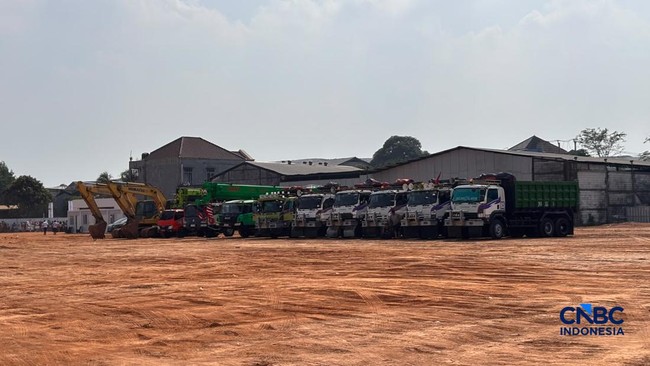
Bekasi, CNBC Indonesia - The Daya Anagata Nusantara Investment Board (BPI Danantara) has inaugurated the construction of a Waste-to-Energy Processing Facility (PSEL) worth Rp 3 trillion in Bekasi City. The facility is being built to address the problem of waste accumulation in the area while generating electricity that will be supplied directly to households in the Bekasi region.
Danantara CIO Pandu Sjahrir stated that the Bekasi PSEL project represents one of the integrated waste processing solutions that has undergone rigorous technical evaluation. Its construction is being managed professionally, involving dozens of experts from various countries to ensure the quality of the project.
“This project is targeted to be able to manage more than 500,000 tonnes of waste per year, or around 70 per cent of the waste generated in Bekasi City. From an environmental perspective, the Bekasi City PSEL is also projected to reduce waste emissions from the final disposal site by up to 80 per cent and reduce carbon emissions by 640,000 tonnes of CO2 equivalent per year,” he said at the Groundbreaking Ceremony for the Ciketing Udik PSEL Project, Bekasi, Wednesday (26/8/2026).
The Bekasi PSEL is projected to be able to meet the electricity needs of 55,000 households in the area. In addition, Pandu mentioned that the investment is targeted to reduce landfill land use by up to 90 per cent and open 1,000 new jobs for the community.
“This initiative will produce green energy that can supply the needs of 55,000 households in Bekasi City. And this initiative, valued at Rp 3 trillion from an investment perspective, is estimated to create around 1,000 green jobs and reduce landfill land requirements by around 90 per cent,” he added.
Meanwhile, President Director of PT PLN (Persero) Darmawan Prasodjo has allocated the entire electricity supply from the waste processing results specifically to meet the energy needs of Bekasi City.
To support this, PLN is building a substation infrastructure located 5 kilometres from the project site so that electricity distribution to residential areas becomes more efficient.
“It turns out the electricity load in Bekasi is high, so we are dedicating the electricity from the Bekasi PSEL for Bekasi City. We are building a substation that is only 5 kilometres from here because this is only 27 megawatts with 36 installed, so this uses ordinary electricity poles to the substation, and that substation is specifically specialised for Bekasi City,” said Darmawan on the same occasion.
PLN has calculated the electricity price from the project to be in the range of 20-24 US dollar cents per kWh, taking into account land acquisition cost factors. According to him, the main focus of the collaboration is to create a cleaner environment, while the electricity generated is a by-product of the process.
“We can convey here that the main product is not electricity, but the main product is a clean environment. Electricity is merely a by-product of this programme. The Letter of Intent with this PPA, in PLN’s history, usually takes 90 days, but this is running in parallel,” he added.
Meanwhile, Coordinating Minister for Food Zulkifli Hasan stated that his ministry is simplifying waste management regulations to facilitate investment in the renewable energy sector. The government is cutting hundreds of regulations down to just three main regulations so that the handling of the waste accumulation in Bekasi, which reaches 1,800 tonnes per day, can be resolved more quickly.
“The regulations regarding waste management, waste to energy. There are more than a hundred regulations, Sir. That is why in 11 years there have only been two. We are tidying this up. From here, only three remain. We are overseeing the entire process until it can be implemented like this,” said Zulkifli on the same occasion.
In addition, West Java Governor Dedi Mulyadi also welcomed the operation of the PSEL facility to address the waste accumulation crisis in the Bekasi City area. His administration is ready to provide support in the form of forest land provision through a long-term lease scheme to guarantee the stability of regional waste management.
“Regarding the existing forest area, if it is indeed needed for waste management and if PT Perhutani requires costs as rent, the West Java Provincial Government is willing to provide rent for the next 30 years,” Dedi concluded.
The Daya Anagata Nusantara Investment Board (BPI Danantara) has inaugurated the construction of the waste-to-energy processing facility (PSEL) in Ciketing Udik, Bantar Gebang, Bekasi City, West Java.
Danantara, through PT Danantara Investment Management (DIM) and PT Daya Energi Bersih Nusantara (Denera), is collaborating with Project Implementation Business Entity (BUPP) PT Wangneng Bekasi Environment Nusantara in developing the project.
The existence of the Bekasi PSEL is projected to absorb 1,000 workers and reduce carbon emissions by 640,000 tonnes of CO2 equivalent per year.
The inauguration of the second PSEL construction is part of Danantara’s efforts to carry out the mandate of urban waste management through environmentally friendly technology as mandated in Presidential Regulation No. 109 of 2025.
The facility in Bekasi City is the second project to commence construction after the start of the Denpasar Raya PSEL construction in July 2026. The waste to be managed will come from the Sumurbatu Final Disposal Site (TPA), which is a landfill specifically accommodating waste from Bekasi City.
The Bekasi City PSEL is targeted to operate by mid-2028. Based on Presidential Regulation No. 109 of 2025, the electricity generated will be purchased and distributed to PLN.
As part of the Bekasi City PSEL inauguration, a Power Purchase Agreement (PPA) was signed with PT PLN (Persero).
The agreement serves as the commercial foundation for the absorption of electricity generated from the Bekasi City PSEL facility.