
Waste-processing technology at source is key to circular economy
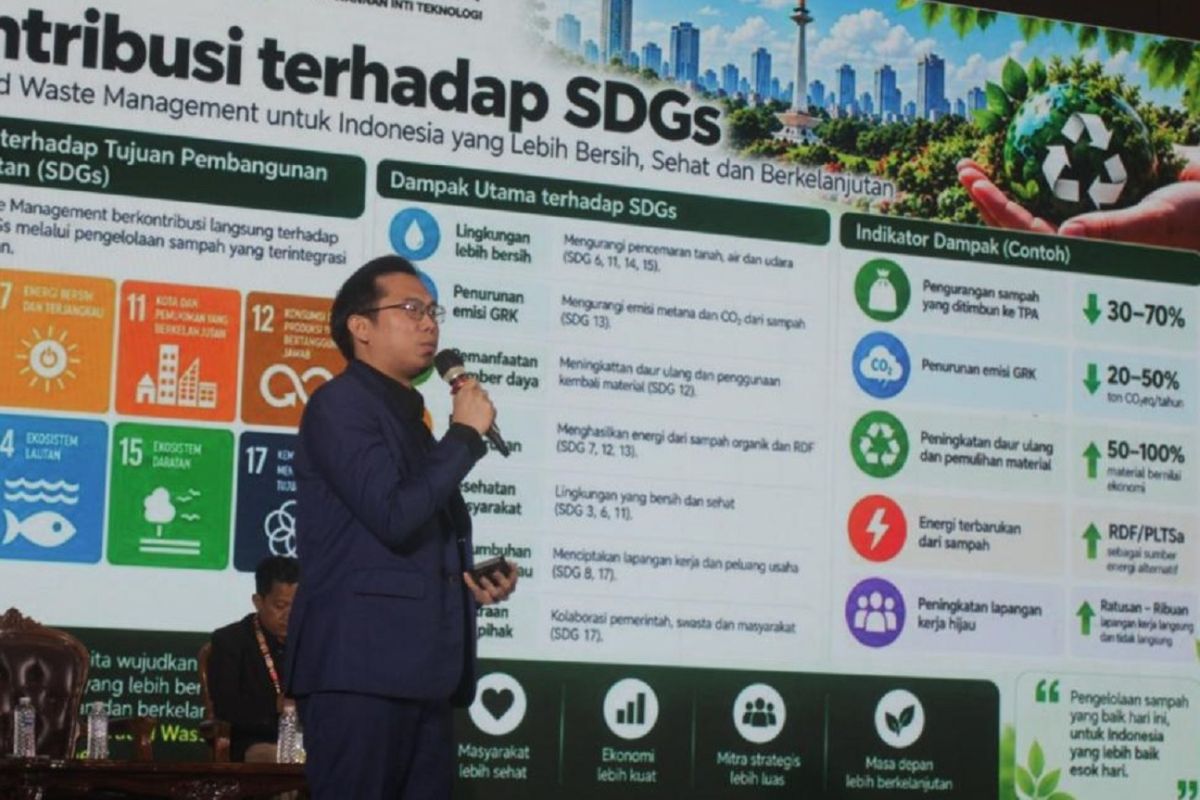
Jakarta (ANTARA) — Developing waste-processing technology at source is seen as one way to support the implementation of a circular economy in Indonesia.
PT Wannan Inti Teknologi (WIT) director Jeremy Wijaya said organic-waste management should not focus solely on collection and disposal, but should also include efforts to process and reuse materials that retain value.
“This requires processing solutions that can reduce waste mass while creating opportunities to use the processed output,” Jeremy said in a statement in Jakarta on Friday.
He described biochemical chamber technology as one alternative for processing organic waste, from business-scale operations to industrial facilities.
Citing data, he said Java accounts for around 58.7 per cent of the country’s total waste. Against this backdrop, processing organic waste where it is generated — including at hotels, restaurants, food and beverage industries, and commercial areas — is one option for reducing pressure on conventional waste-management systems.
Organic waste has characteristics that require special handling, including high moisture content and the potential to produce odours as it decomposes.
However, he added, with proper management the material could also be processed into a resource for reuse.
To meet this need, Jeremy introduced an integrated processing system that includes sorting and the treatment of solid fractions using a biochemical chamber machine.
The technology is available in input capacities ranging from 30 kilograms to 120 tonnes a day, depending on the model and unit specifications.
“With a biochemical chamber machine, mass can be reduced by 80 per cent within 24 hours. The output of this mass reduction can be used as planting media, help stabilise soil pH, improve nutrient content and support land reclamation,” Jeremy said.
Reducing the material’s mass also offers the potential to make the handling of processed output more efficient.
Processing waste at source is one way to support a circular economy by optimising the use of waste as a valuable resource.
He said organic waste had often been regarded as a burden to be discarded, even though, with proper processing, it could become a resource that can be used sustainably.
“Reusing these resources supports a circular economy in society,” Jeremy said.
Meanwhile, PT Indonesia Environment Consultant chief executive E. Kurniawan Padma expressed hope for sustainable production through responsible consumption, sorting, processing, recycling and material recovery.