
Waste management at Bagek Kembar Beach supports sustainable tourism
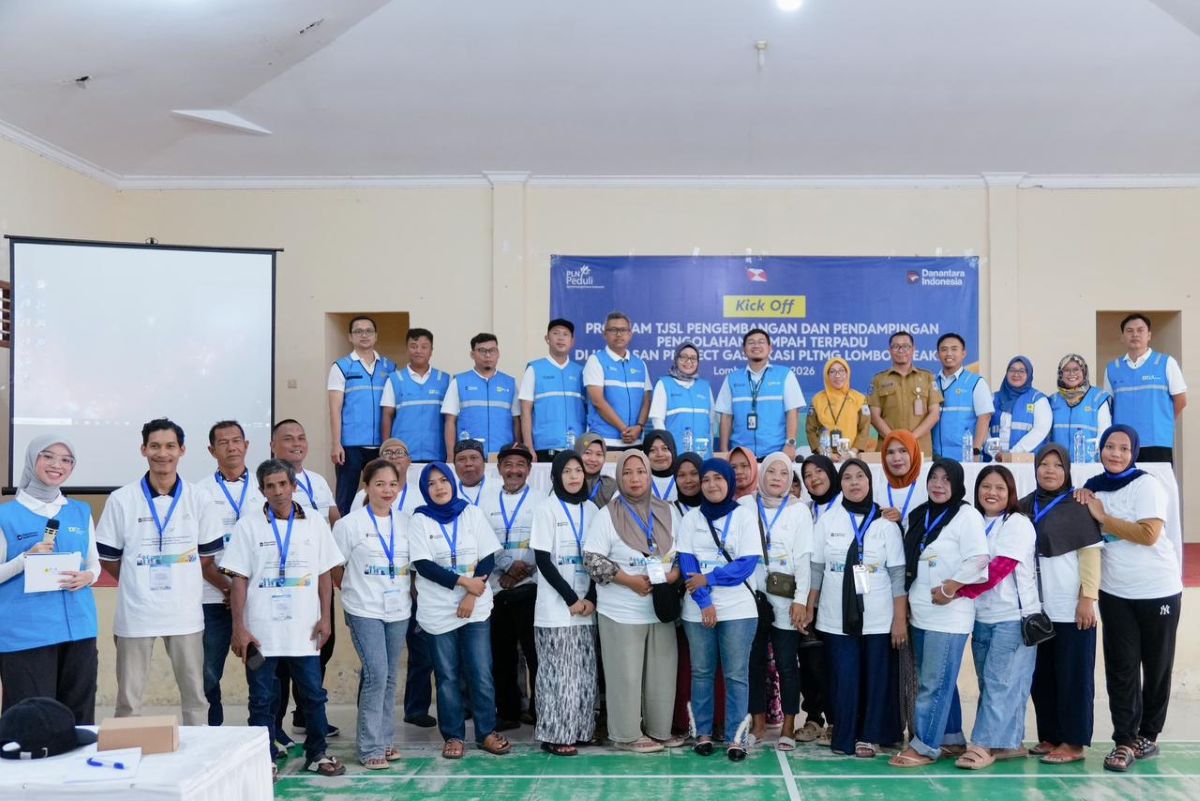
An integrated waste management programme is being strengthened in the Bagek Kembar Beach tourist area, Mataram, as an effort to reduce coastal waste generation and to curb greenhouse gas emissions through a circular economy approach and community empowerment. The programme is implemented by PT PLN Energi Primer Indonesia (EPI) together with PT Pelayaran Bahtera Adhiguna in the area around the Lombok Peaker gasification project site and involves a range of stakeholders, from local government, the Pokdarwis (community tourism awareness groups), to the PLN Group.
Mamit Setiawan, Corporate Secretary of PT PLN EPI, said the programme is part of the company’s social and environmental responsibility (TJSL) commitment to support the development of clean and sustainable coastal tourism areas.
‘This programme is part of PLN EPI’s TJSL commitment to support the development of coastal tourism that is clean, sustainable, and community-empowered. We want to create real impact not only for the environment but also for enhancing the capacity and economy of the surrounding community,’ he said.
According to Mamit, the increasing tourism activity in coastal areas also drives higher waste volumes, so an integrated management system from upstream to downstream is needed.
Therefore, the programme includes training in sorting organic and inorganic waste, strengthening the Pokdarwis institutions, developing maggot farming, and providing facilities and infrastructure for integrated waste management.
‘This programme is also a joint effort to promote the circular economy concept, whereby waste is no longer viewed solely as waste but as a resource that can be processed into economically valuable products such as organic fertiliser or maggot farming,’ Mamit said.
Meanwhile, Hengky Purbo Lesmono, Manager of PLN UP3 Mataram, said that the success of development is not only measured by the availability of energy infrastructure but also by the positive impacts felt by the community and the surrounding environment.
‘PLN UIW NTB is strongly committed to continuing to be a company that not only provides reliable electricity but also is part of social and environmental solutions in the community,’ Hengky said.
Lurah (village head) Nani Nurkomala of Tanjung Karang Permai assessed that the waste problem in the coastal tourist area requires involvement of all parties because it relates directly to environmental cleanliness and tourist comfort.
‘Though the smallest efforts we make in waste management will be meaningful. We are all waste producers, so we also have a responsibility to manage it properly,’ Nani said.
She added that education on sorting organic and inorganic waste must continue so that the amount of waste sent to the final processing site (TPA) can be reduced.
Head of the Waste Reduction Section, Mataram City Environmental Agency, I Made Wibisana Gunaksa, noted that Mataram City produced around 311 tonnes of waste per day in 2025 and the majority still relied on the TPA.
‘Of that 311 tonnes, more than 70% still depends on the TPA. Only around 28% can be managed by the community and the city government. This is a collective task,’ he said.
He said that upstream waste management is an important step to reduce the volume of waste entering the TPA while also cutting greenhouse gas emissions, especially methane from landfill.
‘This activity supports carbon and methane emission reduction from waste piling up at the TPA. Waste processing is one of the concrete steps to reduce the impact of climate change,’ he said.
Head of Pokdarwis Bagek Kembar, H. Sukendi, appreciated the support given to strengthen waste management in the coastal tourism area.
‘This programme helps the community and tourism players in the coastal area. We hope that education and mentoring like this will continue so that the community becomes more aware that waste managed well can protect the environment while also providing economic value,’ Sukendi said.
The integrated waste management programme is part of the company’s commitment to environmental, social, and governance (ESG) principles, particularly through emissions reduction, strengthening the circular economy, and empowering communities around the company’s operational area. (E-3)