
Waskita Karya Showcases Infrastructure Legacy in Jakarta's 499th Anniversary
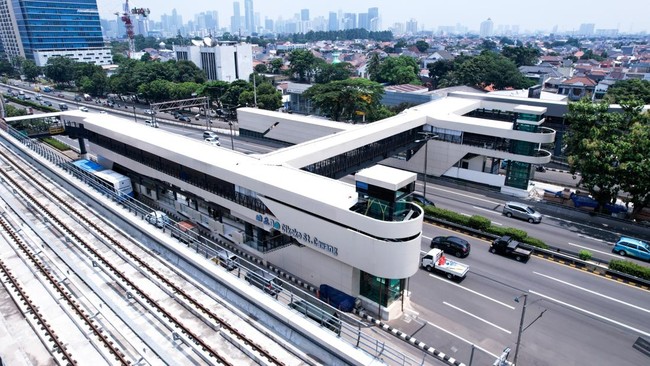
PT Waskita Karya (Persero) Tbk (WSKT) continues to play a crucial role in shaping Jakarta as the nation’s centre of government, business, and economy. In line with its transformation into a modern and sustainable global city, Waskita Karya is completing the LRT Jakarta Phase 1B Velodrome-Manggarai project, which will become a key driver of urban connectivity. The Rp 4.1 trillion project, owned by PT Jakarta Propertindo (Perseroda), will connect East Jakarta and Central Jakarta while strengthening intermodal integration at Manggarai Station, Indonesia’s largest transport hub. The presence of this LRT line is expected to further encourage the public shift to public transport, reduce congestion, boost productivity, and support carbon emission reduction targets in the metropolitan area.
“Jakarta is not only the centre of government and business, but also the epicentre of national economic growth that continues to move and transform. It is a city where millions arrive carrying hopes, dreams, and the spirit to build a better future. Waskita Karya is therefore honoured to be part of Jakarta’s long development journey through various infrastructure works that support mobility, productivity, and the quality of life of the community,” said Waskita Karya Corporate Secretary Ermy Puspa Yunita in an official statement on Tuesday (23/6/2026). According to her, infrastructure development not only delivers physical connectivity but also creates sustainable economic and social impacts. On that basis, Waskita remains committed to delivering quality infrastructure that strengthens Jakarta’s competitiveness as a global city while providing tangible benefits to the wider community.
Waskita Karya’s track record of contribution to Jakarta’s development began in 1973 and continues to this day. Over more than five decades, the company has delivered various infrastructure that has become part of daily life, ranging from public transport facilities, skyscrapers, health facilities, and business centres, to buildings with historical and social value for the nation. One work that has become a new icon of Jakarta’s public space is the Transjakarta Tosari Bus Stop. Located precisely in the Bundaran HI area, the stop’s cruise ship-like design not only functions as a modern transport node but has also become a favourite destination for the public to enjoy the panorama of Central Jakarta. “Tosari Bus Stop shows that infrastructure today must not only be functional but also capable of delivering new experiences for the community. From the top of the stop, residents can enjoy Jakarta’s landscape from a different perspective while seeing firsthand the modern face of the capital,” said Ermy.
In supporting urban transport transformation, Waskita also revitalised several strategic stops such as Dukuh Atas 1 and Cikoko, which are integrated with the LRT Jabodebek network. The presence of disability-friendly facilities, commercial areas, and more comfortable public spaces is part of the effort to create an inclusive and sustainable transport system. The company’s contribution to Jakarta’s connectivity is also reflected in the construction of BNI City Station, which remains one of the main gateways for public travel to Soekarno-Hatta Airport. This infrastructure strengthens intermodal integration while supporting the mobility of millions of residents and business actors each year.
Beyond connectivity, Waskita has built a number of landmarks that shape Jakarta’s skyline. One of these is Wisma 46, which remains one of Indonesia’s most iconic buildings. With its distinctive architectural design and soaring height of 262 metres, the building is a symbol of Jakarta’s modernisation and a centre of national business activity. The company also built Plaza Mandiri, which is currently transforming into Wisma Danantara Indonesia. The building, now used as the office of the Daya Anagata Nusantara Investment Management Agency (Danantara Indonesia), has become a new symbol of strategic national investment management. “We are proud because the various works built by Waskita are not only physical assets but continue to be utilised to support economic growth, public services, and the government’s strategic agenda,” said Ermy.
Waskita’s development footprint is also present in the Bank Indonesia Complex through the construction of several towers and supporting facilities that remain an important part of the central bank’s operations. Consistency in maintaining construction quality has ensured these buildings continue to function optimally over the years. The company has also built various facilities used daily by the public, from shopping centres, hotels, places of worship, and the national library, to health facilities. “Not many know that a number of Jakarta icons such as Senayan City, Kota Kasablanka, the National Library, Istiqlal Mosque, the Silaturahmi Tunnel, and various strategic health facilities are part of Waskita’s track record. This is proof that development is not only about construction but also about delivering social benefits and improving the quality of life of the community,” she said.
In the health sector, the company contributed to the construction and development of several health facilities, including RSUP Fatmawati, RSCM, RSUD Pasar Minggu, and the Kemayoran Covid-19 Emergency Hospital, which played a vital role during the pandemic. Waskita is currently completing the construction of the Indian Embassy Office in South Jakarta. The project is expected to further strengthen Jakarta’s position as a centre of international diplomacy while reflecting global confidence in the nation’s capabilities.