
Wary of the Risks of Maintaining the BI-Rate at 5.75 Per Cent
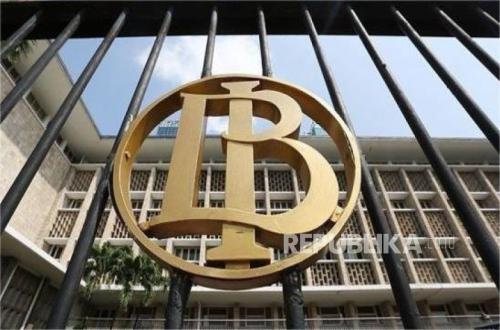
The decision of the Bank Indonesia Board of Governors Meeting (RDG BI) to maintain the BI-Rate benchmark interest rate at 5.75 per cent was undoubtedly made after very careful consideration. Following the recent interest rate hike by the US central bank, the Federal Reserve (The Fed), ideally, BI would have done the same. However, this time it did not. BI’s decision to maintain the benchmark rate is a move that is both very bold and precise.
On one hand, BI must maintain external stability, particularly the rupiah exchange rate, and prevent capital outflow. On the other hand, there is an equally important issue: supporting the momentum of domestic economic recovery, maintaining public purchasing power, and ensuring the smooth distribution of bank credit. In the eyes of BI, the current unstable condition of the national economy appears to be a greater consideration than merely preventing capital flight. There is no guarantee that preventing capital outflow can be achieved solely through raising the benchmark interest rate. This appears to be the basis for BI’s consideration in choosing to maintain the benchmark rate.
Not Following the Trend
Indonesia has firmly decided to choose its own path. BI has chosen not to immediately follow the aggressive policies of The Fed. This is an act of monetary independence that deserves appreciation, but at the same time demands high vigilance. Why did BI choose to remain at the 5.75 per cent level? What is the real impact of this decision on the national economy, the real sector, and public purchasing power?
To be honest, a 5.75 per cent interest rate is not a panacea. It is recognised that maintaining the BI-Rate at 5.75 per cent will not cure the economic problems facing Indonesia. BI’s decision is actually a high-dose painkiller. To a certain extent, raising the benchmark interest rate might succeed in dampening the external symptoms of the global storm blown by The Fed.
However, if interest rate hikes are carried out continuously or used for too long without structural reforms in the real sector, they risk damaging the vital organs of the domestic economy from within. This is why BI ultimately chose to maintain—rather than increase—the benchmark interest and interest rate.
It can be certain that the most fundamental reason behind BI’s decision to maintain the benchmark rate is to provide space for domestic economic growth. It is recognised that raising the benchmark rate will imply changes to bank lending rates. We know that the benchmark rate is the upstream source of all forms of domestic borrowing costs.
When the benchmark rate is held steady, national banks have no strong reason to raise their credit interest rates, whether for Home Ownership Loans (KPR), vehicle loans, or working capital loans for businesses. This differs from a scenario where BI decides to raise the benchmark rate.
For business actors in the country, stability in the benchmark rate is a blessing amidst uncertainty. The costs of expansion and corporate operational financing can be predicted more accurately without the fear of a sudden surge in interest burdens. If BI had acted recklessly, panicking, and reactively raising rates just to match the hawkish steps of The Fed, the transmission of that policy would have directly hit the banking sector.
It is hoped that BI’s stance in maintaining the interest rate at 5.75 per cent will lead to increased credit growth and economic activity. Household consumption—which has long been the main backbone of Indonesia’s Gross Domestic Product (GDP)—remains protected because public instalments will not skyrocket drastically. By choosing to maintain the BI-Rate, BI is indirectly sending a message of optimism to the market: our domestic economic engine is still healthy and does not need to be forcibly braked through excessive monetary tightening.
To be Watched
Although beneficial to domestic businesses, BI’s decision to maintain the benchmark rate is not without risk. It must be acknowledged that behind BI’s courage to choose its own stance, the resulting economic consequences may come at a high price. When The Fed decides to raise its benchmark rate to the range of 3.75 per cent to 4.00 per cent, the interest rate spread between Indonesian and US financial instruments will automatically narrow. For global portfolio investors, this narrowing gap will inevitably reduce the attractiveness of rupiah-based assets, such as Government Securities (SBN) or stocks on the Indonesia Stock Exchange.
The law governing global financial markets remains constant: capital will always flow to where it offers the highest return with the lowest risk. As US Treasury yields climb towards 5 per cent, the investment appeal of emerging markets like Indonesia will inevitably diminish. The risk of massive capital outflow remains a real threat looming over our financial market conditions. If the offered returns are deemed less attractive, investors may choose to withdraw their funds and move them to countries offering more profitable yields.
The issue that needs to be watched is: if capital outflows occur in large volumes and continuously following BI’s decision to maintain the benchmark rate, pressure on the rupiah exchange rate will be unavoidable. The weakening of the rupiah against the US dollar has the potential to trigger the phenomenon of imported inflation—inflation caused by the skyrocketing prices of imported raw materials, ranging from soybeans to wheat.
Source: jawawa.id (https://jawawa.id/newsitem/wary-of-the-risks-of-maintaining-the-bi-rate-at-5-75-per-cent-1790168145)
Originally published by Republika (https://analisis.republika.co.id/berita/tltgjn393/mewaspadai-risiko-birate-dipertahankan-575-persen), translated from Indonesian