
Warteg Entrepreneurs Struggling Due to Weakening Rupiah Despite No Direct US Dollar Usage
The weakening of the Rupiah against the US Dollar deepened during trading on Monday (18/5/2026), with the currency hitting a new low of approximately Rp17,600 per US Dollar. According to Refinitiv data, the Rupiah weakened by 1.15% to the level of Rp17,660/US$ by 10:20 WIB, a significant drop from its opening position and its previous close before the long holiday.
Amidst this currency volatility, President Prabowo Subianto addressed the impact of US Dollar fluctuations on the Indonesian people. He expressed confidence in the nation’s stability, stating that people in rural areas do not use dollars in their daily activities. “I am sure there are those who constantly claim ‘Indonesia will collapse, will face chaos’… People in the villages do not use dollars,” Prabont stated during the inauguration of the Marsinah Museum in Nganjuk, East Java.
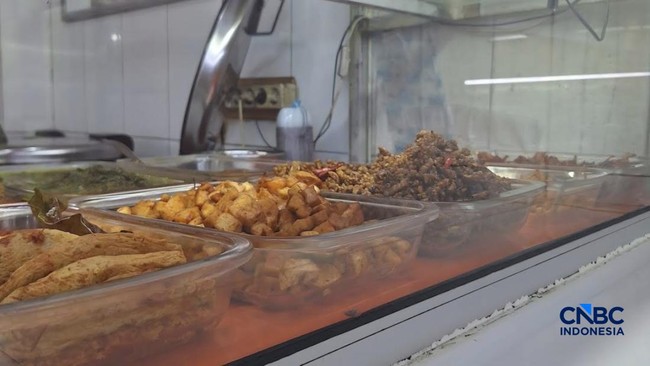
However, this sentiment was met with pushback from ‘Warteg’ (traditional food stall) entrepreneurs. Mukroni, Chairman of the Indonesian Warteg Coordinator (Kowantara), noted that while traders do not transact directly in US Dollars, the impact of the Rupiah’s depreciation is felt at the micro-business level. “Directly, Warteg entrepreneurs do not transact using US Dollars. However, indirectly, this Rupiah weakness significantly impacts our production costs and productivity,” Mukroni told CNBC Indonesia.
He explained that Warteg businesses are highly sensitive to raw material price hikes. The weakening Rupiah drives up the price of import-based goods, which eventually impacts the domestic market. A prime example is imported soybeans, the primary ingredient for tofu and tempeh. As the Rupiah weakens, soybean prices rise, forcing traders to either increase prices or reduce the size of the products.
Beyond food, the cost of plastic packaging for takeaway services is also affected, as the petrochemical industry is sensitive to exchange rates and global oil prices. Furthermore, Mukroni highlighted the impact on customer purchasing power, particularly among lower-middle-class and informal workers. As inflation rises due to the currency weakness, daily turnover for Warteg stalls faces downward pressure.
Mukroni argued that there is a gap between economic theory and the reality on the ground. “While daily transactions in villages use the Rupiah, the dollar enters the village through the price of goods they consume,” he said, noting that even farmers are affected because fertilisers and livestock feed contain significant imported components.
With approximately 50,000 Warteg entrepreneurs facing these challenges, Mukroni described the situation as a ‘Simalakama’ (a dilemma). “If we raise the price of a meal, we fear losing our loyal customers whose purchasing power is also struggling. But if we do not raise prices, our profit margins are already so thin that some colleagues are subsidising operational costs from their personal savings,” he concluded.