
Warren Buffett's 5 Legendary Investment Mantras for the Next Generation
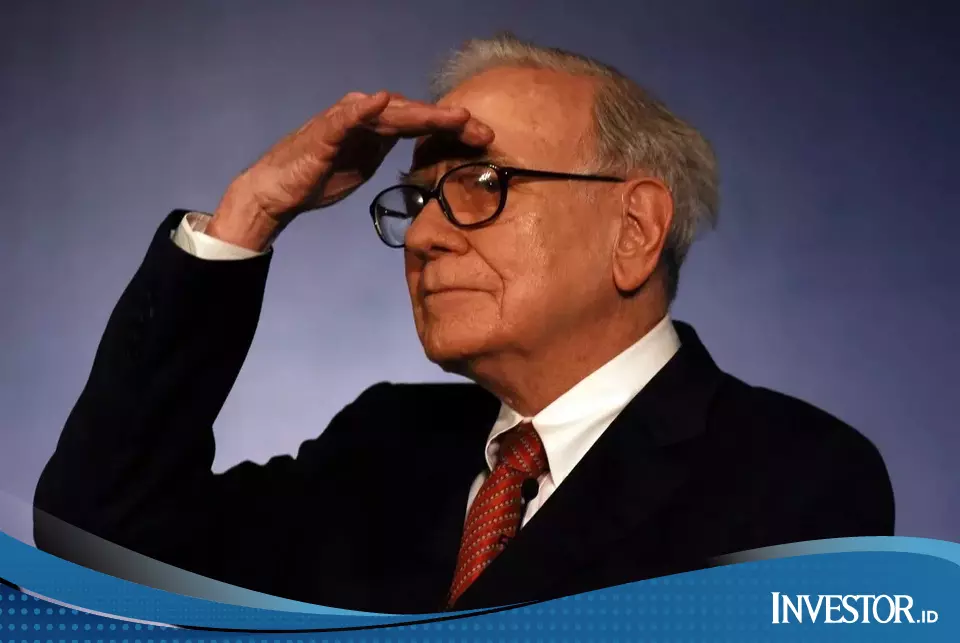
A new era in the global investment world has officially begun. Renowned global investor Warren Buffett has officially stepped down from his position as Chairman of Berkshire Hathaway. This move marks the final phase of a leadership transition in the conglomerate, which he successfully transformed from a near-bankrupt textile company into a business giant valued at over US$1 trillion.
Berkshire Hathaway has confirmed that Buffett now holds the position of Chairman Emeritus. Despite relinquishing his top post, the 96-year-old (as of 30 August 2026) will remain on the board of directors and continue to provide strategic advice to the company.
In accordance with the company’s long-term succession plan, the board of directors has appointed his son, Howard Buffett, to the position of Chairman. Meanwhile, the Chief Executive Officer (CEO) position remains held by Greg Abel, who previously took over operational leadership on 1 January 2026, while Susan Decker continues as Lead Independent Director.
Howard Buffett is no stranger to the professional world. He has led the Howard G. Buffett Foundation since 1999, focusing on global food security and conflict mitigation, and served as a Special Ambassador for the UN World Food Programme (WFP) for nearly a decade.
Financial Legacy and Warren Buffett’s 5 Key Mantras
Despite the restructuring of the leadership, Buffett’s influence on Berkshire’s investment portfolio remains highly palpable. For instance, in recent quarters, Berkshire recorded a spectacular investment of US$36.6 billion in Alphabet, the parent company of Google.
Buffett’s successful investment track record over more than six decades is built upon a set of relatively simple fundamental principles. Here are the five key investment mantras that serve as a valuable legacy for young investors, as quoted by the Economic Times on Friday (2/10/2026):
- Do Not Buy Stocks at Too High a Price
Buffett’s primary philosophy centres on purchasing high-quality company shares at fair or attractive prices. He is known for being highly disciplined regarding valuation and rarely buys stocks with a price-to-earnings ratio exceeding 15 times projected forward earnings.
This approach relies on in-depth analysis of predictable company cash flows and healthy balance sheets. The goal is to minimise the risk of permanent loss of capital during market downturns.
- Be Patient, But Know When to Sell
Buffett is famous for his principle of extreme holding periods. His most popular saying is: “Our favourite holding period is forever.” Giant stocks such as Coca-Cola, American Express, and Wells Fargo are tangible evidence of his long-term commitment.
However, this patience does not mean holding investments blindly. If business fundamentals change or are no longer promising, Buffett does not hesitate to exit the market. In recent years, Berkshire has gradually reduced or closed positions in several financial and technology giants, including Apple, Bank of America, JPMorgan Chase, Goldman Sachs, Citigroup, and Paramount Global.
He is also very open about admitting his investment mistakes, such as describing the purchase of the Dexter Shoe factory, which eventually went bankrupt, as the “terrible mistake” of his career.
- Stay Within Your “Circle of Competence”
Buffett frequently emphasises that an investor does not need to understand every type of industry. The most important thing is to recognise the limits of what one truly understands.
“You only need to be able to evaluate companies that fall within your circle of competence,” said Buffett.
This principle led him to avoid technology stocks during the dot-com bubble in the late 1990s because he felt unable to predict the survival of tech startups. His decision proved correct when the Nasdaq index subsequently plummeted by 75% between 2000 and 2002.
When Berkshire finally made a large investment in Apple in 2016, Buffett viewed it not as a pure technology company, but as a consumer products company with extremely strong brand loyalty.
- Keep Investment Free from Emotional Influence
Self-discipline during periods of market fear or greed is Buffett’s key. At the 2025 Berkshire Annual General Meeting, he delivered a stern message to investors: “Leave your emotions at the door when you invest.”
This detached attitude was evident following the US stock market crash in 1987. Buffett instead injected approximately US$1 billion into Coca-Cola during the 1988–1989 period.
By 2025, the value of those Coca-Cola shares had soared by nearly 2,800%. He applied a similar strategy during the 2008 financial crisis by injecting US$5 billion into Goldman Sachs, which yielded a net profit for Berkshire of US$500 million when the shares were repurchased in 2011.
- Let Compounding and Time Work
Buffett began investing at the age of 12 by purchasing preferred shares of Cities Service in 1942. His wealth was not acquired instantly but accumulated exponentially over decades.
His net worth was recorded at around US$20,000 at age 21, he became a millionaire at 34, and only reached billionaire status at age 55. This timeline reinforces his primary message: start as early as possible, remain patient, and let the magic of compound interest work.
Source: jawawa.id (https://jawawa.id/newsitem/warren-buffetts-5-legendary-investment-mantras-for-the-next-generation-1790979711)
Originally published by investor.id (https://investor.id/money-lab/456387/ini-5-mantra-investasi-legendaris-warren-buffett-bagi-generasi-penerus), translated from Indonesian