
Warning! Space Debris — Rocket Body Fragments Could Fall on Jakarta
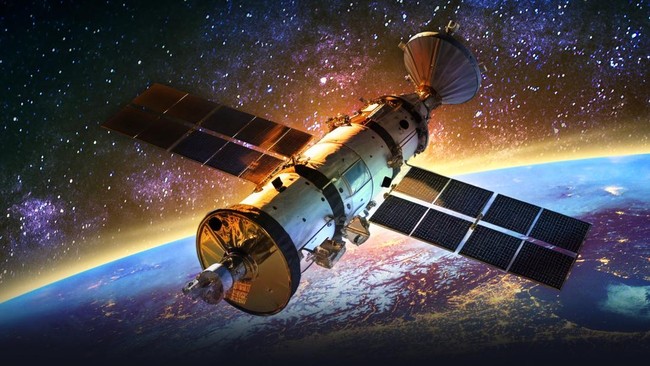
Jakarta, CNBC Indonesia — The threat of space debris falling to Earth is said to be increasing as satellite and rocket launches have surged in recent years. Regions in the southern hemisphere, including Jakarta, are described as areas more at risk of being affected by such debris. NASA reports indicate that on average one piece of space debris re-enters Earth each day over the past 50 years. Although there have been no serious injuries due to incidents, scientists warn that the potential danger continues to rise. A study published in 2022 even estimated there is a 10% chance that uncontrolled space debris will fall to Earth and cause human casualties within the next decade. More worrying, the greatest risk is said to lie in Global South countries or developing regions at southern latitudes. Cities such as Jakarta, Dhaka in Bangladesh, and Lagos in Nigeria are projected to have a threefold higher probability of rocket-body debris hitting them compared with New York, Beijing, or Moscow. Earth’s orbit is also becoming increasingly crowded with space waste. There are around 25,000 space debris objects larger than 10 centimetres currently orbiting and trackable, with millions of smaller fragments left untracked. According to IFLScience, on Friday (22 May 2026), in total around 9,000 tonnes of metal and discarded satellite or rocket material are currently moving around Earth. The phenomenon of space debris re-entry was even witnessed directly by NASA astronaut Chris Williams from the International Space Station (ISS). As the ISS streaked over West Africa on 27 April, Williams saw a glowing object enter the atmosphere and break into a shower of flames. “I saw its tail swell and then break into a rain of small fragments. It was really a light show,” Williams said on his social media. Although the probability of debris reaching Earth’s surface is relatively small, the risk is not entirely zero. During launches, spacecraft typically shed several components, such as disposable rocket boosters, to reduce payload. Those components are designed to burn up when re-entering the atmosphere. Yet scientists note that the lifespan of space debris is increasing because the materials used are stronger and more heat-resistant. On the one hand, that technology makes space travel safer and more efficient; on the other, the risk of space debris reaching Earth’s surface also rises.