
Warning: Papua's Glaciers on the Brink as Indonesia Faces Loss
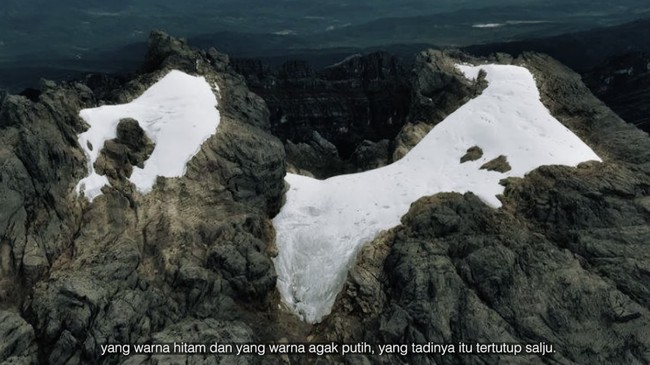
Jakarta, CNBC Indonesia – Indonesia is at risk of losing all its glaciers within the coming years. Scientists warn that the last two remaining glaciers in Papua’s Puncak Jaya region are projected to disappear by 2027 due to climate change and the effects of El Niño.
Puncak Jaya, the highest peak in Southeast Asia, is home to Asia’s last tropical glaciers. However, their condition has been rapidly deteriorating over recent decades.
Monitoring data shows the area has lost approximately 97% of its ice cover over the past 44 years. Of the six glaciers that once existed, only two remain: Carstensz Glacier and East Northwall Firn, both expected to vanish before the decade’s end.
Climate researcher Donaldi Permana of the Indonesian Meteorology, Climatology, and Geophysics Agency (BMKG) stated that global warming is the primary cause of melting in Papua, exacerbated by El Niño, which has made the region drier and warmer.
He explained that rising temperatures raise the snow line, causing precipitation to fall as rain instead of snow. This deprives the ice of new snowfall, accelerating melting.
‘Warmer temperatures lead to more precipitation falling as rain rather than snow, speeding up ice melt,’ Permana said, citing Colombia Climate School on Wednesday, 27 May 2026.
Permana and his team conducted research using a 32-metre ice core extracted from Papua in 2010. Findings revealed a sharp increase in ice loss during El Niño events. During the 2015-2016 El Niño, vertical glacier thinning accelerated nearly fivefold, from around one metre per year to 5.3 metres annually.
According to the researchers’ modelling, Papua’s glaciers have shrunk from approximately 19.3 square kilometres in 1850 to just 0.16-0.23 square kilometres between 2022 and 2024 – equivalent to a reduction from 3,500 football fields to around 40.
Permana warned that climate models suggest Papua’s glaciers could vanish imminently.
‘With the increasing likelihood of a strong El Niño in the second half of 2026, Indonesia’s glaciers may disappear between 2026 and 2027,’ he said.
The loss of Papua’s permanent snow has implications beyond the environment, affecting local indigenous cultures. For many Papuan communities, the snow-capped mountain peaks hold deep spiritual significance, with glaciers seen as integral to cultural identity and ancestral heritage.
Wewin Wira Cornelis Wahid, an Indonesian sustainability researcher interviewed by GlacierHub, said the disappearance of permanent snow means losing a vital part of Papua’s cultural legacy.
‘Permanent snow is not just a landscape feature but part of the community’s spiritual identity. Its loss reflects the erosion of cultural heritage,’ he said.
Mike Kaplan, a geologist from Lamont-Doherty Earth Observatory, described tropical glaciers as an ‘early warning’ of global climate change impacts. Kaplan noted that even if greenhouse gas emissions ceased today, the Earth’s climate system would still take time to adjust.
This means global temperatures may continue rising in the coming years, further reducing the chances of Papua’s glaciers surviving.
‘Global temperature rises directly contribute to worldwide glacier melt. For Indonesia’s glaciers, this is marked by El Niño years,’ he said.
Source: jawawa.id (https://jawawa.id/newsitem/warning-papuas-glaciers-on-the-brink-as-indonesia-faces-loss-1779890399)
Originally published by CNBC Indonesia (https://www.cnbcindonesia.com/tech/20260527183021-37-738370/alert-salju-abadi-papua-di-ujung-tanduk-ri-bisa-kehilangan-gletser), translated from Indonesian