
Warning of Renewed War: US-Iran Clash Over Nuclear Inspections, Netanyahu Seeks Opening
Relations between the United States (US) and Iran are tense once again after both sides traded rebuttals regarding permission for United Nations (UN) inspections of nuclear sites. This fresh uncertainty overshadows efforts to reopen global shipping lanes in the Strait of Hormuz.
The dispute surfaced just as Iranian President Masoud Pezeshkian met with mediators in Pakistan. At the same time, technical teams from the US and Iran are continuing intensive negotiations in Switzerland.
The verbal confrontation began when Iranian Foreign Ministry spokesman Esmail Baghaei told media in Tehran that UN inspector teams have no schedule to examine the uranium enrichment site bombed by the US military last year. Tehran’s unilateral statement immediately sparked fresh controversy, openly rejecting a claim made by US Vice President JD Vance a day earlier.
Amid the political deadlock, an emergency plan has been agreed internationally. Maritime authorities will evacuate approximately 11,000 crew members stranded in the Strait of Hormuz. The vital energy passageway was completely blockaded by Iran’s military following the outbreak of war in late February.
The phased evacuation plan was designed through strict cross-border cooperation, involving Iran, Oman, regional coastal states, and the US military.
“We have secured the necessary safety guarantees and have thoroughly verified safe navigational conditions to support this operation,” said International Maritime Organization (IMO) Secretary-General Arsenio Dominguez in an official statement.
The evacuation step is seen as a positive development for the global logistics industry. The marine insurance sector hopes that restoring the route will help stabilise worldwide supply chains.
“It can only be good news for all parties involved,” said Marcus Baker, global head of marine, cargo, and logistics for Marsh in London.
However, the ceasefire draft is considered extremely fragile on the ground. Iran previously threatened to re-close the strait due to escalating fighting between Israel and Hezbollah in Lebanon.
According to tracking data from Kpler, maritime traffic in the strait is beginning to creep upwards, with 39 vessels transiting on Monday after a complete standstill. This volume remains far below the pre-war norm of up to 100 ships per day. Meanwhile, US Central Command reported that two of its aircraft carriers remain on standby in the Middle East region.
President Pezeshkian made his first foreign visit since the war broke out, travelling to Islamabad for bilateral talks with Pakistani President Asif Ali Zardari. The leaders discussed strategic regional issues, focusing on regional peace and strengthening bilateral economic cooperation.
Pezeshkian also stressed that the memorandum of understanding between the US and Iran does not constrain their military power, claiming the peace draft does not address Tehran’s ballistic missile programme. “If it were not for Iran’s missile capability, our country would have been plundered and destroyed. We will never compromise or negotiate on our missile capabilities,” Pezeshkian asserted at a press conference following the meeting.
Responding to the cooperation, Pakistani Prime Minister Shehbaz Sharif expressed his condolences and committed to paying his final respects to Iran’s leader. Sharif confirmed he will attend the funeral ceremony of Supreme Leader Ayatollah Ali Khamenei in Tehran, who was killed in an airstrike at the start of the war.
From the negotiating table in Switzerland, Iranian representatives stated that talks with the US delegation are progressing dynamically. The dialogue has resulted in the formation of a specialised working group to draft a permanent peace agreement. This group will focus on sanctions relief mechanisms and the supervision of shipping lanes in the Strait of Hormuz. Both nations also agreed to establish a deconfliction cell to de-escalate fighting in southern Lebanon.
Despite these diplomatic steps, the situation on the ground remains highly volatile. Israeli forces reportedly shot dead two individuals in southern Lebanon, shattering a two-day lull and potentially jeopardising the comprehensive draft agreement that demands a full ceasefire in Lebanon.
Prime Minister Benjamin Netanyahu asserted that Israel’s military is not bound by the external agreement, as neither Israel nor Hezbollah are direct parties to the US-Iran draft. He stated that troops will remain stationed in southern Lebanon until threats to Israeli citizens are completely eliminated. “Our military retains full freedom of action in Lebanon to thwart any threat,” Netanyahu declared.
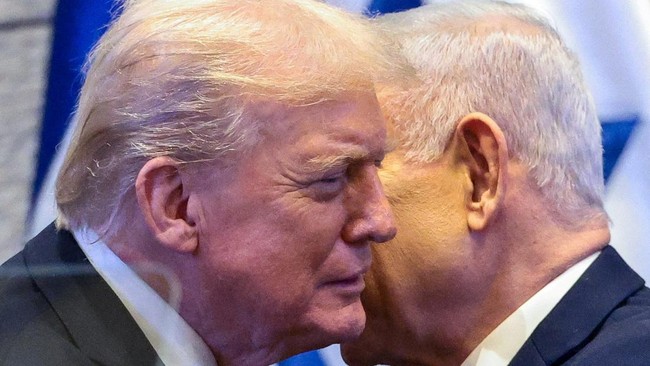
When asked to respond to Netanyahu’s hardline stance, US President Donald Trump gave a brief reply, stating he would monitor developments and believed the situation could be resolved. Meanwhile, main transport routes into Beirut are becoming congested as thousands of displaced residents risk returning to their homes in southern Lebanon following Saturday’s ceasefire announcement.
Source: jawawa.id (https://jawawa.id/newsitem/warning-of-renewed-war-us-iran-clash-over-nuclear-inspections-netanyahu-seeks-opening-1782287527)
Originally published by CNBC Indonesia (https://www.cnbcindonesia.com/news/20260624074606-4-745200/awas-perang-lagi-as-iran-ribut-soal-nuklir-netanyahu-cari-celah), translated from Indonesian