
Warning of Numerous Loopholes, KPK States Corruption Practices Remain Prone in Pati Regency
The Corruption Eradication Commission (KPK) has revealed that it continues to uncover various issues in the governance of Pati Regency, Central Java. According to the KPK, Pati Regency Government remains prone to corruption practices.
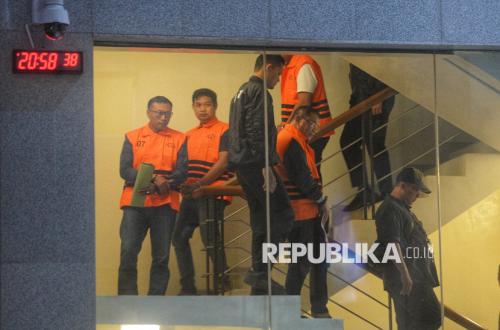
In response to the sting operation (OTT) against Pati Regent Sudewo in January 2026, the KPK’s Directorate of Coordination and Supervision (Koorsup) has strengthened corruption prevention efforts in the area. This was carried out through the “Corruption Prevention Coordination in Pati Regency Government” activity held at the Pati Regency Pendopo, Central Java, on Wednesday (15/4/2026).
“This activity is not an investigation, but a preventive effort to improve governance. We focus on prevention from APBD planning to procurement of goods and services,” said the Head of the Task Force (Kasatgas) of KPK Koorsup Region III, Azril Zah, as stated in the press release obtained by Republika on Sunday (19/4/2026).
The KPK records a significant increase in public complaints in Pati Regency. Over the last three years, the number of reports rose from 13 complaints in 2023 to 19 in 2024, and surged to 64 in 2025. Azril views this increase as an important part of the check and balance mechanism. Nevertheless, every report must still be verified and validated.
Based on the mapping results, the KPK still finds several fundamental issues in the governance of Pati Regency Government. These range from non-compliance with planning mechanisms, deviations in the main functions of DPRD’s pokir (budget allocations), to inconsistencies in authority and budget standards.
In the grants sector, the KPK also notes various vulnerabilities, such as the absence of a single recipient database, potential duplication of aid, and indications of budget politicisation through certain channels that risk conflicts of interest.
Meanwhile, in the procurement of goods and services (PBJ) sector, the KPK found irregularities in reporting plans and realisations of procurement, a high proportion of direct appointments, and suboptimal e-purchasing practices, including without price negotiations. This condition is seen as opening opportunities for project conditioning and unhealthy business competition.
Similar risks are also identified in the management of civil servants (ASN), particularly in promotion, rotation, and mutation processes that are not fully based on a merit system. The KPK even received information about practices of job conditioning, involvement of success teams, and placement of acting officials for extended periods that could lead to conflicts of interest.
From the prevention side, the Integrity Assessment Survey (SPI) score for Pati Regency Government has declined over the last three years, from 80.75 in 2023 to 77.85 in 2024, and further to 72.23 in 2025. This score falls into the vulnerable category.
Source: jawawa.id (https://jawawa.id/newsitem/warning-of-numerous-loopholes-kpk-states-corruption-practices-remain-prone-in-pati-regency-1776588648)
Originally published by Republika (https://news.republika.co.id/berita/tdqdyp487/wantiwanti-ada-banyak-celah-kpk-sebut-praktik-korupsi-masih-rawan-terjadi-di-pemkab-pati), translated from Indonesian