
Warning: Indonesia’s Petrochemical Industry Faces a Flood of Cheap Chinese Products
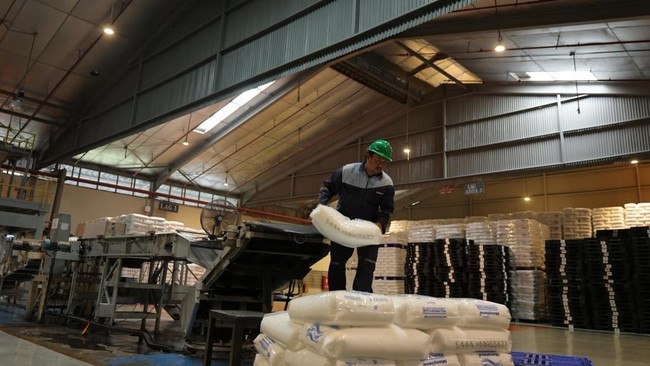
Bogor, CNBC Indonesia — Indonesia’s petrochemical industry is under pressure from a flood of cheap imports amid excess production capacity, or oversupply, in the global market. China is among the most aggressive players in expanding production capacity, making competition increasingly difficult for domestic producers.
The pressure comes as several other major petrochemical-producing countries continue to add capacity. As a result, competition comes not only from China but also from Russia, India, the United States and countries in the Middle East.
Sri Bimo Pratomo, Director of Upstream Chemical Industry at the Ministry of Industry, said China had developed into a leading player in the global petrochemical industry. It had built an industry spanning upstream to downstream production and was no longer as dependent on other countries as before.
“China used to be where we exported raw materials for petrochemical products. But, because demand there was strong, it built its petrochemical industry from upstream to downstream. China is now highly self-sufficient and is experiencing oversupply,” Bimo said at a Forwin media gathering in Sentul on Friday (6 November 2026).
The challenge is compounded by Indonesia’s large domestic market, with a population of nearly 300 million. This makes the country an attractive destination for foreign producers seeking markets for their surplus output.
Indonesia is also not as well positioned as several other ASEAN countries. In terms of production infrastructure, it lags behind in the number of crackers, which form the foundation of the petrochemical industry.
“Across ASEAN, Indonesia has only two crackers, while Malaysia has three, Singapore has four and Thailand has more than four. With our large population and petrochemical plants, we have to compete with ASEAN countries,” he said.
Import pressure is also evident in trade trends for plastic raw materials. Overseas products are entering at competitive prices, while local producers have to bear substantial production and investment costs.
Fajar Budiono, Secretary-General of the Indonesian Olefin, Aromatic and Plastic Industry Association (Inaplas), said shifts in global trade patterns required serious attention. China could become increasingly dominant in Indonesia’s petrochemical market in the coming years.
“Previously, the top five sources of imports of these materials were from ASEAN, followed by the Middle East. With the war, the top five have changed. Singapore, Malaysia and Vietnam remain; China is now fourth, followed by South Korea,” Fajar said.
These developments pose a challenge to the viability of investment in the domestic industry. Petrochemical facilities require substantial capital and take a long time to build, so producers need certainty about the market before deciding to expand.
“China could very likely become number one for polyethylene, PVC and other products by 2030. Supply and demand are oversupplied, but China is also making use of its raw materials. We must strengthen the industry from upstream to downstream,” Fajar stressed.
Source: jawawa.id (https://jawawa.id/newsitem/warning-indonesias-petrochemical-industry-faces-a-flood-of-cheap-chinese-products-1793965841)
Originally published by CNBC Indonesia (https://www.cnbcindonesia.com/news/20261106160418-4-783039/warning-industri-petrokimia-ri-terancam-banjir-produk-murah-china), translated from Indonesian