
Warning: Indonesian Palm Oil and Vietnamese Coffee at Risk
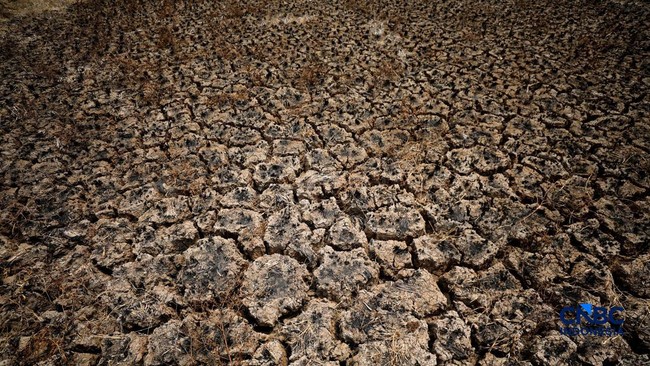
Jakarta, CNBC Indonesia — The 2026/2027 El Niño is increasing the risk of drought and extreme heat in South-east Asia, potentially disrupting food production and hydropower supplies while raising the risk of disasters.
In Indonesia, the Meteorology, Climatology and Geophysics Agency (BMKG) and the Jakarta Disaster Management Agency (BPBD) carried out weather modification operations from 21 to 25 October 2026 to reduce air pollution and the effects of high temperatures. Meanwhile, on Tuesday (27 October 2026), BMKG warned of possible moderate to heavy rain in northern Sumatra due to the potential formation of a new cyclonic circulation near the Andaman Sea.
Amid these varied weather conditions, the risk of seasonal drought remains a concern. A report published by BMI, part of Fitch Solutions, on 23 October 2026 identified South-east Asia as one of the regions facing the sharpest increases in drought and extreme-heat risk because of El Niño. The conditions could threaten food security, hydropower generation and resilience to climate disasters.
South-east Asia faces drought threat
According to BMI’s analysis, the 2026/2027 El Niño could increase drought risk on agricultural land, particularly in southern Africa, Central America, northern South America and South-east Asia.
During previous El Niño events, the share of farmland exposed to high-intensity drought in these regions rose by an average of 11 to 12 percentage points compared with normal conditions.
In South-east Asia, the Philippines and Thailand are among the countries facing the largest increases in risk. The impact is not limited to food production; it also affects the number of people exposed to drought.
BMI noted that in previous El Niño episodes, more than 90 million additional people in South-east Asia were exposed to drought compared with normal conditions, making it the region with the greatest population impact.
The drought could affect production of several of the region’s main commodities, including rice in Thailand, Vietnam and the Philippines; sugar in Thailand; palm oil in Indonesia and Malaysia; and robusta coffee in Vietnam.
According to BMI, pressure on crop yields is one of the main ways El Niño can affect the economy. Historically, food inflation in a number of emerging economies has been around 1.8 to 2.5 percentage points higher in the nine to 12 months following an extreme drought.
This could squeeze consumers’ purchasing power, particularly among lower-income households, which spend a large proportion of their budgets on food.
Asia’s food stocks are increasingly vulnerable
The El Niño threat is heightened by the relatively limited commodity reserves held by several South-east Asian countries to cope with production disruptions.
BMI noted that rice stocks in Thailand, Vietnam and the Philippines have fallen from their 2023 levels. The Philippines is among the countries most vulnerable to price rises, as imports meet around a third of its rice needs.
In Indonesia, opening palm oil stocks are estimated at 9% of total use, while Vietnam’s robusta coffee stocks stand at just 2%. This points to limited supply buffers if drought disrupts production.
Nevertheless, BMI considers the risk of a global rice price surge on the scale of 2023/2024 to be relatively limited, as global stocks are now stronger.
India, which accounts for around 39% of global rice exports, holds reserves equivalent to 47% of domestic consumption, up from about 30% before the 2023/2024 rice price crisis.
These substantial stocks are considered to reduce the likelihood of a repeat of the precautionary export restrictions that previously drove up global rice prices. Thailand also has relatively adequate sugar reserves to maintain exports.
For Indonesia, the main risk is not only a fall in domestic production but also potential disruption to regional food trade if supplier countries experience drought at the same time.
Drought also threatens power generation
Beyond agriculture, El Niño could disrupt hydropower generation as reduced rainfall lowers water levels in reservoirs and river flows.
BMI noted that southern Africa faces the greatest risk. During previous El Niño episodes, the share of hydropower capacity exposed to high-intensity drought rose by an average of 19 percentage points, followed by Mexico and Central America at 12 percentage points.
In South-east Asia, the Philippines, Thailand and Malaysia also face increased drought risk to their hydropower capacity. Indonesia faces similar risks, although its reliance on hydropower is relatively lower.
According to data from the International Renewable Energy Agency (IRENA), Vietnam had the largest installed hydropower capacity in South-east Asia at the end of 2025, with 24.68 gigawatts (GW), followed by Laos at 10.36 GW and Indonesia at 7.59 GW.
Malaysia had 6.27 GW of hydropower capacity, the Philippines 3.89 GW and Thailand 3.69 GW.
By comparison, Zambia had 3.17 GW of hydropower capacity, Mozambique 2.19 GW and Zimbabwe 1.08 GW.
Although several South-east Asian countries have larger hydropower capacities, southern Africa faces a greater risk of power disruption because of its heavy reliance on hydropower.
According to BMI, around 87% of Zambia’s electricity and 60% of Zimbabwe’s electricity comes from hydropower. In previous El Niño episodes, the share of hydropower capacity exposed to drought rose by 29 and 27 percentage points respectively.
By contrast, hydropower accounts for less than 20% of electricity generation in Indonesia, Thailand, the Philippines and Malaysia. Drought is therefore more likely to put pressure on power supplies during peak demand than to cause widespread electricity shortages.
Heat and disaster risks increase
El Niño’s threat is not limited to drought. BMI estimates that South-east Asia and southern Africa will face the greatest increases in exposure to extreme heat.
During the strong El Niño episodes of 2015/2016 and 2023/2024, the number of people in South-east Asia exposed to temperatures above 35 degrees Celsius increased by around 20 million compared with normal conditions.
Thailand is among the most vulnerable countries. At the peak of a previous strong El Niño, around 80% of Thailand’s population was exposed to high-intensity heat in April, almost twice the proportion under normal conditions for that month.
The effects are also evident in energy consumption. During the 2023/2024 El Niño, Thailand’s peak electricity demand reached a record 36,699 megawatts (MW). Extreme temperatures also risk reducing the productivity of workers in agriculture and construction.
On disaster risk, BMI considers the global increase in flood risk associated with El Niño to be more limited and variable than the risks from drought and heat. Historically, most of South-east Asia has tended to see lower flood exposure during strong El Niño events.
Meanwhile, data from the Philippine Atmospheric, Geophysical and Astronomical Services Administration (PAGASA) show rainfall deficits in parts of South-east Asia from July to September 2026, including areas of Indonesia and the Philippines.
This indicates that some areas have already experienced below-normal rainfall, although it does not directly prove that El Niño has caused drought.
Nevertheless, overall disaster risk remains a concern. BMI identifies Cambodia and Laos as countries with a large increase in disaster exposure, alongside relatively weak resilience and recovery capacity.
This means the economic impact of El Niño will depend not only on the severity of the weather but also on a country’s ability to protect its people, infrastructure and economic activity.
Climate resilience is key to sustainability
The El Niño threat shows that climate change is not merely an environmental issue: it is directly connected to food and energy security and economic stability.
From a sustainability perspective, these risks require an integrated approach to climate adaptation. In the food sector, strengthening water-efficient irrigation, diversifying sources of supply and managing commodity reserves can help reduce vulnerability to production disruptions.
In the energy sector, diversifying power generation, managing reservoirs using climate projections and expanding energy storage capacity are important ways to reduce reliance on rainfall.
Social considerations also require attention, particularly the protection of farmers, outdoor workers and lower-income households, which are most vulnerable to rising food prices and extreme heat.
In the long term, BMI warns that climate change will worsen the effects of El Niño, as baseline drought and heat risks are projected to continue increasing.
Therefore, sustainable development should be measured not only by a country’s ability to reduce emissions, but also by its preparedness for growing climate risks.
For Indonesia and South-east Asia, the challenge is to ensure that food systems, electricity supplies and economic infrastructure can continue to function as weather becomes increasingly difficult to predict.
Source: jawawa.id (https://jawawa.id/newsitem/warning-indonesian-palm-oil-and-vietnamese-coffee-at-risk-1793087509)
Originally published by CNBC Indonesia (https://www.cnbcindonesia.com/research/20261027093811-128-779741/awas-sawit-ri-hingga-kopi-vietnam-dalam-bahaya), translated from Indonesian