
Warning: Grand Bioethanol Plans May Remain Unfulfilled, Expert Points to Root Problems
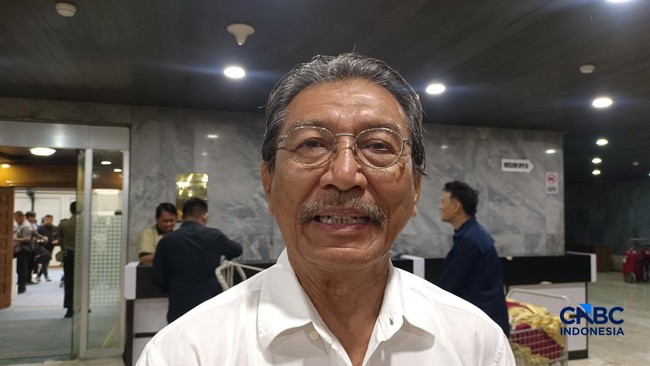
The Indonesian Sugarcane Farmers Association (APTRI) has warned Minister of Agriculture Amran Sulaiman not to rush the pursuit of bioethanol development targets. According to farmers, the government’s ambitious goals must be aligned with the readiness of land, seeds, and processing industries.
APTRI Chairman Soemitro Samadikoen stated that the government needs to account for seed requirements before realising large-scale sugarcane planting plans. This is because sugarcane propagation involves multi-stage processes that cannot be completed quickly.
He illustrated that if the government intends to plant sugarcane across 1 million hectares, the land required for seed preparation must be approximately one-sixth of that, or roughly 160,000 hectares.
“So, if we say we want to plant several million hectares of sugarcane—for example, 1 million hectares—the seeds that must be prepared would be one-sixth of that. We must ensure the availability of seeds from Seed Gardens (KBD). That must be one-sixth of the area intended for cultivation. For 1 million hectares, one-sixth is approximately 160,000 hectares,” Soemitro told CNBC Indonesia at the parliamentary complex on Wednesday (23/09/2026).
He noted that seed provision cannot be done instantaneously, as the process must pass through several stages to produce planting-ready seedlings. “This takes 30 months. It cannot be bypassed. We cannot plant all at once like rice,” he added.
Soemitro believes these issues must be calculated from the outset so that bioethanol development targets do not merely remain figures on paper. “Targets must be adjusted to our capabilities and our basic capital, and there must be a clear timeline,” he emphasised.
2 Million Hectare Target for Ethanol Development
The government previously planned to prepare upto 2 million hectares to support bioethanol development as a fuel source. Of this area, approximately 1 million hectares is specifically targeted for sugarcane.
Minister Amran stated that bioethanol development will utilise three main commodities: sugarcane, cassava, and maize. The government aims to begin planting next year to support the achievement of a 50% ethanol-gasoline blend (E50).
However, Soemitro reiterated that the larger the land target, the greater the need for seed production. In addition to seeds, he argued that the government must also ensure the availability of land locations and processing industries, as the harvested sugarcane must be processed immediately in factories.
“In the final stages, the sugarcane must be processed by factories. Can the Regional Governments (Pemda) provide the land or find investors?” Soemitro asked.
He noted that the involvement of regional governments is crucial, particularly in ensuring land availability, licensing, infrastructure, and labour for investors building processing plants. Soemitro also argued that a large target of 2 million hectares must be accompanied by clear locations from the start.
“If I ask now, where will the 2 million hectares be? We cannot just say ‘this is the target.’ Targets must be based on what we actually possess,” he said.
Soemitro also urged the government not to rush towards the E50 target before the initial stages of bioethanol development are truly operational. “In my opinion, our desire to create E50 is like a dream while sleeping. Are E20 or E5 even running yet?” Soemitro remarked.
He concluded that bioethanol development should be carried out gradually, taking into account the production capacity of raw materials and the readiness of the industry to absorb them. “Do not do it suddenly; take it slowly,” he concluded.