
Warning! Global Food Prices Soar: Sugar Most Alarming!
Global food prices rose again in September 2026. Disruptions to trade routes and concerns regarding production due to weather have pushed the global food price index to its highest level since early 2023.
The Food and Agriculture Organization of the United Nations (FAO), in a release on Friday (2/10/2026), noted that the FAO Food Price Index (FFPI) reached an average of 136 points in September. This figure represents a 1.5% increase compared to August, which stood at 134 points.
On an annual basis, the index rose by 5.8% compared to September 2025. Despite the continuous increase, it remains 15.1% below the peak seen in March 2022. The September 2026 level is the highest since November 2022. The index has also risen for three consecutive months, climbing from 120.1 points in June to 136 points in September.
Compared to the December 2025 position of 124.5 points, the index has increased by approximately 9.2%. This movement indicates that global food price pressures have strengthened again throughout the current year.
The FFPI measures international price changes across five commodity groups: cereals, vegetable oils, sugar, meat, and dairy products.
In September, sugar recorded the largest monthly increase at 6.1%, followed by cereals at 5.1% and vegetable oils at 0.9%. Conversely, the meat index fell by 1.1%, while dairy products remained relatively stable with a slight decrease of 0.1%.
Cereals Rise, Rice Under Scrutiny
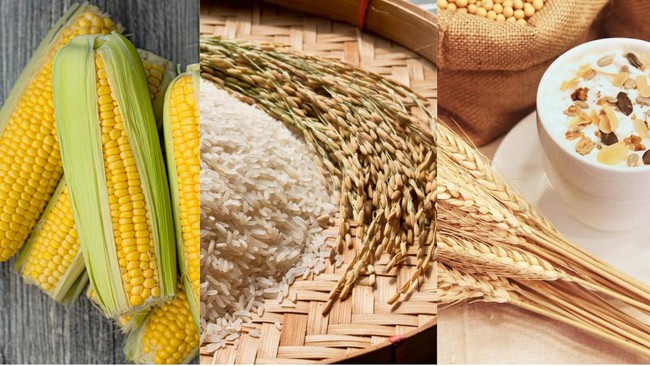
The rise in cereal prices is a significant development for Indonesia to monitor, as this group includes rice, alongside wheat, maize, and various other grains. The FAO cereal price index reached 122.8 points in September 2026, up 5.1% from August and 17.2% annually. This strengthening was primarily supported by wheat prices, which rose 6.3% monthly, and maize, which rose 5.6%.
Wheat prices were driven by logistical disruptions in the Black Sea and dry weather in parts of North America. Meanwhile, maize strengthened due to lower-than-expected harvests in the United States, reduced export availability from Brazil, and trade barriers in the Black Sea.
The FAO rice price index also rose by 1.4% in September. This more moderate increase was driven by the strengthening of Indica rice prices due to weather concerns and seasonal supply constraints.
In Indonesia, BPS (Statistics Indonesia) recorded that the average price of rice at the wholesale level reached Rp14,992/kg in September 2026, an increase of 0.61% monthly and 4.91% annually. These prices have increased every month throughout the January-September 2026 period.
While both global and domestic rice prices are rising, domestic prices are also influenced by production, stocks, and distribution. Consequently, international price increases are not automatically passed on to the domestic market in the same magnitude.
Vegetable Oils Supported by Palm Oil
Vegetable oil prices also contributed to the rise in global food prices. This group’s index reached 198.6 points in September 2026, up 0.9% monthly and 18.3% annually.
The FAO noted that international palm oil prices strengthened for four consecutive months up to September. The increase was supported by strong global import demand and concerns that dry weather could disrupt production in Southeast Asia.
The strength in palm oil was able to offset the decline in sunflower oil prices. Meanwhile, soybean oil and rapeseed oil prices remained relatively stable.
Entering October, CPO (Crude Palm Oil) futures contracts faced renewed pressure, including in trading on Monday (5/10/2026). This recent weakening occurred following the strengthening of international palm oil prices throughout September, as reflected in the FAO report.
Sugar Rises Most Sharply
The sugar price index increased by 6.1% monthly to 114 points, marking its third consecutive increase. This level is the highest since April 2025.
The primary driver is the prospect of increasingly tight global sugar supplies for the 2026/2027 season. Production in Thailand is expected to weaken, while below-normal rainfall and the strengthening of El Niño have raised concerns regarding crops in India.
In Brazil, heavy rains have hindered harvesting in the key Centre-South region. Meanwhile, in the European Union, a reduction in planting area and poor weather are expected to pressure the production of sugar beet, the tuber used as a raw material for sugar.
Meat and Dairy Subside
Amid the rise in plant-based commodities, the meat index fell to 127.9 points. The decline occurred primarily in poultry and pork, following an abundance of supply from major exporting nations.
The dairy products index also fell slightly to 119.1 points. The decline in cheese prices was almost offset by the rise in powdered milk prices, while butter prices remained relatively stable.
These diverging trends indicate that food price pressure is not uniform. Nevertheless, the increases in cereals, vegetable oils, and sugar confirm that weather risks and trade fluidity remain critical factors for the direction of global food prices.