
Warning from House of Representatives! Indonesia's Tax Ratio Approaches 10%, Revenue Performance Under Scrutiny
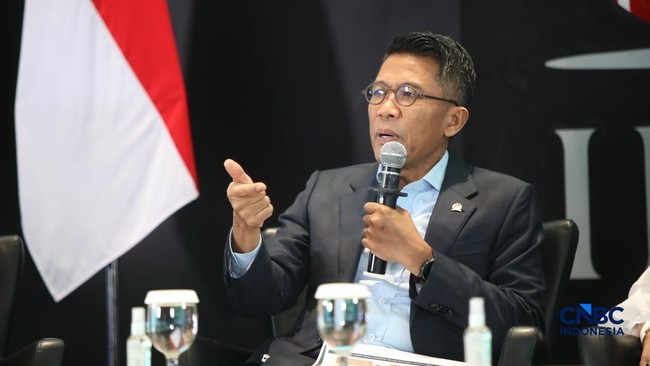
Jakarta, CNBC Indonesia - The Chairman of Commission XI of the House of Representatives (DPR RI), Mukhamad Misbakhun, has highlighted the performance of tax and customs revenues, which have failed to reach targets in recent years. He noted that this situation poses a significant challenge as it directly impacts the state’s ability to finance various development programmes.
Misbakhun emphasised that the Directorate General of Taxes (DJP) and the Directorate General of Customs and Excise (DJBC) must be able to improve state revenue performance moving forward. “Because last year, none reached 100%, and this has an impact on revenue,” Misbakhun told CNBC Indonesia during the Power Lunch programme on Thursday (17/9/2026).
He explained that optimising state revenue is becoming increasingly important as it is closely linked to the government’s efforts to maintain the state budget (APBN) deficit, including the target deficit of 2.4% for 2027. “State revenue is vital because it serves as the funding source for various government programmes and expenditures required to drive economic growth,” he said.
Misbakhun explained that government spending and public economic activity are interconnected in creating economic growth. “Income is used for consumption, improving public welfare, and increasing household consumption expenditure, which drives economic growth and circles back to the production sector. This is what we must achieve,” he stated.
Tax Targets Not Met
Misbakhun reminded that tax revenues over the last two years have not successfully met the targets set in the state budget. He noted that this situation represents a major task for the government, particularly the Ministry of Finance under the leadership of the new Finance Minister. “In the last two years, our tax revenues targeted by the APBN have not been achieved. That is a specific challenge,” he said.
In addition to missing revenue targets, Misbakhun also highlighted the long-term downward trend in Indonesia’s tax ratio. “Our tax ratio over the last 20 years has experienced a decline. In 2004, we reached 12.71%. Now, we are at a level approaching 10%,” said Misbakhun.
He believes this trend requires serious attention, as the tax ratio is a key indicator of the state’s ability to collect revenue from economic activities. To improve state revenue, Misbakhun suggested that the government needs to evaluate various tax expenditure policies currently provided to the business world. These policies include various fiscal incentives such as tax holidays, tax exemptions, tax payment deferrals, and taxes borne by the government.
According to Misbahnun, an evaluation is necessary to measure whether these incentives are truly effective in encouraging investment and economic activity, or if they are instead reducing potential state revenue. “Their effectiveness must be assessed. Do they provide a significant impact on the economy and state revenue, or are they actually a factor suppressing tax revenue?” he asked.
Based on the 2025 state budget realisation data, tax revenue was recorded at Rp2,231.84 trillion, or 89.05% of the APBN target of Rp2,490.91 trillion. This indicates a shortfall of approximately Rp259 trillion compared to the target set by the government.
Source: jawawa.id (https://jawawa.id/newsitem/warning-from-house-of-representatives-indonesias-tax-ratio-approaches-10-revenue-performance-under-scrutiny-1789665414)
Originally published by CNBC Indonesia (https://www.cnbcindonesia.com/news/20260917183454-4-768837/alarm-dari-dpr-rasio-pajak-ri-dekati-10-kinerja-penerimaan-disoroti), translated from Indonesian