
Warning for Indonesia and Others? US-Iran Conflict Could Trigger 1997 Asian Monetary Crisis?
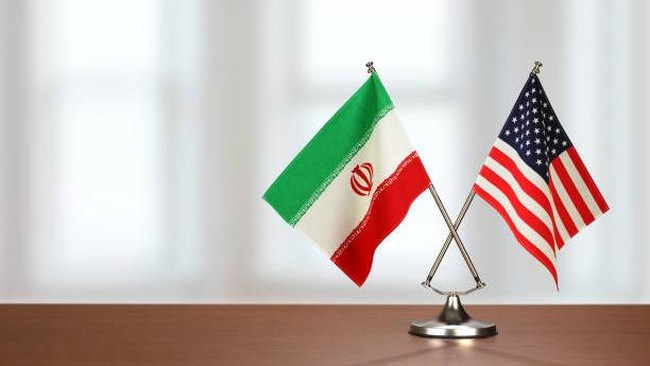
Jakarta, CNBC Indonesia - The threat of a global energy crisis is intensifying. This follows attacks by Iran on vital Saudi Arabian infrastructure.
In a statement on Wednesday, the kingdom revealed how a “critical pipeline” to the Red Sea had suffered a recent attack, impacting the reduction of oil flow by 700,000 barrels per day. This is linked to missile strikes on the East-West pipeline pumping station, which serves as Saudi Arabia’s main export route to other countries while the Strait of Hormuz is blockaded by Iran.
Not only that, attacks on the Manifa and Khurais production facilities have also cut the kingdom’s output by 600,000 barrels per day. This adds to the “wound” on global energy supplies.
This new fact represents the worst oil supply disruption since the Arab oil embargo in the 1970s, due to the Yom Kippur War between Arabs and Israel. So, will the economic suffering that is beginning to spread widely lead to a repeat of the 1997 Asian monetary crisis?
The “ghost” of the 1997 crisis is hard to ignore. Especially as global geopolitics places Asian currencies under severe pressure, triggering risks of capital outflows.
The surge in energy costs has prompted governments to launch emergency measures, while central banks are depleting their foreign exchange reserves. In Thailand, policymakers have begun rationing petrol, while the Philippines has declared a national emergency due to the spike in fuel prices at pumps.
Nevertheless, David Lubin, a senior researcher at Chatham House, stated that although there are similarities, the structure of this crisis is entirely different. Because Asia’s economies are now far more protected thanks to the legacy of the late 1990s crisis.
“Crises can take many forms, and the form of this [Iran] crisis is very different,” he said, as reported by CNBC International on Friday (10/9/2026).
“The 1997 crisis was driven by a toxic mix of fixed exchange rates, high levels of short-term foreign debt, and low foreign exchange reserves,” he added.
The same sentiment was echoed by Fesa Wibawa, a fixed income investment manager at Aberdeen Investments. He added that the region’s financial architecture has evolved substantially with deeper local markets.
“This reduces the risk of sudden capital flight and forced deleveraging that defined the 1997 crisis,” Wibawa said.
Financial Shock vs Physical Shock
Brad Setser, a senior researcher at the Council on Foreign Relations, explained that while the 1997 crisis was a shock to the financial account, the current crisis is a physical or supply shock to the current account due to the halt in oil flows.
“One is a financial shock, the other is a physical or supply shock. And for the Asian economies most severely affected, the 97/98 crisis was a far greater shock,” Setser said.
The effective blockade in the Strait of Hormuz is currently choking about a third of the oil supplies needed for the regional economy. Sultan Ahmed Al Jaber, CEO of Abu Dhabi National Oil Co (ADNOC), emphasised that although there are talks of a ceasefire, the shipping route remains unsafe.
“This moment requires clarity. So let’s be clear: the Strait of Hormuz is not open. Access is restricted, conditional, and controlled,” Al Jaber asserted.
Fortress of Foreign Exchange Reserves
Unlike the situation three decades ago, Asian countries now have a stronger defensive fortress. According to US Federal Reserve data, South Korea’s (South Korea) foreign exchange reserves reached more than US$400 billion at the end of January, a drastic increase compared to the 1997 crisis when they ranged from US$30 billion to US$40 billion.
Dan Wang, Director for China at Eurasia Group, said that exchange rate reforms have strengthened the region’s resilience. Because currencies are now allowed to move more freely to absorb pressure.
“During this oil shock, sufficient reserves, especially in Thailand and the Philippines, have avoided the need for aggressive interest rate hikes to defend currencies. The problems these countries face now are the possibility of stagflation, but the financial system remains intact,” Wang stated.
Stagflation Risks Looming?
Even so, Alicia García-Herrero, chief economist for Asia Pacific at Natixis Bank, warned that fiscal space is now much more limited than in 1997 due to already high public debt levels. Indonesia and the Philippines are considered most vulnerable to risks of capital outflows and pressure on the Rupiah and Peso exchange rates.
“There has not yet been widespread capital flight. Investors are positioning themselves cautiously across the region rather than panicking,” García-Herrero explained.
Indonesia itself is facing pressure on its 2026 energy subsidy budget of Rp381.3 trillion, which was prepared based on an oil price assumption of US$70 per barrel, far below the current market price that once reached US$97 per barrel. Rob Subbaraman, chief economist at Nomura Bank, emphasised that de-escalation must be carried out immediately before the economic impact becomes uncontrollable.
“If the US escalates further and/or deploys troops on the ground, the initial inflation surge could quickly turn into a growth shock,” Subbaraman said.
Matt Smith, an oil analyst at Kpler, added that Gulf oil producers have halted around 13 million barrels per day of production due to the chaos in the strait.
“The Strait of Hormuz remains closed until further developments with Iran,” Smith concluded.