
Warehouse Investment Becomes the "New Gold" - Kompas.id
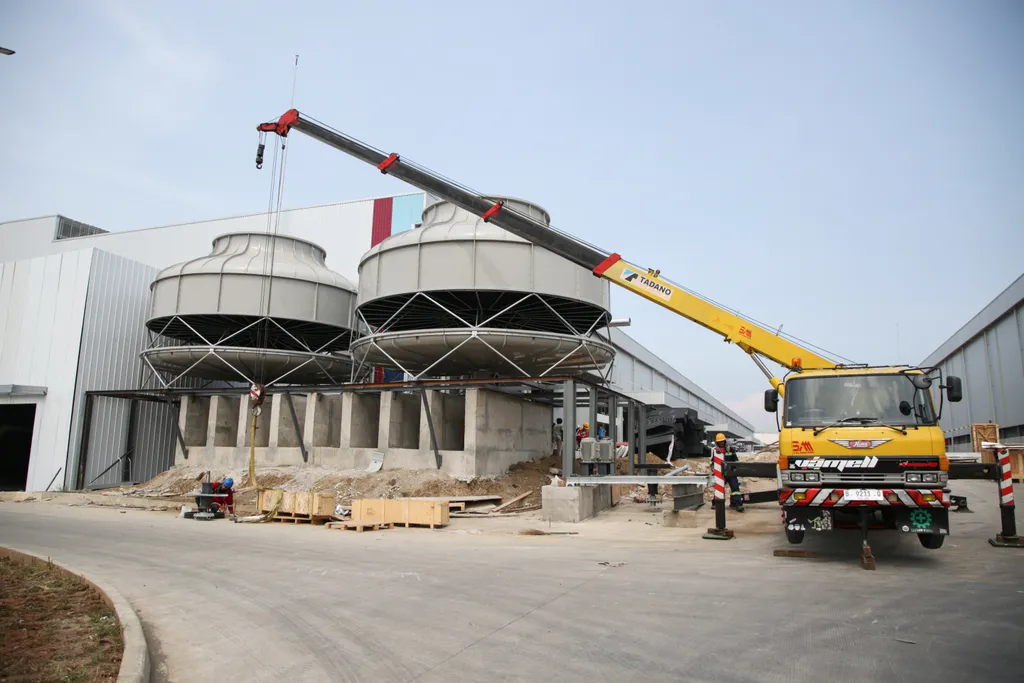
Diversification into logistics and warehousing assets has become a survival strategy for developers amid pressure from interest rates and purchasing power.
When many people still view property as a matter of houses and apartments, the business direction of major developers is quietly shifting. No longer are residences the prime focus, but rather warehouses and logistics zones.
A sector that has long escaped public attention, yet is becoming the “new engine” of growth.
This trend has been seized upon by one of Indonesia’s industry players, PT Astra Property. Since 2025, they have begun redirecting their focus to the industrial sector as a new source of growth. Last year, this Astra International subsidiary actively pursued acquisitions with players in the logistics property sector.
One of them was the acquisition of PT Mega Manunggal Property Tbk (MMP), a listed industrial and logistics property developer on the Indonesia Stock Exchange, which operates 13 warehouses in major industrial and infrastructure hubs in Jabodetabek and Surabaya, East Java.
The assets with MMP include warehouses that can be rented by individuals lacking sufficient space at home to store infrequently used items. Located in East Jakarta, the warehouse provides rooms of 3-5 square metres with rental costs under Rp 3 million per month.
Furthermore, Astra Property, through a joint venture with ESR, a leading Asian real estate investor and manager, also controls two warehouses: Cikarang Logistics Park 1 and 2, spanning 17.3 hectares in Cikarang, Bekasi Regency, West Java.
Astra Property’s President Director, Wibowo Muljono, in Jakarta on Wednesday (29/4/2026), stated that expansion into the industrial sector is a strategic step to strengthen portfolio diversification. Previously, Astra’s property business was supported by residential and commercial segments.
Astra Property had previously developed three landed housing projects: Asya, Ammaia, and Altea BLVD. Additionally, there are two apartment assets: Anandamaya and Arumaya with over 1,400 units handed over. This residential portfolio is located in Jakarta and its surroundings.
In the commercial line, Astra Property owns two office buildings, including Menara Astra, one hotel, and two shophouses. This year, the company will soon operate Arumaya Financial Center at The Arumaya, South Jakarta, in the second quarter of 2026.
However, the company is now promoting industrial as the third pillar. According to Wibowo, this diversification approach is crucial to maintain business resilience, especially when one segment faces pressure.
The global trend is now deemed more favourable for industrial property businesses. Astra Property sees an increase in demand for industrial and logistics space in recent times, including from foreign companies expanding operations in Indonesia. This is partly due to the effects of the US-China trade war.
“There has been a change in tenant composition, with more new companies entering and requiring warehouses or logistics facilities,” said Wibowo.
Meanwhile, the residential segment is currently more sensitive to interest rate hikes because it relies on home ownership credit (KPR) financing.
“Residential follows the buying and selling cycle very closely. If interest rates rise, the impact is immediately felt,” said Wibowo.
Therefore, Astra Property’s residential asset portfolio is acknowledged to pursue margins over volume.
In the current situation of weak purchasing power, the company is adjusting strategies, including redesigning projects to better match local market characteristics. One example is their residential project, Ammaia in Cikupa, Tangerang, Banten.
Wibowo explained that they will redevelop the concept of this landed housing complex. One reason is that the targeted market segment does not align with the purchasing power in that area, even though they still target the upper-middle class.
“Segmentation must be viewed by region. High-end in one city cannot be equated with another,” he said.
Throughout 2025, the sales performance of Astra Property’s residential segment was acknowledged to have slowed. Meanwhile, the commercial segment remains the largest contributor to operating income, which reached Rp 1.13 trillion last year.
The industrial segment, newly recorded for three months in the 2025 financial performance, is expected to grow significantly in 2026. This segment is also hoped to contribute income close to the commercial segment, which has long been the company’s largest revenue source.
Overall, Indonesia’s industrial property sector has experienced rapid growth of around 9% per year in recent years, far surpassing national GDP growth.
Warehousing needs are projected to grow by 8-10% per year until 2030, offering attractive long-term investment potential. This is driven by strong demand from the logistics, e-commerce, consumer products or fast-moving consumer goods (FMCG), and manufacturing sectors.
This phenomenon is not unique to Astra Property. Industry-wide, data shows the same pattern. The first-quarter 2026 property performance report by Cushman & Wakefield notes that the industrial sector performed as one of the main growth drivers, amid more moderate movements in the commercial and residential segments.
In the industrial segment, market performance appears relatively solid. Demand for industrial land in the first quarter of 2026 reached 68 hectares, dominated by local investors and significant contributions from Chinese companies.
This activity is mainly concentrated in Bekasi and Purwakarta areas in West Java, which continue to attract new industrial developments. Additionally, the textile and FMCG sectors are the main drivers of demand, followed by new needs from data centre developments.
Not only from the demand side, other performance indicators j