
War Turns Back to Erode Putin, Former Russian Central Bank Adviser and Oxford Professor Speak Out
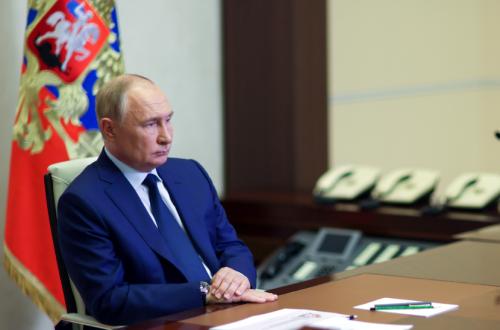
The war launched by Russia against Ukraine is now judged to be turning back to erode the foundations of President Vladimir Putin’s power. Swelling war costs, pressure on the economy, and rising public discontent are said to be early signals of the weakening resilience of the Kremlin regime.
The warning was delivered by former Russian central bank adviser Alexandra Prokopenko and Oxford University professor of global history Peter Frankopan. Both assess that the mounting pressure from the war could trigger fissures within Russia’s elite circle, even though Putin still holds political control for now.
In her opinion piece in the Financial Times, Prokopenko said the war is forcing the Kremlin to abandon the fiscal discipline that has long been one of Russia’s economic strengths. According to the Carnegie Russia Eurasia Center researcher, the government is now amending various budget rules to ensure war financing continues.
One of the most striking moves was the Russian parliament’s decision to grant the Finance Ministry greater authority to increase state spending and add debt without having to wait for formal approval of a new budget.
The fiscal pressure is increasingly evident. By May, Russia’s budget deficit had reached around 2.6 percent of gross domestic product, or approximately 83 billion US dollars, twice as large as the deficit for the whole of 2025. Meanwhile, Russia’s National Wealth Fund, which has served as a fiscal cushion, continues to shrink as it is used to cover the budget shortfall.
“A cornered autocracy is rewriting fiscal rules while bypassing parliament and refusing to acknowledge dangers that are increasingly difficult to control. This may not be as dramatic as a coup, but this is how a regime’s decline begins,” Prokopenko wrote.
At the same time, the pressure of war is also growing. Ukrainian drone attacks are reportedly reaching Russian territory more frequently, including oil refineries and defence industry facilities around Moscow and St. Petersburg. Casualties on the Russian military side continue to mount, while compensation costs for soldiers’ families are also swelling.
Domestic economic conditions are also coming under strain. Fuel shortages have triggered long queues at a number of petrol stations, while inflation and high interest rates are increasingly burdening Russian society.
According to Prokopenko, the Kremlin is no longer able to pursue three targets simultaneously: financing the war, controlling inflation, and maintaining economic growth.
“The war is now increasingly being financed by shifting the burden onto the public and suspending the state’s own rules. If this continues, Russia will face a poorer economy, an angrier society, an increasingly fragile financial system, and war funding that can no longer be relied upon,” she wrote.
Pressure is also beginning to emerge from circles long known to support Russia’s military operation. A military blogger and veteran of the Ukraine war, Aleksandr Lunin, recently uploaded a viral video after accusing commanders of torturing their own soldiers.