
War Shifts Global Trade Direction, Here is the Indonesian Government's Response
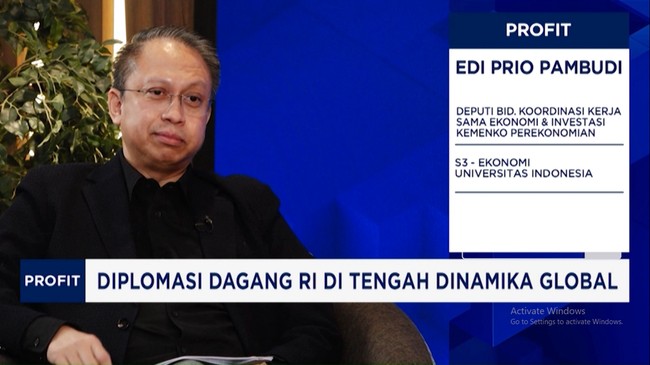
Amid global geopolitical turmoil and trade tariff wars, the Indonesian government observes a fundamental shift in global trade towards ‘economy security’, compelling every nation to secure its national interests. According to the Deputy for Economic and Investment Cooperation at the Coordinating Ministry for Economic Affairs, Edi Prio Pambudi, the government is seeking opportunities within this new security paradigm by establishing strategies for trade tariffs and strengthening regional cooperation, including bilateral partnerships. The government is also continuously enhancing risk management in trade cooperation with partner countries. Furthermore, the government is collaborating with business actors to implement every trade agreement to accelerate the realisation of trade cooperation and drive the Indonesian economy. One trade agreement under close attention is the Indonesia-European Union Comprehensive Economic Partnership Agreement (IEU-CEPA), a free trade agreement between Indonesia and the European Union with high standards. Every trade deal is encouraged to elevate Indonesia’s standards to strengthen the country’s market access. The Indonesian government is also closely monitoring tariff policies from partner countries, directing them to be less volatile to provide tariff certainty for businesses. Currently, high-value export markets for Indonesia include the European Union and the United States, which have large absorption capacities, alongside important regional markets for strengthening supply chains and potential non-traditional markets capable of absorbing Indonesian products.