
War, Oil, and Islamic Finance: Can OIC Leadership Unite the Interests of the Ummah?
The war in the Middle East is forcing OIC countries to confront a major question: Can the Islamic world unite its economic, energy, and Islamic finance interests amid ongoing conflicts disrupting the region?
This question is not rhetorical. The conflict has strained trade routes, increased logistics costs, shaken energy prices, and amplified uncertainties for the financial systems of Muslim countries. If the OIC fails to act as a collective force, the ummah will only witness each nation acting independently in increasingly fragile conditions.
The latest data shows that global Islamic finance actually possesses significant strength. Its total assets in 2024 have reached $6.0 trillion with 2,255 Islamic financial institutions, and it is projected to rise to $9.719 trillion by 2029. The industry’s structure is still dominated by Islamic banking at $4.318 trillion, followed by sukuk at $1.031 trillion, Islamic funds at $308 billion, and takaful at $136 billion.
The Islamic world actually has a sufficiently large financial base to build collective economic resilience. The issue is not a lack of instruments. The issue lies in leadership and coordination.
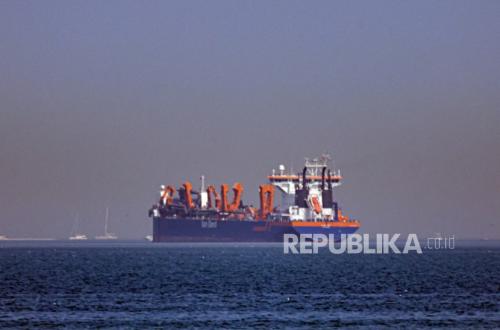
The latest conflict illustrates the magnitude of this threat. Doubts over ceasefires and restrictions in the Strait of Hormuz are keeping markets pricing in high risk premiums for oil. This route typically carries about 20 per cent of global oil and gas supplies, mainly from Iraq, Saudi Arabia, Kuwait, and Qatar.
When this energy artery is disrupted, OIC energy-exporting countries may indeed benefit from higher prices. However, they also bear risks of attacks on facilities, surges in insurance premiums, rising shipping costs, and export uncertainties. Short-term gains could turn into structural vulnerabilities.
This situation has been felt in the markets. On 9 April 2026, the DFM General fell 1.24 per cent, the FTSE Nasdaq Dubai UAE 20 dropped 1.30 per cent, the Qatar Main 20 declined 0.36 per cent, and the Tadawul All Share fell 0.12 per cent. This data indicates that OIC markets are highly sensitive to war. Investors do not only look at oil prices. They assess regional risks comprehensively: shipping stability, infrastructure security, and growth sustainability.
Iran provides the harshest lesson. The country has the largest Islamic finance assets, around $2.249 trillion, but ranks only 8th in IFDI with a score of 64. In contrast, Malaysia leads with a score of 136, followed by Saudi Arabia at 114, UAE at 92, and Indonesia at 75.
This data confirms that asset size does not automatically generate institutional strength. In wartime situations, institutional foundations, governance, public awareness, and coordination capacity become the key differentiators. Countries large in assets can remain fragile if living under prolonged geopolitical pressure.
The war’s impact also extends to OIC countries not directly targeted. The World Bank warns that the Middle East war, high energy prices, and trade disruptions will slow growth and tighten financing conditions. The report also highlights risks of declining remittances from Gulf-based workers. If the conflict prolongs, households could lose 3–4 per cent of income due to fuel cost surges. For many OIC energy-importing countries, this means dual pressures: rising inflation, swelling subsidies, and shrinking fiscal space.
In this context, OIC leadership is being tested. The OIC cannot suffice with issuing political solidarity statements. The OIC must prove that ummah solidarity can be translated into concrete economic work. Gulf countries rich in liquidity need to support more fragile OIC countries through investments, sharia-based financing, and stabilisation support. Cross-border sukuk markets must be strengthened to finance energy, logistics, food, and infrastructure recovery. Islamic banks must be directed to maintain real sector resilience, not just expand balance sheets. Takaful must also be expanded as war risks, logistics, and business disruptions have sharply increased.
Indonesia has important relevance in this agenda. With a 4th IFDI ranking and a knowledge score of 200, Indonesia has the intellectual capital to promote OIC Islamic economic integration ideas. The challenge lies in the ability to transform that knowledge strength into strategic leadership that can bridge the interests of energy-exporting countries, energy-importing countries, and those directly impacted by war.
Can OIC leadership unite the ummah’s interests? The answer depends on the courage to act. If the OIC remains divided by narrow national interests, the war will continue to turn the Islamic world into a fragile market. If the OIC chooses integration, strengthens sharia financing, and builds collective resilience, this crisis can become a turning point towards more tangible ummah economic leadership.
Source: jawawa.id (https://jawawa.id/newsitem/war-oil-and-islamic-finance-can-oic-leadership-unite-the-interests-of-the-ummah-1775782248)
Originally published by Republika (https://analisis.republika.co.id/berita/td88sb475/perang-minyak-dan-keuangan-syariah-mampukah-kepemimpinan-oic-menyatukan-kepentingan-ummat), translated from Indonesian