
War Intensifies, Oil Prices Surge Nearly 10% in a Week
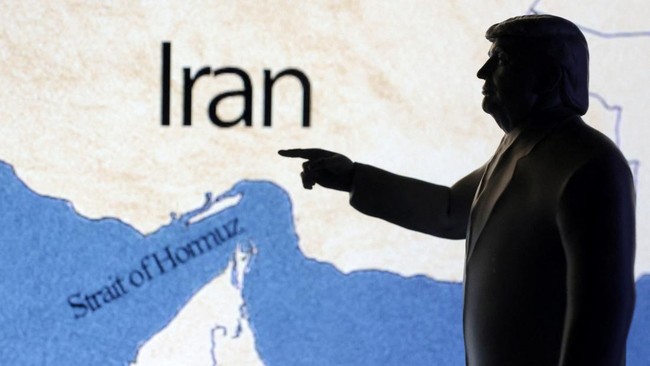
Global oil prices fell during the final trading session of the week. However, Brent and WTI remained above US$100 per barrel as the war between the United States and Iran continues to disrupt oil supplies from the Middle East.
According to Refinitiv data, Brent crude prices closed down 2.81% on Friday (11/09/2026) to US$104.61 per barrel. Meanwhile, West Texas Intermediate (WTI) crude fell 2┢37% to US$100.05 per barrel.
This correction broke Brent’s five-day winning streak, while WTI also reversed its eight-day upward trend. Despite the final session’s decline, both benchmark prices recorded sharp weekly gains. Over the course of the week, Brent surged by 8.65%, while WTI jumped 9.37%, marking the second consecutive week of gains for both.
The surge reflects significant market anxiety regarding Middle Eastern oil supplies. The conflict between the US and Iran has hindered shipping through the Strait of Hormuz, one of the world’s most vital oil transit routes. Oil prices even touched their highest levels since mid-May on Friday, before retreating following reports that several Middle Eastern foreign ministers are discussing a temporary agreement with Iran to regulate shipping through the Strait of Hormuz.
These reports temporarily eased market panic and prompted traders to realise profits after the preceding price surge. “The factors that triggered panic yesterday began to subside today,” said Phil Flynn, senior analyst at Price Futures Group, as quoted by Reuters.
However, discussions regarding the agreement have not yet eliminated the threat to supply. The United States and Iran continue to launch retaliatory strikes, and oil flows through the Strait of
Supply concerns in the Middle East also intensified after Saudi Arabia’s primary pipeline network became a target. According to CNBC International, Saudi Arabia temporarily closed its East-West crude oil pipeline network on Friday as a precautionary measure following drone attacks believed to have originated from Iraqi territory.
The attacks occurred on Thursday morning, targeting pipeline networks in the Riyadh and Madinah regions. The strikes caused fires and damage to several sections of the network, with several injuries reported. The Saudi Ministry of Energy subsequently deployed emergency teams to secure the site and inspect the condition of the pipelines. The Saudi government has not yet announced when the pipelines will be operational again.
“Further developments will be announced in due course,” stated the Saudi Ministry of Energy, as quoted by CNBC International.
The East-West pipeline is one of Saudi Arabia’s most critical energy infrastructures, with a capacity of approximately 7 million barrels per day, stretching across the kingdom to export terminals on the Red Sea coast. This route allows crude from eastern production areas to reach Red Sea terminals, enabling tankers to bypass the Persian Gulf and the Strait of Hormuz when transporting oil to global markets.
The importance of the East-West pipeline has grown since the US-Iran war disrupted shipping through the Strait of Hormuz. Saudi Arabia relies on this route to maintain exports and reduce dependence on Persian Gulf routes. Saudi Aramco CEO Amin Nasser stated last month that the East-West pipeline plays a larger role in mitigating supply disruptions caused by the Iran war than the release of emergency oil reserves.
News of the attacks has been circulating since Thursday and is believed to have driven the oil price surge. During that trading session, both Brent and WTI prices jumped by more than 6%, breaking the US$100 per barrel threshold. The Saudi government has temporarily chosen not to launch retaliatory strikes, as Riyadh seeks to allow the Iraqi government time to take measures to prevent its territory from being used as a launch site for future attacks.
The attack on the East-West pipeline adds to the growing threats against Saudi energy infrastructure. Houthi groups, allied with Iran, have also increased attacks against the kingdom in recent days. Houthi attacks earlier in the week targeted energy facilities and several civilian assets in Saudi Arabia, resulting in over 70 reported injuries.
Since July, the Houthis have also announced a maritime embargo against Saudi Arabia. The militia, affiliated with the IRGC, is attempting to disrupt the kingdom’s oil shipments through the Bab el-Mandeb Strait, which connects the Red Sea to the Gulf of Aden and global shipping lanes. This situation leaves both of Saudi Arabia’s vital oil shipping routes under threat: the Strait of Hormuz is disrupted by the US-Iran war, while access to the Red Sea is shadowed by attacks on the East-West pipeline and Houthi activity near Bab el-Mandeb.
Source: jawawa.id (https://jawawa.id/newsitem/war-intensifies-oil-prices-surge-nearly-10-in-a-week-1789185181)
Originally published by CNBC Indonesia (https://www.cnbcindonesia.com/research/20260912065624-128-767374/perang-makin-panas-harga-minyak-terbang-nyaris-10-dalam-sepekan), translated from Indonesian