
War Heats Up Again: A Look Inside Iran's Arsenal, Can It Stand Against the US?
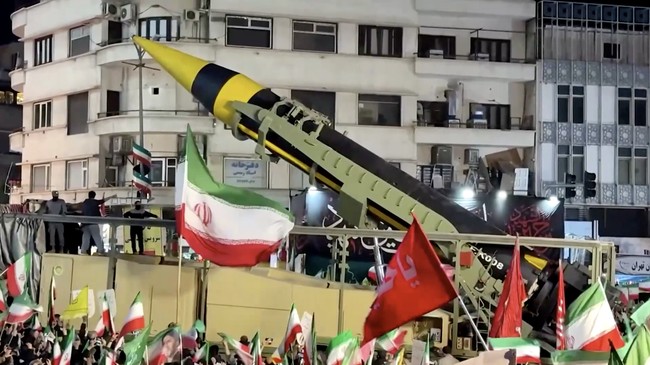
Tensions between the United States and Iran have heated up once again. After a period of relative calm lasting several weeks, both nations have engaged in the most serious exchange of attacks since July 2026.
The escalation began when US military forces attacked two launchers belonging to the Islamic Revolutionary Guard Corps (IRGC) on Larak Island, near the Strait of Hormuz, on Sunday (30/8/2026). Iran retaliated by firing missiles at two US airbases in Jordan.
The conflict expanded on Tuesday (1/9/2026). The US struck back at IRGC air defence systems, radar, maritime facilities, mine-laying capabilities, and communication networks. Iran responded by attacking US facilities in Jordan, Bahrain, and Iraq using missiles and drones.
This exchange of fire has drawn attention to the strength of Iran’s weaponry. Tehran is known to possess a diverse range of military hardware, ranging from ballistic missiles, cruise missiles, and drones to air defence systems and warships. However, its true strength is difficult to calculate as Iran does not disclose data regarding quantities, readiness levels, or operational weaponry.
Nevertheless, a list of Iran’s military assets has been compiled. Based on the House of Saud’s Iran Weapons Database, which contains 65 entries, the assets can be categorised by function:
- Ballistic Missiles: Iran’s Primary Weapon
Ballistic missiles are a crucial part of Iran’s defence. These weapons are capable of carrying warheads at high altitudes before descending towards targets at high speeds. The Centre for Strategic and International Studies (CSIS) assesses that Iran possesses the largest and most diverse missile arsenal in the Middle East. The most prominent names are the Fattah-1 and Fattah-2. Iran promotes the Fattah family as hypersonic missiles capable of manoeuvring before impact. However, claims regarding their speed and capability remain highly debated; some defence observers prefer to describe the Fattah as a ballistic missile with a glide vehicle or manoeuvrable warhead, rather than a fully hypersonic weapon. Iran also possesses the Khorramshahr-4 (or Kheibar), designed to carry heavy warheads. Meanwhile, the Kheibar Shekan, Sejjame, Haj Qasem, and the Fateh family use solid fuel, allowing for faster launch preparations compared to liquid-fuel missiles.
- Cruise Missiles
Unlike ballistic missiles that fly at high altitudes, cruise missiles move more like unmanned aircraft. These weapons use engines during flight and can travel at low altitudes, following the earth’s surface. The Paveh is one of the most notable long-range cruise missiles. Iran claims this missile can alter its flight path and coordinate with other missiles when approaching a target. In addition to the Paveh, there are the Soumar and Hoveyzeh, which are developed from the Soviet-made Kh-55 missile. It is believed that Iran acquired several Kh-55s from Ukraine in the 1990s, subsequently studying and developing its own versions.
- Low-Cost Drones for Mass Attacks
While missiles provide significant explosive power, drones offer a cheaper and more flexible attack option. Iran has successfully developed various unmanned aerial vehicles (UAVs), ranging from single-use kamikaze drones to jumbo-sized drones capable of returning to base. The Shahed-136 is Iran’s most well-known product. This delta-wing drone can carry explosives and strike targets directly, earning it the nickname ‘kamikaze drone’. In terms of speed, the Shahed-136 is relatively slow and easily detectable. However, its very low production cost allows such weapons to be launched in large numbers to overwhelm enemy air defence systems. Iran has since developed the Shahed-238, which uses a jet engine. Its speed is higher than the Shahed-136, reducing the time available for detection and interception. CSIS noted that Iran launched over 2,000 drones and 500 ballistic missiles in the first four days of combat with the US in early 2026. CSIS also estimates that Iran has expended approximately 60% of its drone supplies and 30% of its missile supplies during the conflict. Iran is also estimated to be capable of producing around 5,000 engines and 500 Shahed-136 airframes per year.
- Iranian Air Defence Systems
Iran has developed a layered air defence network to protect cities and military bases. However, in reality, during the war between Iran and the US, many of Iran’s critical objects have been breached. Iran relies on long-range systems such as the Russian-made S-300PMU-2 and the domestically produced Bavar-373. The Bavar-373 is often cited as Iran’s response to the limitations of acquiring foreign systems due to sanctions. This system utilises radar and mobile launchers, which can be moved to facilitate mobilisation.
- Iranian Naval and Land Forces
In addition to missiles, drones, and air defence, Iran possesses diverse naval weaponry, warships, and land combat vehicles. Iran’s naval strength is designed to operate around the Persian Gulf and the Strait of Hormuz. Tehran relies on anti-ship missiles, mines, unmanned vessels, submarines, and fast attack craft. On land, Iran possesses a mix of domestically produced tanks and combat vehicles sourced from Russia and Western nations.
Source: jawawa.id (https://jawawa.id/newsitem/war-heats-up-again-a-look-inside-irans-arsenal-can-it-stand-against-the-us-1788357386)
Originally published by CNBC Indonesia (https://www.cnbcindonesia.com/research/20260902134456-128-764357/perang-memanas-lagi-intip-isi-gudang-senjata-iran-sanggup-lawan-as), translated from Indonesian