
War from a Persian Metaphysical Perspective
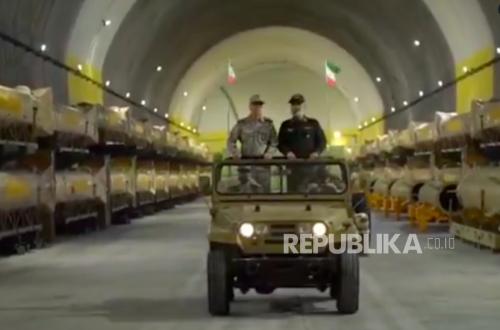
Even though a peace memorandum has been signed between the United States and Iran, the escalation of conflict between Iran and the United States does not immediately vanish, given that the nature of the United States and its ally Israel often involves betraying peace agreements, or even increasing uncertainty.
Global oil prices, which decreased for a period, combined with agreements to increase production by oil-exporting nations (OPEC), serve as a signal that global oil supply routes (the Strait of Hormuz and Bab el-Mandeb) still play a very important role in the world’s oil supply chains.
The United States and Israel must strictly adhere to every peace agreement with Iran if they do not wish to see the closure of both straits by Iran. The world has already felt the consequences of Iran closing the Strait of Hormuz, which caused global oil prices to skyrocket, impacting all sectors of life.
The United States may assume that through a joint attack with Israel, it could incapacitate Tehran within a short period and trigger a regime change. The United States forgets that Iran is not Iraq, Libya, or Venezuela, which can be conquered in a matter of hours through secret military operations. It appears the United States has miscalculated. We can see how the Iranian people deeply love and respect their leaders, as demonstrated during the funeral processions of Imam Ali Khamenei.
Iran (read: Persia) possesses a long historical experience on the battlefield; they have fought against great nations such as the armies of Alexander the Great, the Mongols, the Roman Empire, and Islamic Caliphates. This is why it is highly reasonable that the Persian nation is so brave in resisting the United States and its allies, despite their modern technology and weaponry.
According to Iqbal, there are at least two major currents influencing the Persian perspective on war. First, in Zoroastrian doctrine, the world is seen as an eternal battlefield between Asha (Truth, Light, Order) versus Druj (Falsehood, Darkness, Chaos).
Humans are not mere spectators but soldiers involved in the war. Neutrality is a moral impossibility; to be neutral is to side with Druj, because war is never neutral but always takes a side and is metaphysical.
The arrival of Islam introduced the concept of Tawhid (monotheism), causing the Zoroastrian dualism to undergo a Hegelian Aufhebung, ascending to a higher value within divine monotheistic principles. Persia added another dimension following the tragedy of Karbala in 680 AD, finding a perfect form within the pattern of Asha vs Druj.
Hussain is the manifestation of Asha, while Yazid is the manifestation of Druj. Furthermore, Syahadah (martyrdom) represents the highest path towards ultimate reality.