
War Escalates! Pro-Iran Militias Threaten to Bomb Saudi Arabia's "Lifelines" for Oil
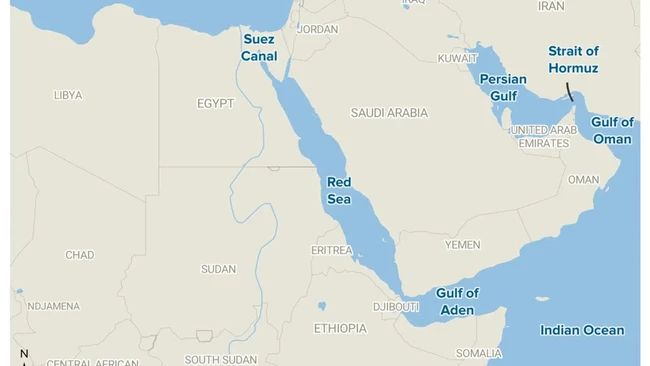
Iran-backed Houthi militants from Yemen have officially entered the fray of war over the weekend, an escalation that threatens to sever global crude oil shipping lanes in the Red Sea. This aggressive move comes just as Saudi Arabia attempts to divert millions of barrels of oil to the Yanbu port to avoid blockades in the Strait of Hormuz.
Richard Bronze, co-founder and head of geopolitics at research firm Energy Aspects, has issued a stark warning about the impact of attacks by the group on world energy stability.
“Anything that endangers the flow of Saudi oil out of the Red Sea will put further upward pressure on global oil prices,” Bronze told CNN International.
According to Vortexa data on Monday (30/03/2026), 4.6 million barrels per day have been loaded at Yanbu in the last two weeks, a threefold surge from the 2025 average. However, the Houthis’ entry into the conflict has now placed this backup route in the sights of missiles and drones.
The Houthis’ official involvement was marked by the launch of two missiles towards Israel on Saturday (28/03/2026). The day before, Mohammed Mansour, Deputy Minister of Information in the Houthi government, openly described blocking sea routes as their primary strategy.
“Closing the Bab el-Mandeb Strait is a viable option, and the consequences will be borne by the aggressor United States and Israel,” Mansour told CNN.
The impact of this threat has immediately hit financial markets. Brent crude prices have surged around 50% since the war began, reaching US$110 (Rp 1,870,000) per barrel. Artem Abramov, head of oil and natural gas research at Rystad Energy, predicts prices will skyrocket even higher if Bab el-Mandeb is truly closed.
“Closing that waterway will only break the system much faster. Even the threat of closing the Red Sea alone is likely to impose continuous upward pressure on insurance, shipping, and ultimately most oil price benchmarks in the coming days,” Abramov said.
This situation poses a serious threat to Asia, which depends on 60% of its oil needs from the Middle East. If the Houthis continue their attacks, tanker ships will have to detour around Africa, adding weeks to travel times.
Bronze reiterated that this disruption will significantly worsen shortages in the Asian region.
“If the Houthis start threatening ships, then at minimum, this will add weeks to journey times to Asia. That will deepen the crude oil supply crisis in Asia,” Bronze said.
Muyu Xu, senior crude oil analyst at Kpler, stated that oil stocks in Asia will begin to dwindle from April onwards. If the Bab el-Mandeb route is paralysed, Saudi Arabia is expected to prioritise shipments to closer Europe, leaving Asia in a critical state.
“If they can’t get Saudi crude on time, it will only make their short-term supply crisis worse,” Xu said.
Furthermore, Xu warned that the main problem facing the world now is no longer just high prices, but the availability of the commodity itself.
“High oil prices are one issue, but most importantly, they can’t get enough oil,” Xu concluded.