
War Escalates: Iran's Axis of Resistance Re-emerges Targeting Saudi Arabia
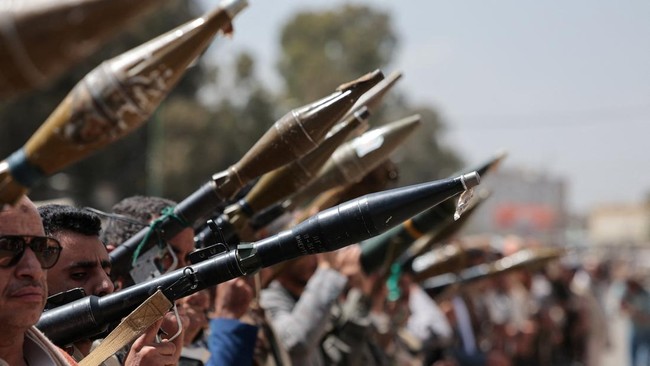
The war is intensifying. Attacks against Saudi Arabia, claimed by the Yemeni Houthi group this week, are suspected to have been launched from Iraqi territory with the support of Iraqi armed groups allied with Iran. This finding emerged from assessments by the Saudi Arabian government and several regional partners, who believe that coordination between pro-Iranian militias in the Middle East is becoming tighter and more dangerous than before.
According to Reuters, two regional officials stated that part of the attacks hitting oil facilities in the Eastern Province of Saudi Arabia were carried as joint operations between the Houthis and Iraqi armed groups supported by Tehran. This assessment differs from the official version previously presented to the public. The officials noted that these operations are being conducted under the supervision of the Islamic Revolutionary Guard Corps (IRGC).
These findings indicate that the groups comprising what Iran calls the ‘Axis of Resistance’ are strengthening their operational relationships while increasing their capability to attack US allies in the region. This development occurs despite these groups being targets of US and Israeli strikes for years, spanning from Lebanon to Iran, particularly following the Hamas attack on Israel in 2023.
Saudi Oil Facilities Targeted
The attacks include strikes against oil facilities in Saudi Arabia’s Eastern Province, the kingdom’s primary hub for crude oil production. In response, Saudi Arabia and the United States launched airstrikes on several locations in Iraq on Wednesday. Riyadh stated that the strikes targeted sites linked to the attacks on Saudi Arabia and officially blamed Iranian-aligned Iraqi armed groups. Conversely, the Houthi group claimed responsibility for the attacks.
The Iraqi government stated it is still conducting an investigation. However, two regional officials told Reuters that part of the attacks were indeed carried out from Iraqi territory by joint forces of Iraqi militias and the Houthis. Following the Saudi-US airstrikes on Wednesday, media outlets affiliated with Iran reported the deaths of several IRGC members, Iraqi fighters, and at least one Houthi member.
Increasing Coordination Among Pro-Iranian Militias
Farea al-Muslimi, a researcher for the Middle East and North Africa programme at Chatham House, stated that the links between groups within the Axis of Resistance are now much closer than before. ‘There is now direct training and coordination among the members of the Axis of Resistance itself, not just between them and Iran,’ he noted.
Analysts believe this development highlights the growing importance of Iraq’s position within the Axis of Resistance, especially following the fall of the Bashar al-Assad government in Syria and the weakening of Hezbollah in Lebanon. The governments of Saudi Arabia, Iran, and Iraq have not responded to requests for comment, nor has the Houthi group.
The Houthis previously stated that attacks on Saudi Arabia were retaliation for Saudi actions in Yemen, aiming to break what they termed a ‘siege’ by the kingdom. Saudi Arabia denied these allegations, asserting that dozens of ships have arrived at Houthi-controlled ports throughout the year.
Long-standing Houthi-Iraqi Militia Ties
Cooperation between the Houthis and Iranian-loyal Iraqi armed groups is not a new phenomenon. The relationship is particularly strong with Kataib Hezbollah, considered the most powerful and organised Iraqi militia. In 2024, Houthi leader Abdul Malik al-Houthi announced the existence of a joint operations room between the Houthis and Iraqi groups. That same year, both parties announced their first joint operation targeting Israel.
Furthermore, the Houthis maintain a permanent presence in Iraq, including official offices and representatives such as Ahmed al-Sharafi. Reports indicate that Sharafi has attended several open meetings with Iraqi Shia parties and Iranian-aligned militias. In various parts of Baghdad, red and green posters displaying the Houthi ‘Sarkha’ slogan have long been visible.
Iraq as a Strategic Base
Analysts assess that Iraq holds high strategic value for the Houthis and other pro-Iranian groups. The country’s vast territory and many open areas make it easier to conduct covert activities and launch attacks. Additionally, Iraq shares a border of over 800 kilometres with Saudi Arabia, which is deemed difficult to monitor entirely. This makes Iraq an ideal location for launching attacks against Saudi Arabia and other Gulf states.
For years, hundreds of attacks against Kuwait, Saudi Arabia, and the United Arab Emirates have been attributed to groups operating out of Iraq. These include the drone attacks on the US Embassy in Riyadh last March and the attack on the Barakah nuclear power plant in the UAE in May. While the Iraqi government repeatedly states it will investigate allegations that its territory is being used to attack neighbouring Arab states, critics argue that Baghdad’s capacity to address these issues is limited, damaging its credibility with the Gulf nations.