
War De-escalates: Crypto Celebrates, Bitcoin Accelerates
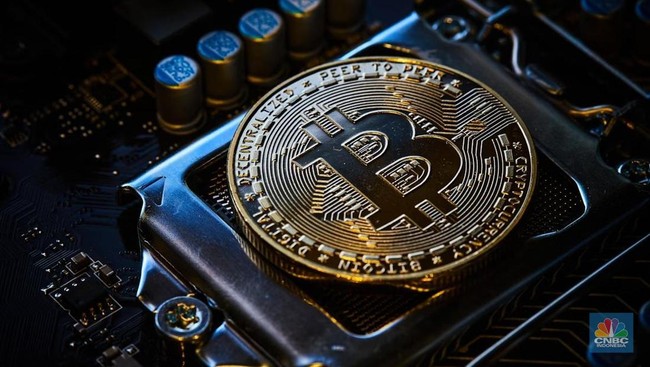
Global financial markets, including crypto assets, began mid-June with a more stable sentiment. US President Donald Trump has reportedly signed a preliminary draft of a peace agreement with Iran. Although the deal is not yet fully finalised, this diplomatic step has succeeded in reducing some of the geopolitical risk premium that has pressured markets in recent months. The market’s response to this de-escalation is visible in a measured relief rally. Bitcoin and the majority of large-cap digital assets recorded positive movements over the last 24 hours. Nevertheless, the shadow of persistent structural inflation remains a restraining factor, limiting the room for price increases.
Based on the latest trading data, Bitcoin is trading at $65,615.37, recording a daily gain of +1.57% and a weekly appreciation of +3.98%. This movement indicates that after a deep correction from the $80,000 area to the $65,000 range, the market is beginning to find a short-term equilibrium thanks to the easing of military tensions. A similar recovery pattern is shown by Ethereum, which is at $1,719.90, posting daily growth of +2.09% and a weekly appreciation of +2.05%. The stability in these two major assets reflects reduced panic selling, although significant new accumulation volume has yet to appear.
In the altcoin sector, price movements directly responded to the geopolitical sentiment transition. Solana recorded a positive performance with a daily increase of +3.35% and led the weekly appreciation among the top ten with a +7.42% gain to $71.24. Moderate sectoral strengthening was also followed by Hyperliquid, up +4.99%, and Dogecoin, which strengthened +0.96%. Conversely, a very sharp negative anomaly was recorded by Zcash. After surging significantly the previous week as a privacy instrument alternative amid the heating up of war, the de-escalation of conflict today triggered a rapid capital rotation. ZEC recorded a deep daily correction of -11.90% and a weekly decline of -9.38%, bringing it down to $472.17. This phenomenon confirms that the previous demand for privacy assets was purely driven by regional panic, which is now beginning to subside.
The signing of the preliminary peace draft by the US is an important turning point in this year’s geopolitical dynamics. Although it still requires a process to reach a final, binding memorandum of understanding, this de-escalation signal provides hope for the permanent reopening of the Strait of Hormuz. Expectations for the normalisation of global energy trade routes are gradually beginning to dampen speculation of further crude oil price spikes. For risk asset markets, the easing of the energy supply crisis threat provides breathing room, reducing fears of a sudden inflationary shock in the near term.
Despite the peace deal providing a breath of fresh air, the fundamental macroeconomic structure has not yet eased. Inflation in the United States and Europe has previously shown signs of rising, driven by still very strong US labour data and logistics costs that were already elevated during the conflict period. This condition maintains the probability that the Fed, under new Chair Kevin Warsh, still has the urgency to keep interest rates at restrictive levels, or even raise them, to ensure domestic price stability. This monetary tightening will continue to limit the liquidity available for digital asset markets. Therefore, the analytical view for long-term projections is firmly maintained. The sharp decline from the $85,000 level to the current $65,000 range aligns with the thesis of market fair value adjustment. The primary target for maximum capital deployment remains unchanged, conservatively positioned in the $40,000 to $45,000 price range. This range is projected as the optimal four-year cycle bottom in the third or fourth quarter of 2026.