
Wanam Food Estate Project in South Papua for Food Security
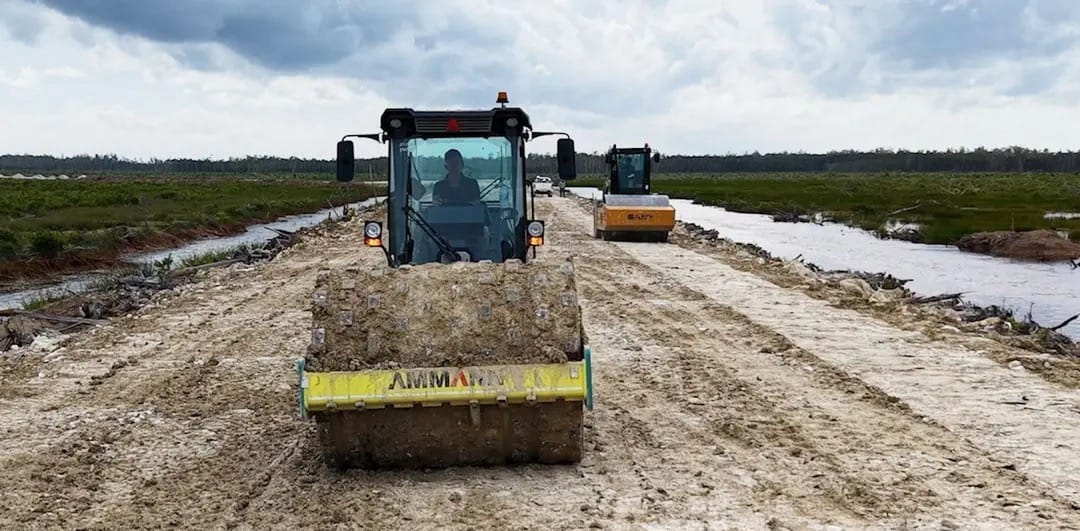
National Strategic Project (PSN) food estate in Wanam, Merauke, South Papua, is not linked to the film ‘Pesta Babi’. The film by Dandhy Laksono and Cypri Paju Dale depicts the struggle of indigenous communities in South Papua to defend ancestral lands and customary forests against mega-projects under the banner of development. The forests and land portrayed in the film are not part of the PSN and are not located in Wanam, which is creating a 1-million-hectare rice paddies.
Iwan Setiawan, Director of Indonesia Political Review (IPR), emphasised that considering today’s global conditions, the Wanam project to print 1 million hectares of rice fields should continue. “In my view, the Wanam PSN policy is quite visionary, because in the future global nations will focus on their own food issues. If the issue is Indonesia running a food deficit, that would be more dangerous,” he said on Tuesday (19/5).
He explained that Wanam’s rice field program aims to strengthen national self-sufficiency and resilience. The main benefits include achieving rice self-sufficiency, creating new rural jobs, increasing farmers’ incomes by 20 percent to 30 percent, and turning idle land into productive areas.
“As for criticisms of the Pesta Babi film, that is the right of democracy to express opinions in film. The problem would be if such actions aim to delegitimise and advance hidden political agendas,” he emphasized.
Regarding the environment and forests, he noted the government must have studies and comply with applicable laws. “In a situation of global pressure that affects Indonesia’s economy today, we must build optimistic narratives rather than engage in provocation,” he added.
New Hope
As information, PSN Wanam in South Papua shows significant progress with several main facilities completed 100 percent. The project has brought new hope to local communities, especially in promoting welfare and balanced development in the region.
One Papua resident expressed gratitude for development that now reaches villages and hamlets. He said benefits will not only be felt now but also for future generations. “We must be grateful because when else could we receive this? Not only us who can enjoy, but even our children and grandchildren,” said Tarsan Balagaize, quoted in Jakarta on Thursday (14/5/2026).
He believes central government development programs will open opportunities for local life to improve and prosper. “If this program is from the central government, it means the local communities here may become more prosperous,” he added.
Moreover, locals also expressed appreciation because development now reaches areas previously untouched by infrastructure. “The community fully accepts the PSN Wanam development. So we are very grateful and accept the 100 percent development program,” he said.
National Food Reserve Center
Meanwhile, a project officer explained that progress on several supporting facilities in Wanam is nearly complete. The multipurpose jetty area and solar cells have reached 100 percent progress.
“For the progress of the multipurpose jetty area, it has reached 100 percent,” the project officer said.
In addition, the 5,000-metric-ton HSD tank has reached 97 percent, while the multipurpose warehouse is at 88 percent.
“We have stocked the 5,000 metric-ton HSD tank to 97 percent, and the multipurpose warehouse to 88 percent, with solar cells already at 100 percent,” he added.
Wanam is now projected to become the National Food Reserve Center through the ambitious 1-million-hectare new rice fields program. The PSN, funded and executed by Jhonlin Group, is not merely about opening farmland but building a new life ecosystem that includes irrigation networks, a biodiesel industry, and strengthening national defense. The key, however, is connectivity.
According to Maruli, the dissolution of nobar screenings in several regions was the result of coordination and decisions by local governments in the interest of regional security.
Yusril said the government continues to respect freedom of creativity and expression by artists through the film.
The documentary Pesta Babi has drawn public attention after a number of viewing events were cancelled in various regions. The documentary by WatchDoc, created by Dandhy Dwi Laksono and Cypri Dale, foregrounds the challenges faced by South Papua’s indigenous communities affected by large-scale industrial and food projects, while sparking debate over colonialism and militarisation in Papua.
The TNI has assessed that the film Pesta Babi, including its content, carries a high risk of disrupting stability and social harmony that has been maintained in Papua. The authorities have provided guidance on how to watch the film.
The author notes the problem of reducing complex issues to portray the state as the oppressor and indigenous peoples merely as victims without agency.
Source: jawawa.id (https://jawawa.id/newsitem/wanam-food-estate-project-in-south-papua-for-food-security-1779546027)
Originally published by Media Indonesia (https://mediaindonesia.com/nusantara/891900/proyek-food-estate-wanam-papua-selatan-untuk-ketahanan-pangan), translated from Indonesian