
Wamenkomdigi Nezar Patria Outlines Three Collaborative Aspects for Building AI-Driven Security in Indonesia
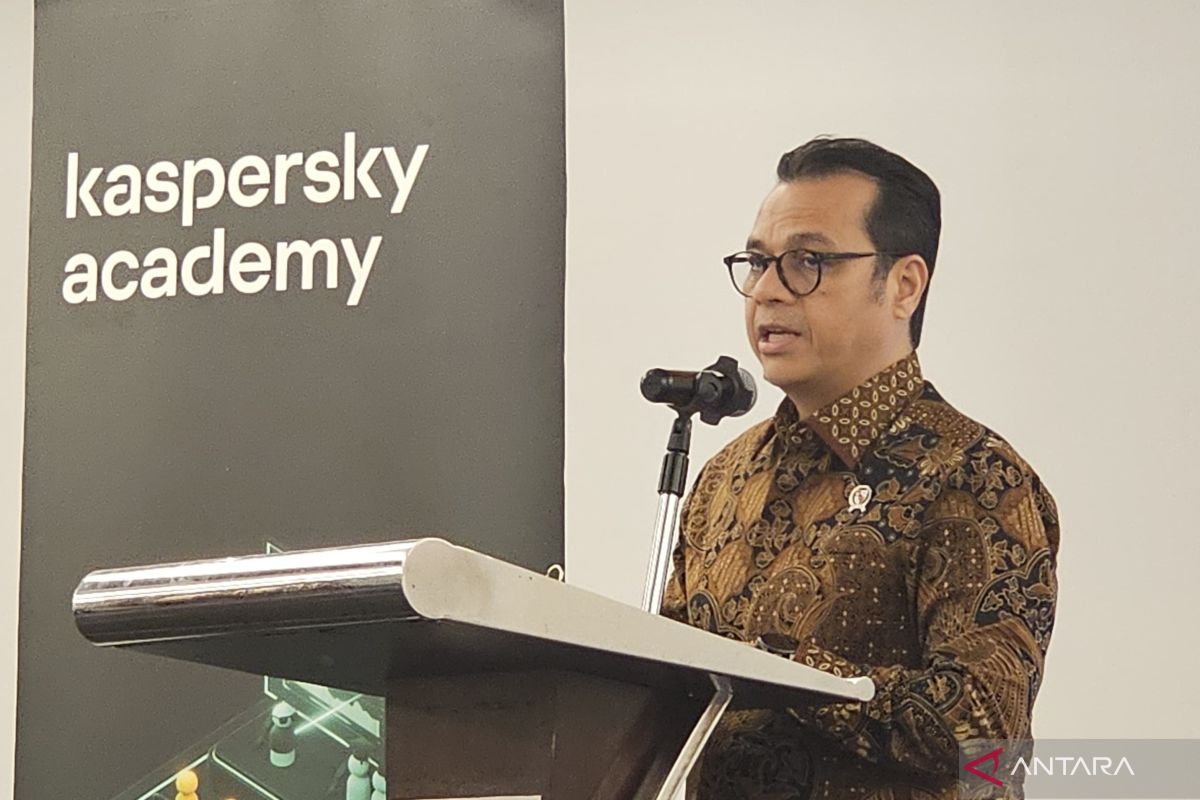
Deputy Minister of Communication and Digital Affairs (Wamenkomdigi) Nezar Patria has outlined three important aspects for building AI-driven security in Indonesia, ranging from creating adaptive regulations to developing reliable digital talent.
Nezar emphasised that all three aspects must be pursued collaboratively, involving not only the government but also academics, industry, and the wider community.
“Firstly, we need a sustainable and collaborative process in which the government, industry, academia, and other stakeholders actively work together to adjust regulations,” Nezar said at the Kaspersky Academy Partners Summit 2026 in Jakarta on Wednesday.
According to Nezar, in introducing regulations related to cybersecurity, the government has actively opened space for relevant stakeholders to participate. This approach is also being applied in the formation of rules currently underway, such as the implementing regulations for the Personal Data Protection Law (PDP) and the draft Cybersecurity and Resilience Bill (RUU KKS).
The second aspect is the routine exchange of information between industry and national institutions as partners, particularly in discussing AI solutions that can help detect cyber attacks.
Nezar said that beyond the need for communication to understand cyber attack patterns, industry and national institutions working in this field also need to build solutions such as AI that can detect and prevent cyber attacks. These solutions are expected to be useful not only for large-scale businesses but also accessible to the general public for everyday use.
“Such as call screening services, fake identity verification services, and government verification system services that can be used nationally,” Nezar said, citing examples of AI solutions that could be developed to create AI-driven security.
Lastly, the third aspect that needs to be prepared through collaboration between the government and relevant stakeholders to build AI-driven security in Indonesia is the creation of digital talent.
The Deputy Minister said that human resources are the most important factor in realising AI-driven security because they not only create solutions but also establish governance and ensure that these solutions work optimally.
Beyond cultivating cybersecurity digital talent to become professionals in the industry, this collaboration is also expected to reach the general public, especially those vulnerable to cyber attacks in their daily lives. By building awareness of cybersecurity among the general public, the growth of AI-driven security innovation in Indonesia should accelerate.
“I also invite community groups and industry to expand digital literacy outreach, particularly to vulnerable groups such as novice internet users, retirees, and small business owners. They are highly vulnerable to becoming victims of cybercrime,” Nezar said.
AI-driven security has become relevant in the current era, given the massive development of AI and its increasingly important role in cybersecurity. This is in line with the Global Cybersecurity Outlook 2026 report from the World Economic Forum, which reported that many business leaders consider AI to be the most significant driver of change in the cybersecurity field. The report states that nine out of ten leaders identify AI as influencing cybersecurity vulnerabilities.
It is therefore important for a country to support the creation of AI-driven security so that in the future, technology provides security rather than becoming a vulnerability.
Source: jawawa.id (https://jawawa.id/newsitem/wamenkomdigi-nezar-patria-outlines-three-collaborative-aspects-for-building-ai-driven-security-in-indonesia-1787140600)
Originally published by Antara (Indonesian) (https://www.antaranews.com/berita/5701807/nezar-ungkap-tiga-aspek-wujudkan-ai-driven-security-di-indonesia), translated from Indonesian