
Wamendagri Bima Arya Urges Civil Servants to Prioritise Public Impact Over Output Targets
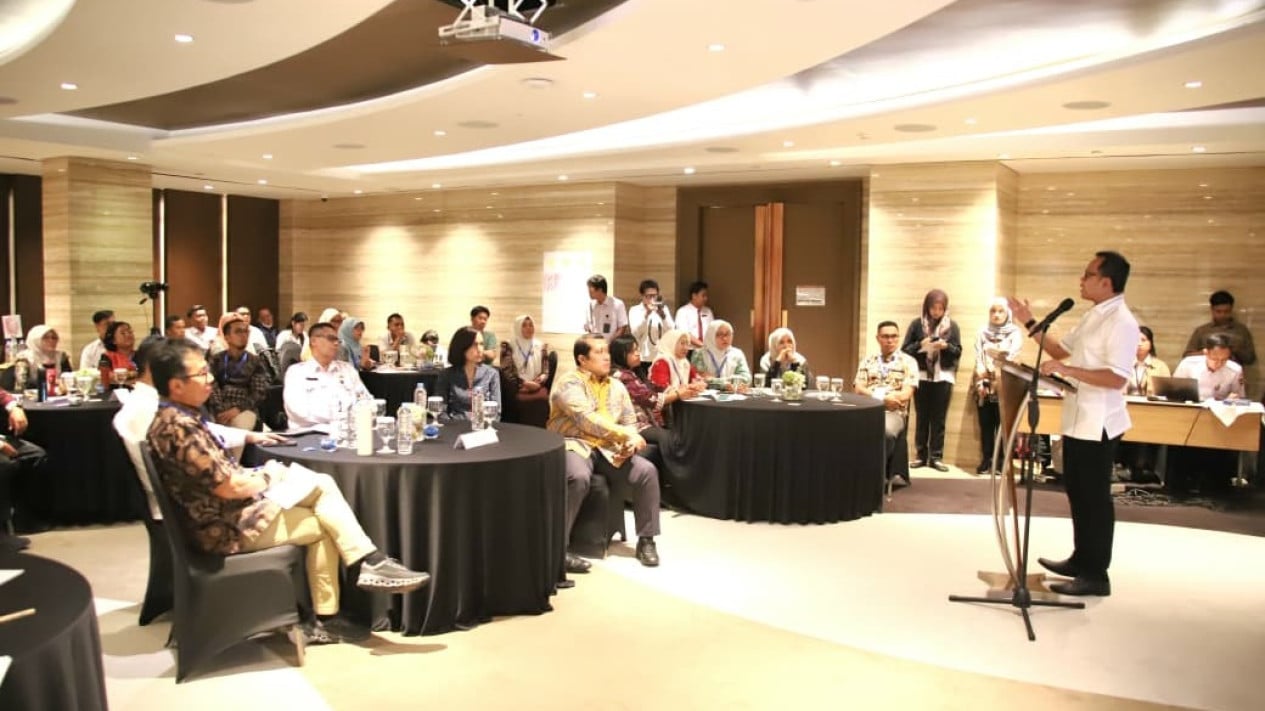
Deputy Minister of Home Affairs (Wamendagri) Bima Arya Sugiarto has emphasised the importance of transforming public services by strengthening service orientation, empathy, and innovation among the state civil apparatus (ASN). This is crucial, including in supporting the achievement of Minimum Service Standards (SPM) in the education and health sectors.
He made the remarks while opening a Design Thinking training for district/city government ASN with the theme ‘Transformation of Public Services: The Role of ASN in Realising Adaptive, Innovative, and Impactful SPM for Citizens’ at the Ashley Hotel in Jakarta on Wednesday (24/6/2026).
According to Bima, a fundamental challenge still faced by ASN and regional heads is ensuring that every policy and programme is genuinely oriented towards serving the public. ‘The serious challenge for ASN is the understanding that they all, or we all, are public servants. That is the main issue for all new regional heads,’ he stated.
He explained that a spirit of service is key to narrowing the gap between development visions and on-the-ground realities. He argued that the success of a government programme cannot be measured solely by the execution of activities or the achievement of administrative targets. The most important factor is the tangible impact felt by the community.
Therefore, Bima stressed the importance of utilising data, dialogue, and citizen-centred approaches in the policy formulation process. He believes ASN need to be more active in going into the field to understand the problems faced by the public directly.
‘What we do must be what citizens need, what they feel, and what is a primary issue. Design Thinking is oriented towards a human centre, towards our ability to have empathy for what is needed,’ he said.
Furthermore, Bima revealed that the Ministry of Home Affairs (Kemendagri) is currently paying attention to around 140 regions facing challenges in meeting SPM due to limited budget capacity. This condition requires creativity and innovation from ASN so that basic services in education and health can continue to run optimally.
According to him, future ASN will not only need to master administrative aspects. They must also be able to build collaboration, utilise data appropriately, and establish good communication with the public to produce impactful policies.