
Wamendag urges businesses to utilise international trade agreements.
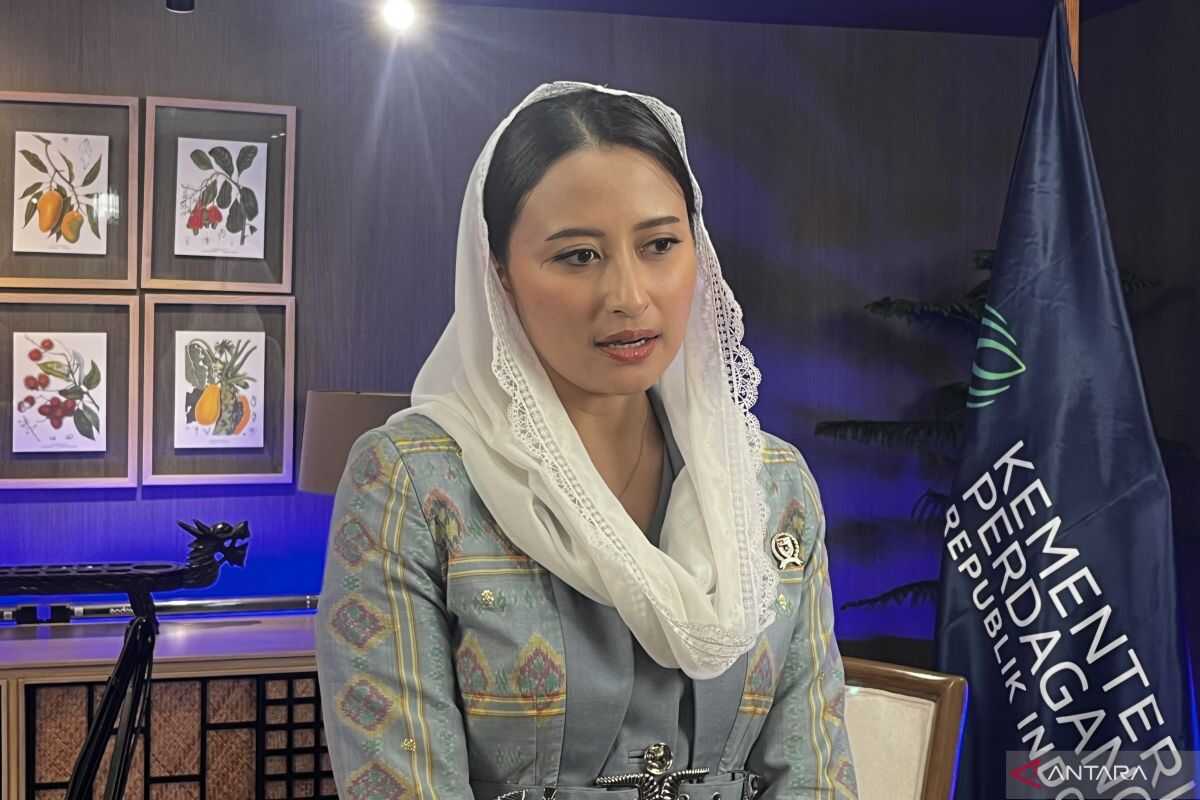
If successful, Indonesian society and entrepreneurs will become more empowered, and their incomes will rise.
Jakarta (ANTARA) - Deputy Trade Minister Dyah Roro Esti urged Indonesian business players to make use of trade agreements with diverse strategic countries.
“This is our shared responsibility to ensure that business players can utilise, i.e., use the trade agreements we have concluded so that there is concrete action and its impact is real,” said Wamendag Roro in a podcast interview with ANTARA at the Ministry of Trade (Kemendag) in Jakarta, on Wednesday.
Furthermore, she noted that maximise the use of trade agreements by business players will not only broaden markets to the global stage, but is also expected to deliver wide-ranging economic impacts domestically.
“This is because the multiplier effects are very substantial. If it succeeds, Indonesian society and entrepreneurs in Indonesia become more empowered, their incomes rise. If incomes rise, that is surely very positive for our domestic economy,” Roro explained.
Wamendag also said that international trade agreements come in varying scales. The Comprehensive Economic Partnership Agreement (CEPA) is the largest-scale trade agreement.
One CEPA that Indonesia has signed is with the European Union (IEU-CEPA), which aims to remove tariff and non-tariff barriers, and to increase exports, investment and economic cooperation between the two countries.
“If we mean Comprehensive Economic Partnership Agreement, we are talking about goods and services. So goods, services. We also talk about other topics, such as sustainability, services, and so on,” said Roro.
Furthermore, there are Preferential Trade Agreements (PTA) that focus on trading goods/products, and Free Trade Agreements (FTA) that reduce or remove trade barriers (tariffs and non-tariffs).
“So indeed the scales vary. But in principle, whatever the scale, we hope this can help position us and strengthen our friendship with a region or a country bilaterally so that trade can continue to occur,” she added.