
Wall Street Weakens: Iran Conflict Overshadows Positive US Economic Data
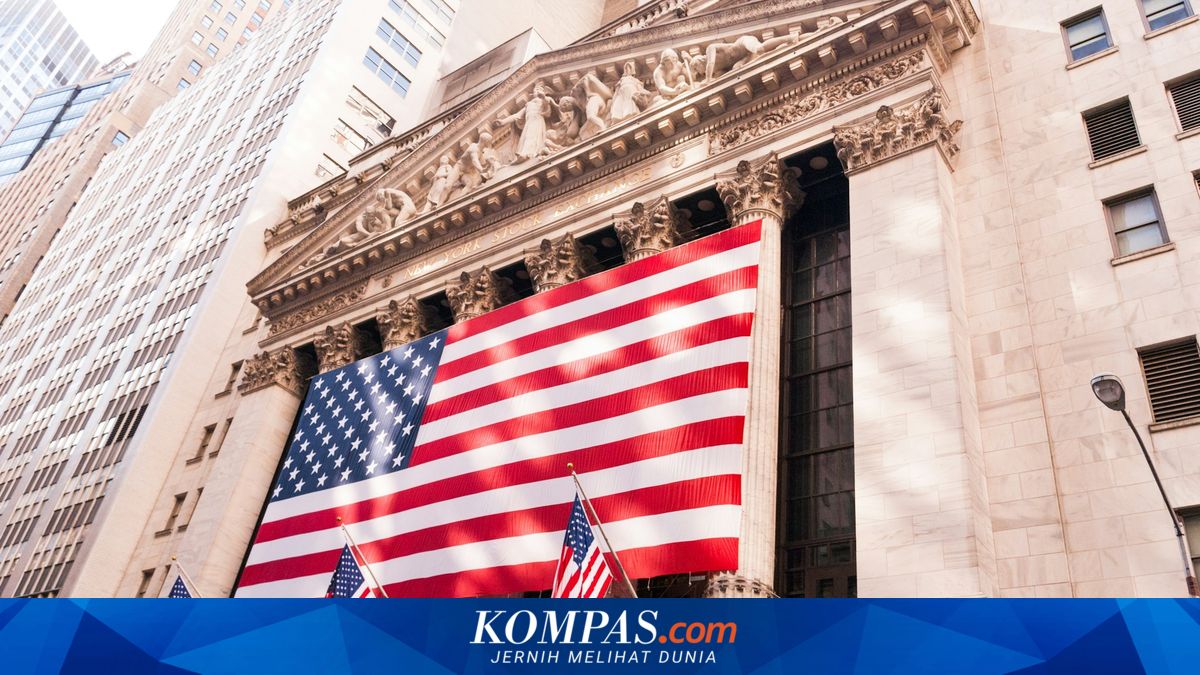
NEW YORK, KOMPAS.com - The United States stock exchange, or Wall Street, reversed course and closed lower during Tuesday’s trading (21/4/2026) local time, after strengthening at the start of the session.
Citing Reuters on Wednesday (22/4/2026), the Dow Jones Industrial Average fell 293.18 points or 0.59 percent to 49,149.38.
Meanwhile, the S&P 500 weakened by 45.13 points or 0.63 percent to 7,064.01, and the Nasdaq Composite dropped 144.43 points or 0.59 percent to 24,259.96.
Investor concerns peaked after new signals of uncertainty emerged regarding the Iran conflict.
A senior Iranian official stated that Tehran is open to attending talks with the US in Pakistan, but on the condition that Washington halts its pressure and threats policy.
Iran also emphasised that it will not engage in negotiations leading to any form of surrender.
In recent weeks, however, the market had rallied on hopes of a peaceful agreement in the conflict.
“The market is currently faced with two factors: the direction of resolving the Iran conflict, and on the other hand, expectations of strong financial performance. Companies have so far reported good results, and the economy remains solid,” said Thomas Martin, senior portfolio manager at GLOBALT Investments in Atlanta.
According to him, the main unpredictable factor remains the developments in the Iran conflict.
On the other hand, economic data shows fairly strong performance.
The US Commerce Department reported that retail sales rose higher than expected in March, driven by a surge in fuel prices due to the escalating conflict with Iran, which boosted revenues at petrol stations.
Retail sales were recorded to increase by 1.7 percent in March, the largest rise since March 2025, after a previous revision upward of 0.7 percent in February.