
Walhi Reveals Devastating Impacts of Mount Ungaran Geothermal Project: Threatening Ecology and Cultural Heritage
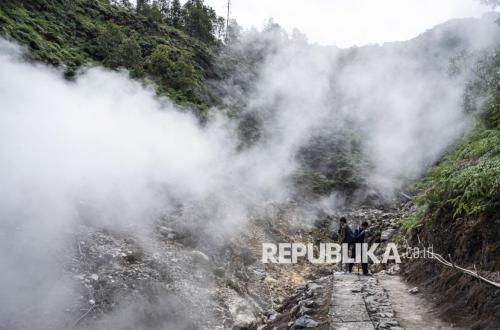
The Deputy Director of the Wahana Lingkungan Hidumn (Walhi) for Central Java Province, Nur Cholis, has revealed that the geothermal energy utilisation project on Mount Ungaran has the potential to cause destructive impacts, not only to the ecology but also to the preservation of cultural heritage. This is due to the exploration area being located near the structure of the Gedong Songo Temple.
“From an ecological perspective, geothermal extraction carries a high risk to the environment’s carrying capacity, particularly regarding water consumption and the preservation of springs. We can look at the Dieng Plateau as a lesson; in Pawuhan Hamlet, residents struggle to access clean water because their water sources are strongly suspected to have been affected and turned saline due to activities around the geothermal power plant,” Nur stated during an interview regarding the ecological risks arising from the geothermal project on Tuesday (1/9/2026).
He also highlighted the geothermal exploration area on Mount Ungaran, which is adjacent to the Gedong Songo Temple. According to him, the project risks threatening the temple’s structural integrity.
“The potential impact is highly threatening and destructive. Gedong Songo Temple is not only a cultural heritage and historical site that must be protected, but it also serves as a pillar of life and the economic lifeline (tourism) for the local community,” he said.
Nur warned that geothermal project activities involve large-scale land clearing, the mobilisation of heavy machinery, drilling, and the potential release of toxic gases (such as H2S) and seismic vibrations. “Vibrations from drilling activities pose a significant risk to the structure of the centuries-old temple. Furthermore, if the groundwater system is disrupted by drilling, the area could potentially experience land subsidence,” he added.
“If this project proceeds, the government will not only be sacrificing the ecosystem but also destroying historical heritage, culture, and the livelihoods of local residents,” Nur added.
He argued that the geothermal project on Mount Ungaran lacks urgency, as the electricity supply, particularly for Central Java and the Special Region of Yogyakarta (DIY), exceeds current demand.
“Based on 2025 data from PLN UID Jateng-DIY, the electricity system in Central Java and DIY is currently experiencing a surplus: installed capacity reaches approximately 6,400 MW, while the peak load is only around 4,200 MW. There is a remaining capacity of about 2,200 MW (44.94 percent). Given this oversupply condition, we believe Central Java does not yet have the urgency to add new large-scale power plants, especially in landscapes that are vital to the community,” he said.
Nur stated that, based on numerous studies, the potential negative impacts of the Mount Ungaran geothermal project are far greater for the environment and the surrounding community, such as the threat of pollution and the loss of livelihoods. Additionally, he noted that from an economic-political perspective, geothermal projects often utilise debt schemes that burden the state.
“Regarding governance, the transparency of geothermal projects must be strictly monitored. Referring to public information and reports circulating regarding the Dieng 1 Geothermal Power Plant, there are allegations or indications of potential losses related to the tender process and procurement worth Rp25.69 billion. This serves as a critical note for us that the governance of such projects remains highly vulnerable to transparency issues,” Nur concluded.
Source: jawawa.id (https://jawawa.id/newsitem/walhi-reveals-devastating-impacts-of-mount-ungaran-geothermal-project-threatening-ecology-and-cultural-1788357685)
Originally published by Republika (https://rejogja.republika.co.id/berita/tkqm3b282/walhi-ungkap-dampak-mengerikan-proyek-geotermal-gunung-ungaran-ancam-ekologi-dan-warisan-budaya), translated from Indonesian