
Walhi: Acute Respiratory Infections Rife in Kalimantan, Government Masks Fail to Meet Standards
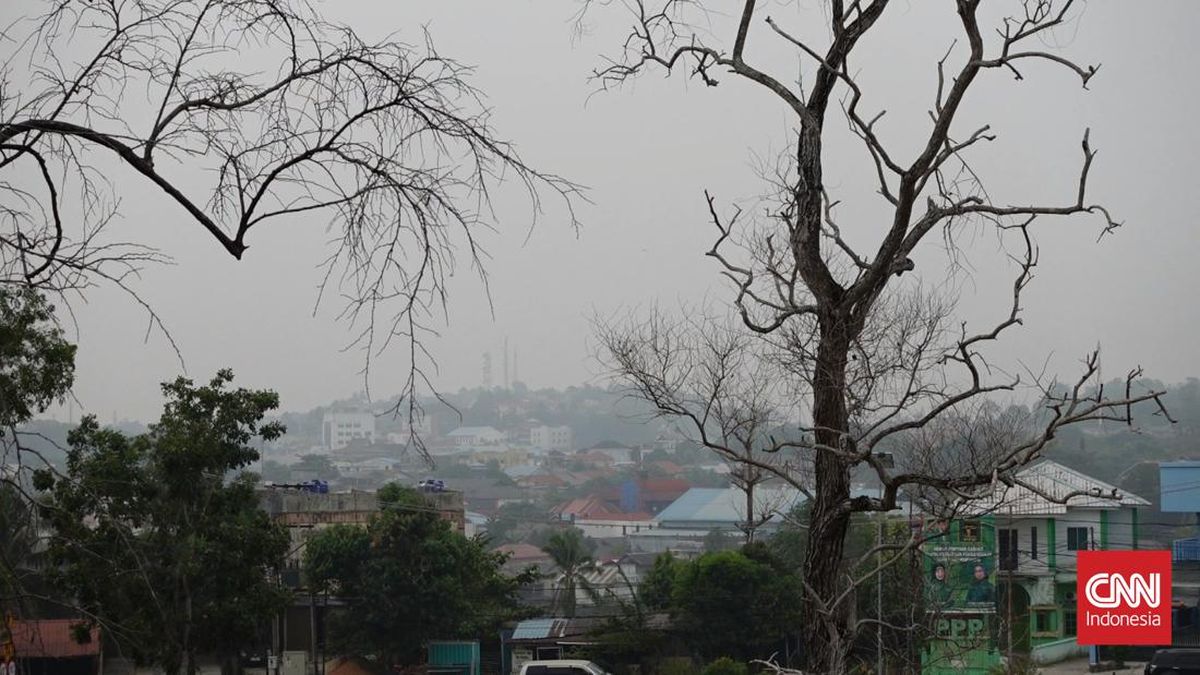
The government has been distributing masks to communities following a surge in cases of Acute Respiratory Infection (ISPA) in Kalimantan as a result of forest and land fires (karhutla). However, the Indonesian Forum for the Environment (WALHI) has revealed that the masks received by residents do not meet the required standards.
“The distribution of masks carried out by the government does not meet standards — for instance, with air pollution at dangerous and very dangerous levels above 300, we are distributing masks that are not of a standard such as the N95,” said Sri, a representative of WALHI West Kalimantan, on Tuesday (15/9).
She also said that unsuitable masks mean communities do not receive full protection from the threat of smoke caused by the fires.
“It has no effect — people are simply wearing masks, but in terms of protection it is not appropriate,” said Sri.
In fact, according to Sri, ISPA cases in several provinces in Kalimantan continue to soar. In West Kalimantan, she explained, 165,727 ISPA cases were recorded between January and 22 August 2026.
She also said that almost the entire population of West Kalimantan has been affected by ISPA, including the elderly, children and infants.
Meanwhile, in South Kalimantan the number of ISPA cases has exceeded 3,900. This figure was released by WALHI South Kalimantan, which said the local government’s handling of ISPA has not been optimal.
“The government is not even covering hospital costs for residents affected by ISPA in South Kalimantan,” said Sri.
A similar situation has occurred in Central Kalimantan. According to a report from WALHI Central Kalimantan, ISPA cases rose by 3,963 during August 2026. Palangka Raya has the highest number of ISPA cases, at 17,061.
According to Sri, the prevalence of ISPA cases in Kalimantan has not prompted the government to respond comprehensively.
Among other shortcomings, health posts such as community health centres (Puskesmas) are not providing maximum service. Sri said Puskesmas should operate 24 hours a day, yet they close at weekends.
“Last week I monitored the situation when the government issued guidance for Puskesmas to be on standby 24 hours, but there were still Puskesmas at the weekend that should have been open 24 hours but were closed. When you look at the data on the West Kalimantan health office’s website, the numbers are falling because they are not providing services,” said Sri.